

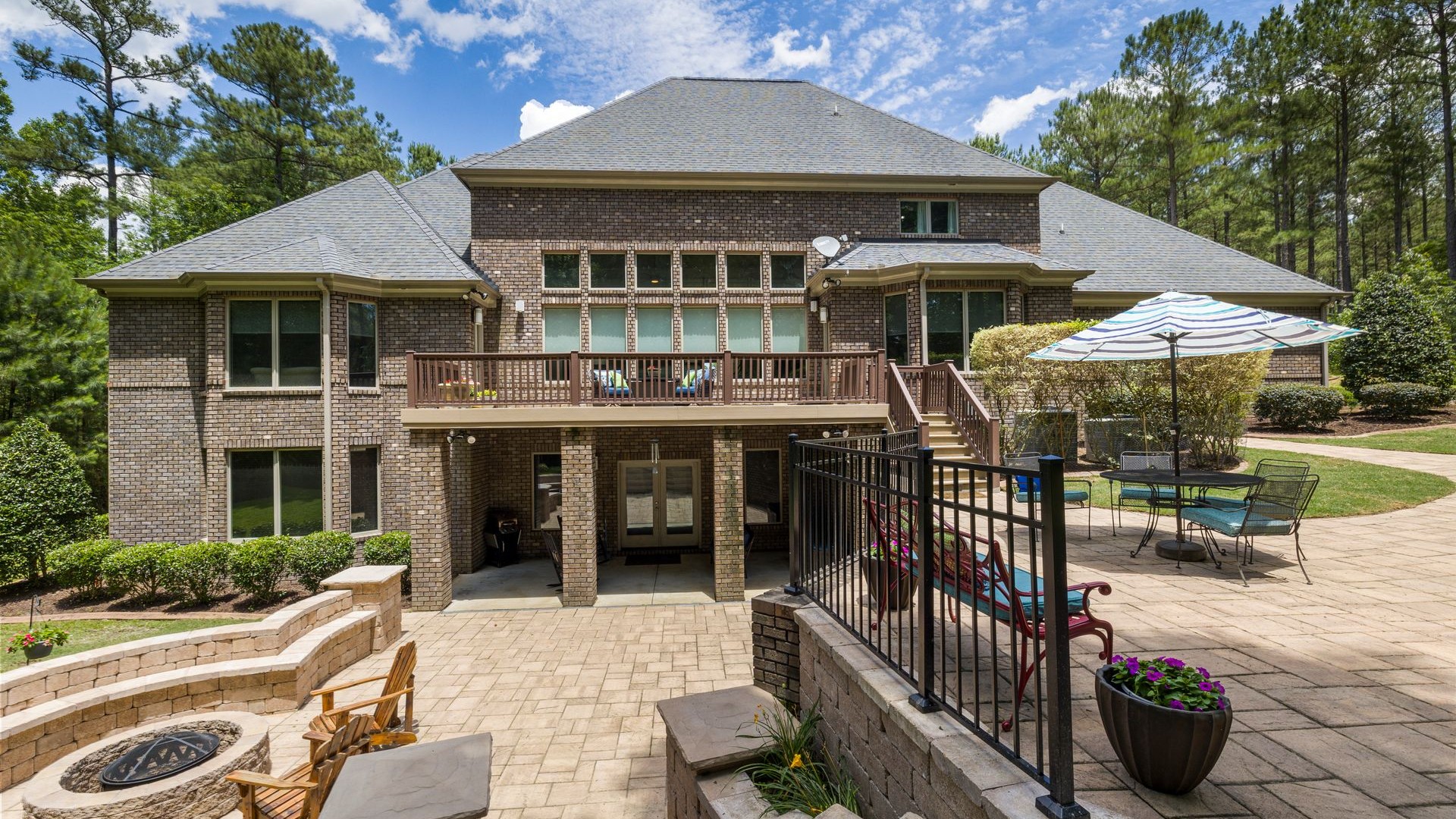
Patio cleaning means washing an outdoor patio the way its surface asks to be washed. Concrete takes pressure that would ruin bluestone, pavers need their joint sand protected, and limestone and marble etch if you reach for vinegar. Get the surface right and most patios come back to life in a single afternoon with soap, a brush, and a careful rinse.
Short answer: rinse the patio, identify the surface, apply the mildest cleaner that fits, let it sit 10 to 15 minutes, scrub the stubborn spots, then rinse toward the drain. Use 2,500 to 3,000 PSI on poured concrete, 1,500 to 2,200 on pavers and brick, and 600 to 1,200 or a soft wash on natural stone, wood, and composite. Re-sand paver joints after washing, and wait 48 to 72 hours before sealing.
Contents
- Read the stain first
- The method for every patio
- Concrete patios
- Concrete pavers and brick
- Natural stone patios
- Wood and composite decking patios
- Tile and porcelain patios
- Pressure and cleaner settings by surface
- Stain decoder
- After cleaning: re-sand and seal
- Mistakes that damage patios
- When to hire a pro
- Questions people ask
- Sources
Read the stain first
A patio rarely has one kind of dirt. The green film in the shade is a different problem from the white haze near the house wall, and the dark spot by the grill is a third. Each one answers to a different cleaner, so look before you wash.

| What you see | What it is | What fixes it |
|---|---|---|
| Green film, worst in shade | Algae | Oxygen bleach or diluted bleach, soft brush |
| Black speckles in joints | Mold or mildew | Bleach cleaner, dwell 10 minutes, scrub the joints |
| White powdery haze | Efflorescence, salts from below | Efflorescence cleaner on concrete; never wash it away with water on stone |
| Orange spots near metal furniture | Rust | Oxalic acid cleaner, gentle scrub, rinse well |
| Dark greasy patch near the grill | Oil or grease | Dish soap and warm water first, then a degreaser or poultice |
| Even gray dullness | Embedded dirt and weathered film | Soap and water, then the right pressure for the material |
| Dark slick film, slippery underfoot | Algae and biofilm | Same algae treatment, plus drainage and sun |
One note on that last row: a patio that feels slick when wet is usually a cleaning problem, not a surface problem. Algae and biofilm make stone and concrete slippery, and removing the growth restores grip.
The method for every patio
The core sequence is the same for concrete, pavers, stone, wood, and tile. Only the cleaner and the pressure change. Pros call it chemistry first, rinse second, pressure last: the cleaner loosens the growth, the rinse carries it away.
This is the same approach our soft washing vs pressure washing guide explains surface by surface. You need a hose or pressure washer with 25 and 40 degree fan tips, a pump sprayer, brushes, and a matching cleaner. Never mix bleach with ammonia. Work in sections you can finish in about ten minutes.
- Clear and inspect. Move furniture, planters, and the grill off the patio and sweep it clean. Note cracks, loose pavers, hollow joints, and soft spots: cleaning will not fix those, and pressure can make them worse.
- Identify the surface. Poured concrete has no joints except control cuts, pavers have sand-filled joints, and natural stone is irregular in shape and color. Never test stone with vinegar: a drop on limestone, marble, or travertine fizzes and etches.
- Pre-wet everything. Rinse the patio with plain water and wet the plants and soil around the edges. Wet foliage absorbs far less cleaner than dry foliage.
- Apply the mildest cleaner first. Start with dish soap and warm water, or a pH-neutral cleaner, and a brush for the surface. Unilock advises soap and water as the first step for pavers, and the NYPavers paver safety guide says the same: identify the material first, then start mild. Step up only if the mild cleaner leaves the stain behind.
- Let it dwell, and keep it damp. Give the cleaner 10 to 15 minutes, and mist any section that starts drying. Cleaner that dries on the patio stops working and can leave marks.
- Scrub, then rinse at the right angle. Scrub the stubborn spots, then rinse from the far edge toward the drain. On pavers, keep the spray at a low angle, no greater than 30 degrees, so the jet does not blast the joint sand out. Unilock suggests holding the washer at knee height with a 45 degree angle and a fan tip at low pressure. Overlap each pass by about half so you do not leave stripes.
- Step back and look while it dries. A wet patio always looks cleaner than it will once dry, so let one section dry before you judge it. If a stain is still there, repeat the cleaner step before you reach for more pressure.
Clean any patio in seven steps, matching the cleaner and pressure to the surface.
- Clear and inspect
Move furniture, planters, and the grill off the patio and sweep it clean.
- Identify the surface
Check if it is poured concrete, pavers, or natural stone. Never test stone with vinegar.
- Pre-wet everything
Rinse the patio with plain water and wet the plants and soil around the edges.
- Apply the mildest cleaner first
Start with dish soap and warm water, or a pH-neutral cleaner, and a brush for the surface.
- Let it dwell, and keep it damp
Give the cleaner 10 to 15 minutes, and mist any section that starts drying.
- Scrub, then rinse at the right angle
Scrub the stubborn spots, then rinse from the far edge toward the drain, keeping the spray low on pavers.
- Step back and look while it dries
Let one section dry before you judge it, and repeat the cleaner step before adding pressure.
Concrete patios
Poured and stamped concrete is the toughest patio surface you will meet, and it takes the most pressure. A concrete patio handles 2,500 to 3,000 PSI with a 25 degree fan tip, enough to strip embedded dirt and algae without harming the slab. Start with chemistry: rinse the slab, apply a concrete cleaner or diluted bleach solution, let it dwell 10 to 15 minutes, scrub, then pressure wash in even passes.
A surface cleaner attachment keeps distance and overlap constant, and Property Refresh notes that it prevents the zebra striping a wand leaves when passes overlap unevenly. Without one, keep the wand 12 to 18 inches from the slab.
Efflorescence needs its own approach: the white haze is mineral salt from below the slab, and a plain wash pushes it around without removing it. Use a dedicated efflorescence cleaner, follow the label, and rinse well. For the full concrete routine, our concrete cleaning guide covers the detail. If you are weighing stamped concrete against pavers, our stamped concrete vs pavers comparison lays out the trade-offs. One caution for stamped concrete: the pattern and color sit in a thin surface layer, so keep the pressure low and use a 40 degree tip on sealed areas.
Concrete pavers and brick
Concrete pavers and brick handle 1,500 to 2,200 PSI with a 25 or 40 degree fan tip, but the real risk is not the paver face. It is the joint sand. A steep spray angle blasts polymeric sand out of the joints, and once the joints are empty, pavers shift and weeds move in.
Keep the spray angle low, no greater than 30 degrees, and keep the wand moving.

Dish soap and warm water with a stiff-bristle brush lifts most dirt and light algae from pavers. For mold, moss, or algae in the joints, Unilock suggests a half water, half bleach mix, or plain boiled water, applied with a soft-bristle broom. If the stain survives, step up to a paver-specific cleaner. Unilock warns against muriatic acid as a routine cleaner for concrete pavers, because it etches the surface and alters the color. This pressure washing demo from The Lawn Care Nut shows the pace, distance, and overlap that keep a paver patio even. If you are planning a new paver patio, our guide to laying pavers covers the base, edge restraint, and joint sand.
For the full step-by-step process, see how to clean patio pavers without damaging the joints.
Natural stone patios
Natural stone is the surface where the wrong cleaner does real damage. Flagstone, bluestone, and slate handle a gentle wash well, but limestone, marble, and travertine are calcareous stone, which means acids dissolve them.
Vinegar, lemon juice, and acid-based cleaners etch these stones on contact, leaving dull marks no rinsing removes. The Natural Stone Institute care guide says the same, and recommends a neutral cleaner, a stone soap, or mild dish detergent for these stones.
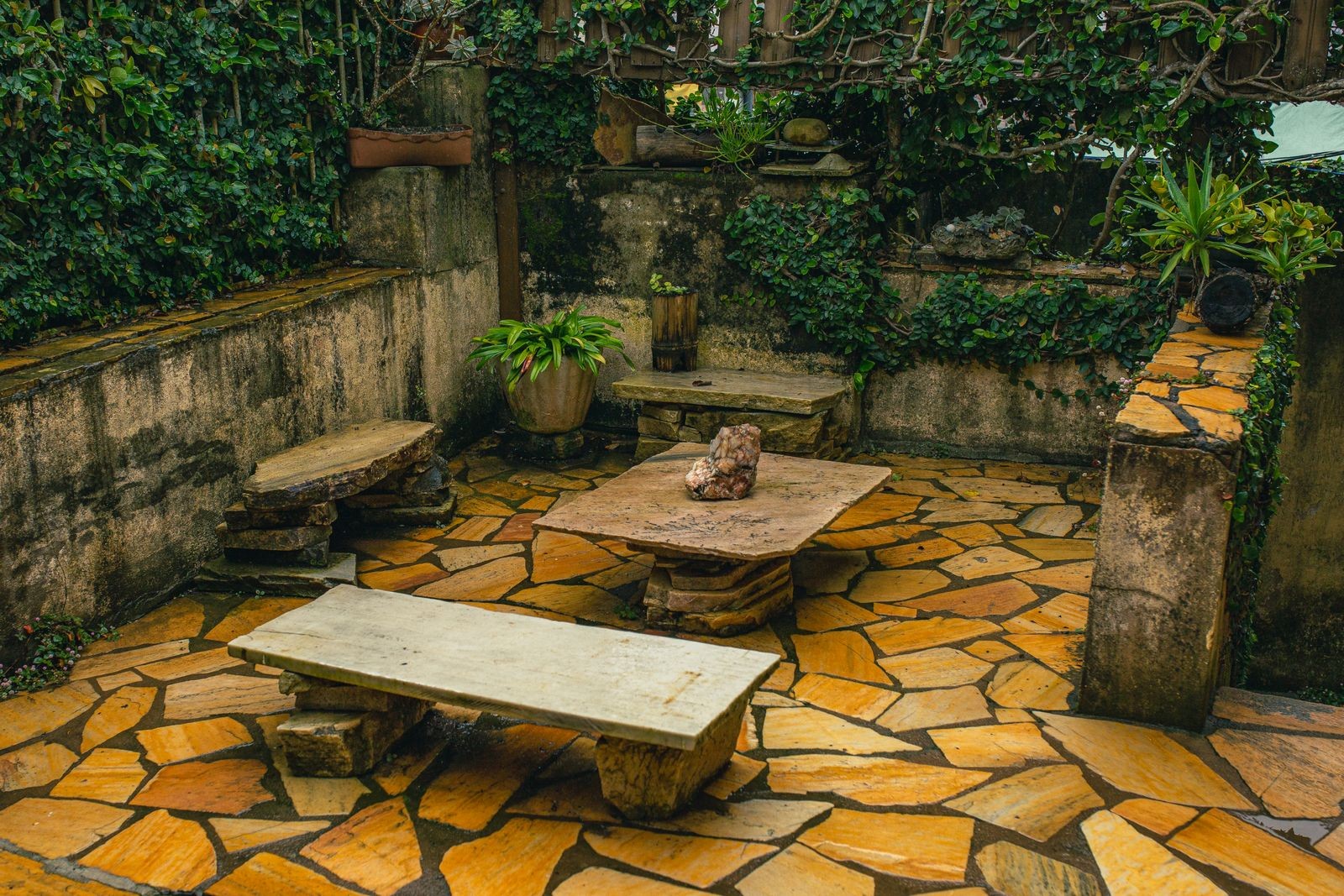
For everyday dirt, soap and water with a soft-bristle brush is the whole job. For algae or moss outdoors, the Natural Stone Institute recommends flushing with clear water, then a mild bleach solution, and rinsing well. Never mix ammonia and bleach. Keep the pressure low, 600 to 1,200 PSI at most, with a 40 degree fan tip held 12 to 18 inches away, or skip the pressure washer and use a garden hose. Efflorescence is the one stain where washing makes things worse: it is mineral salt from below the stone, and water only drives more salt to the surface. Dry-brush the loose salt off, let the stone dry fully, and if the haze keeps returning, talk to a stone professional. Etch marks from a past acid spill need a stone restorer, and that is a job for a pro.
Wood and composite decking patios
Wood and composite patios clean more like a deck than a slab. Wood is soft at the surface, and high pressure strips the soft spring growth out of each board. Keep the pressure at 600 to 1,200 PSI with a 40 degree fan tip, or skip the machine and use a hose and a brush.
Start with an oxygen bleach cleaner, sold as sodium percarbonate, mixed to the label. It lifts algae and gray film without bleaching the wood pale the way household bleach can. Apply it with a pump sprayer, let it sit 10 to 15 minutes, keep it damp, and scrub with a soft-bristle brush along the grain. For heavy green growth in the shade, a second application beats a harder spray every time. Composite decking wants the same gentle approach: soap and water, a soft brush, and low pressure. Composite boards scratch easily. Wood needs 24 to 48 hours to dry before staining or sealing, longer in humidity. The fence that borders the patio usually needs the same treatment, and our fence cleaning guide uses the same method for wood, vinyl, and metal. Clean the fence first so dirty rinse water does not run onto a clean patio.
Tile and porcelain patios
Tile and porcelain patios are the simplest surface in this guide, with one catch. The tile itself is hard, dense, and nearly stain-proof, but the grout lines between the tiles are soft, and dirt, algae, and mold collect there.
Wash with a pH-neutral cleaner, warm water, and a stiff brush worked into the grout lines. A pressure washer at 1,500 PSI or less with a 40 degree tip is safe on the tile, but keep it moving and off the grout at close range, because a hard jet erodes grout over time. Natural stone tile follows the stone rules: travertine or marble tile gets a neutral cleaner only, no acids, no vinegar. Repair cracked grout or loose tiles before you wash.
Pressure and cleaner settings by surface
Here is the whole pressure and cleaner question in one place. If you remember one row, make it your own surface. WashMastery puts it in numbers: a white 40 degree nozzle only, 12 to 18 inches of distance, and about 50 percent overlap between passes.
| Surface | Safe PSI | Nozzle | Cleaner |
|---|---|---|---|
| Poured concrete | 2,500 to 3,000 | 25 degree | Concrete cleaner or diluted bleach |
| Stamped concrete | 2,000 to 2,500 | 40 degree | Mild concrete cleaner |
| Concrete pavers and brick | 1,500 to 2,200 | 25 or 40 degree | Dish soap first, then paver cleaner |
| Flagstone and bluestone | 600 to 1,200 or soft wash | 40 degree | Neutral cleaner or mild dish soap |
| Limestone, marble, travertine | Soft wash only | 40 degree or hose | Neutral cleaner or stone soap, never acid |
| Wood decking | 600 to 1,200 | 40 degree | Oxygen bleach cleaner |
| Composite decking | 600 to 1,200 max | 40 degree | Mild soap and water |
| Porcelain tile | 1,500 max | 40 degree | pH-neutral cleaner |
Two rules sit above the whole table. First, a 0 degree nozzle has no place on any patio: it concentrates the jet into a cutting stream that gouges wood, etches stone, and carves lines into concrete. Second, the cleaner does the work and the pressure only rinses.
Stain decoder
When a stain survives the first wash, the answer is a better-matched cleaner, not more pressure.
| Stain | Surfaces | First try | Never use |
|---|---|---|---|
| Green algae | Concrete, pavers, stone, wood | Oxygen bleach or diluted bleach, soft brush | High pressure on stone or wood |
| Black mold or mildew | Joints, shaded concrete, grout | Bleach cleaner, 10 minute dwell | Undiluted bleach on wood |
| White efflorescence haze | Concrete, pavers, brick | Dedicated efflorescence cleaner | Plain water wash on stone |
| Rust spots | Concrete, pavers, near metal furniture | Oxalic acid cleaner, gentle scrub | Muriatic acid as a routine cleaner |
| Oil or grease | Concrete, pavers, near the grill | Dish soap and warm water, stiff brush | Solvents on sealed or stamped concrete |
| Leaf and tannin stains | Concrete, light pavers, stone | Oxygen bleach, dwell 15 minutes | Acid cleaners on limestone or marble |
| Dirt and gray film | Every surface | Soap and water wash | A 0 degree nozzle on any surface |
One note on rust: oxalic acid works well on concrete and pavers, and WashMastery lists it as the standard rust treatment for patios and walkways. Use it at the label dilution and rinse fully. On limestone, marble, or travertine, skip the acid and call a stone professional.
After cleaning: re-sand and seal
A clean patio is only half the job: what you do in the days after the wash decides how long the clean look lasts. Washing always removes some joint sand. If the joints look low after the patio dries, re-sand them first: scrape out the failed sand to about 1.5 to 2 inches deep, sweep fresh polymeric sand in, and mist it lightly to activate the binder.
Unilock gives that exact sequence for summer paver care, and says to seal only after 24 to 48 hours of dry weather.
WashMastery puts the sealing window at 48 to 72 hours after cleaning, once the surface is fully dry. Sealer applied to a damp patio traps moisture and turns cloudy, so the wait matters. Concrete and pavers benefit from a sealer every two to three years, and stone needs a stone-specific sealer. Wood needs 24 to 48 hours to dry before staining or sealing, longer in humidity. While the patio is clean and dry, walk it with fresh eyes: our concrete crack repair guide covers which cracks are cosmetic and which need a pro. For the rest of the house, our exterior house cleaning guide by surface maps the same approach across every surface.
Mistakes that damage patios
Most patio damage during cleaning comes from five mistakes. The first is too much pressure on a soft surface: a 3,000 PSI rental machine will etch bluestone and fur wood in one pass. The second is the wrong nozzle: a 0 degree tip is a carving tool, not a cleaning tool. The third is the wrong cleaner on stone: vinegar and acid cleaners etch limestone, marble, and travertine on contact.
The fourth is blasting paver joints at a steep angle, which empties the sand. The fifth is sealing a damp patio, which traps moisture and turns the sealer cloudy. Do not let cleaner dry on the surface, and do not skip the test spot: one paver at the edge, washed the way you plan to wash the rest, tells you in five minutes whether your pressure and cleaner are right.
When to hire a pro
Most patio cleaning is honest DIY work: a hose, a brush, and an afternoon handle a standard concrete or paver patio. Hire a pro when the patio is large, the growth is heavy, or the material is fragile: stone with etch marks, widespread efflorescence, failed polymeric sand, and soft or splintering wood all punish a wrong move. Trust the pro who talks in pressure ranges and dwell times, not one PSI number for everything. Before you book, see what a patio cleaning service costs and includes.
Questions people ask
Rinse it, identify the surface, apply the mildest cleaner that fits, let it dwell 10 to 15 minutes, scrub, then rinse toward the drain.
Poured concrete takes 2,500 to 3,000 PSI, pavers and brick 1,500 to 2,200, and natural stone, wood, and composite 600 to 1,200 at most.
Only on concrete, and only diluted. Vinegar etches limestone, marble, and travertine, so never use it on natural stone.
Apply an oxygen bleach cleaner or diluted household bleach, let it sit 10 to 15 minutes, scrub, and rinse.
Keep the spray angle low, no greater than 30 degrees, and use a fan tip at low pressure, then re-sand low joints.
Wait 48 to 72 hours after cleaning, once the surface is fully dry.
Once a year for most patios, twice a year for shaded or damp ones.
What is the best way to clean a patio?
Rinse it, identify the surface, apply the mildest cleaner that fits, let it dwell 10 to 15 minutes, scrub the stubborn spots, then rinse toward the drain. Use 2,500 to 3,000 PSI on concrete, 1,500 to 2,200 on pavers and brick, and 600 to 1,200 or a soft wash on stone, wood, and composite.
What PSI should I use to pressure wash a patio?
Poured concrete takes 2,500 to 3,000 PSI, pavers and brick 1,500 to 2,200, and natural stone, wood, and composite 600 to 1,200 at most. Limestone, marble, and travertine should be soft washed, not pressure washed.
Can you use vinegar to clean a patio?
Only on concrete, and only diluted. Vinegar etches limestone, marble, and travertine on contact, so never use it on natural stone. On concrete, vinegar and water can help with efflorescence, but a dedicated efflorescence cleaner works better.
How do you remove green algae from a patio?
Apply an oxygen bleach cleaner or diluted household bleach, let it sit 10 to 15 minutes, scrub with a brush suited to the surface, and rinse. On stone, flush with clear water first. Never mix bleach with ammonia.
How do you clean patio pavers without ruining the sand?
Keep the spray angle low, no greater than 30 degrees, and use a fan tip at low pressure. Start with soap and water and a stiff brush. After washing, re-sand any joints that look low with fresh polymeric sand, misted lightly to activate the binder.
How long after cleaning can you seal a patio?
Wait 48 to 72 hours after cleaning, once the surface is fully dry. Sealer on a damp patio traps moisture and turns cloudy. For pavers, re-sand the joints first and let the sand set before sealing.
How often should you clean a patio?
Once a year for most patios, twice a year for shaded or damp ones. Wash sooner if green film, black spots, or slick patches appear.
Sources
- Natural Stone Institute, natural stone care guide
- Unilock, paver cleaning guide
- Unilock, summer paver maintenance
- Unilock, removing stains from pavers
- NYPavers, cleaning patio pavers without harsh chemicals
- Property Refresh, patio power washing by surface type
- WashMastery, patio and walkway cleaning
- The Lawn Care Nut, pressure washing brick pavers with a surface cleaning attachment
Last updated: November 8, 2026
