


Last updated: November 29, 2026
A patio is a surfaced outdoor living area beside or near a home, used for sitting, dining, cooking, or quiet time outside. The best ideas for patios start with the job first: who sits there, where the sun lands, how people walk through, and where rainwater goes after a storm.
That order matters more than the style label. A small slab with two good chairs, shade at the right hour, and a clear path can feel finished. A larger patio with oversized furniture and no shade can sit empty all summer. Match each idea to your yard size, budget, and daily habits before you buy.
Contents
- Start with the job your patio has to do
- 15 ideas for patios that work in real yards
- Small patio layouts that do not feel cramped
- Budget order: what to buy first
- Shade, privacy, and evening light
- Surfaces without stealing the paver lane
- Fire, grills, and safe clearances
- Mistakes that make a patio feel smaller
- Frequently asked questions
- Sources
Start with the job your patio has to do
Pick the main job before you pick furniture: morning coffee, family meals, lounge seating, grilling, kids’ play nearby, or a quiet reading corner. Measure the slab, mark the door swing, note sun at the hours you will use it, and leave one clear walking path. Those four checks prevent most bad purchases.
I see the same pattern in patio photos that work: the seating has a reason, the table size matches the group, and the plants frame the edge instead of crowding the chairs. Better Homes and Gardens breaks larger patios into conversation, dining, cooking, and relaxation zones, with a rug marking the seating area. That is a layout rule, not just a decorating trick.
If you are still deciding size, surface, base, and drainage, start with planning the patio itself before you copy a photo. Design ideas do not fix a patio that floods, bakes at 4 p.m., or blocks the back door.
| Main job | First pieces to plan | Layout clue | Common miss |
|---|---|---|---|
| Morning coffee | Two chairs, small table, shade on the east side | Keep it close to the door | A dining set that is too formal for daily use |
| Family meals | Table, chairs with pull-back room, serving spot | Put the table where food travels the shortest path | Chairs squeezed against a fence or wall |
| Lounging | Two lounge chairs or a loveseat, side table, rug | Face chairs toward each other or toward the view | A long sofa that blocks the walkway |
| Grilling and hosting | Grill zone, prep surface, seating outside the heat path | Separate cooking from conversation | Guests standing in the smoke line |
| Quiet corner | One deep chair, plant screen, small water or lantern accent | Use a corner, fence line, or garden edge | Too many small decor pieces |
15 ideas for patios that work in real yards
The strongest patio ideas solve a use problem: shade at the hot hour, seats that fit the group, privacy on one side, light after dinner, or a surface that stays usable after rain. Start with layout, then add style. A pretty chair in the wrong spot still makes the patio feel awkward every day.
1. Zone a larger patio with one rug
On a medium or large patio, one outdoor rug can mark the conversation area and keep the dining table from drifting into it. Keep the rug under the front legs of the main seats so the group reads as one place. Leave the cooking and walking areas outside the rug so spills and foot traffic stay easier to manage.
2. Use a bistro set when two seats are enough
A small round table and two chairs fit many side yards, balconies, and narrow slabs better than a four-person dining set. Add folding chairs for guests instead of forcing a bigger table into daily life.
3. Put the main seat on the longest wall
A bench, loveseat, or pair of chairs along the longest wall keeps the center open and makes a narrow patio feel wider. Keep planters at the ends, not in front of knees.
4. Add a storage bench instead of more chairs
A storage bench gives extra seating and a place for cushions, throws, and small tools. It earns its footprint on a small patio because it does two jobs. Leave room to open the lid without moving the table.
5. Turn an unused corner into a gravel patio
A pea gravel corner can turn a bare patch into a reading spot or extra seating area without a full slab. Better Homes and Gardens describes laying weed fabric first, then raking pea gravel over it for a small gravel patio. Add edging so stones stay out of the lawn and mower path.

6. Use containers as movable walls
Large pots can soften a fence line, hide a utility corner, or mark the edge of the seating zone. Group pots in threes: tall, medium, and trailing. Keep pots movable until shade and wind patterns are clear.
7. Hang string lights to make a ceiling line
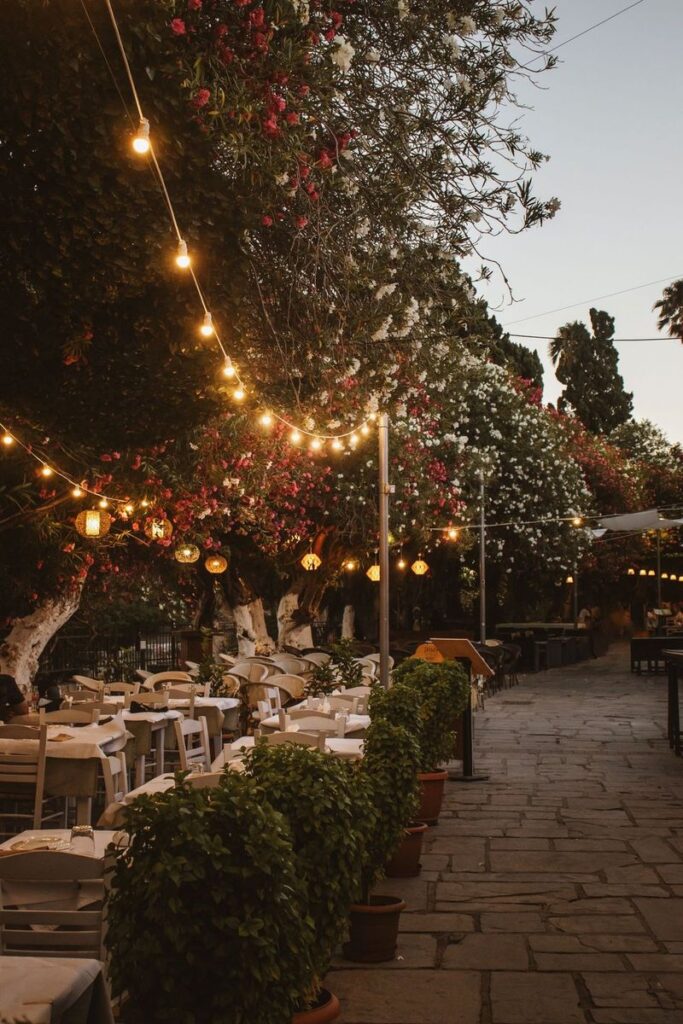
String lights work when they define the seating area, not when they zigzag over every inch of the yard. Run them over the table or lounge zone and use outdoor-rated fixtures. HGTV treats string lights as a budget way to add sparkle to a stone patio, and the effect is strongest after the layout already works.
8. Try movable shade before a roof
An umbrella, shade sail, or portable canopy can test where shade is needed before you commit to posts and footings. Note the hours when the seats become usable. If the patio needs rain cover or a fixed ceiling, use our guide to covered patio structures for pergolas, awnings, louvered roofs, and solid roofs.
9. Screen one side, not the whole patio
Privacy feels better when one exposed side gets a screen, trellis, hedge, or tall planters. Closing every side can block breeze. Screen the worst sightline first.
10. Mix used frames with better cushions
Used metal, wood, or wicker frames can work well if the joints are sound and the finish can be cleaned or painted. Spend first on cushions people actually sit on. Firm cushions matter more than a matching set.
11. Paint one calm color across the hard pieces
Paint can pull mismatched chairs, a bench, and planters into one scheme. Keep the color quiet on large pieces and use pillows or plants for the stronger color. Use exterior products made for the material.
12. Add fire only where the clearance is honest
A fire bowl or tabletop flame can make a patio feel complete, but only when the spot is open, level, and away from anything that can burn. The safety section below gives the clearance checks.
13. Grow up the fence or railing
Wall planters, a trellis, or climbing plants use vertical space when the floor is tight. Leave room for gates, meters, and hose bibs. HGTV shows vertical plantings on walls and railings as a way to make a small terrace work harder, which fits patios where every chair leg matters.
14. Make a second tiny patio away from the house
A small detached seating pad near a garden bed, tree, or view can give the yard a second destination. Two chairs, a side table, and a stable surface may be enough.
15. Leave one flexible open patch
Not every square foot needs furniture. An open patch lets you pull out a folding table, set up a game, move a planter, or let kids pass without climbing over chairs. Flex space keeps the patio useful.
Small patio layouts that do not feel cramped
A small patio feels larger when the furniture matches the real group size, the walking path stays open, and tall items move to the edges or walls. Use two chairs for daily use, add folding seats for guests, and keep the center light. Oversized sectionals are the fastest way to make a small slab feel tight.
| Layout | Best for | Key pieces | Watch out for |
|---|---|---|---|
| Bistro corner | Coffee, reading, two people | Small round table, two chairs, one planter group | Table too wide for chair pull-back |
| Wall bench layout | Narrow patios and side yards | Bench on long wall, two movable chairs, low table | Bench depth stealing the path |
| Two-chair lounge | Evening sitting and conversation | Two lounge chairs, side table, rug | Chairs facing a blank fence with no focal point |
| Four-person dining | Regular outdoor meals | Rectangular table, four chairs, serving cart or ledge | No room to carry plates around seated guests |
| Garden edge patio | Quiet sitting away from the house | Two chairs, gravel or stone pad, shade plant | Muddy path after rain |
Use painter’s tape on the slab before you buy. Mark the table, chair pull-back, door swing, and walking path. Sit in a kitchen chair inside the tape and see if your knees, elbows, and feet still feel natural.
For a front entry that needs the same small-scale thinking, our guide to front porch paver ideas stays in the entry lane. This article stays with backyard and side-yard patio layouts.
Budget order: what to buy first
Buy in this order: layout test, seating comfort, shade, lighting, privacy, surface touch-ups, then decor. That order keeps a tight budget from going to pillows and lanterns while the chairs hurt and the sun drives everyone inside on the first warm evening.
- Measure and tape the layout. Confirm door swing, chair pull-back, and the path from the house to the yard.
- Fix the seats people touch. Repair frames, replace thin cushions, and choose chairs that fit the daily group size.
- Solve the hot hour. Add an umbrella, shade sail, screen, or plant shade where the seats actually sit.
- Add evening light. Use string lights, lanterns, or solar path lights so the patio works after dinner.
- Screen the worst view. Add one trellis, planter group, curtain panel, or hedge section where privacy fails.
- Clean or refresh the surface. Sweep, wash, repair loose edges, and only then judge whether paint or a new surface is needed.
- Finish with plants and soft pieces. Add containers, throws, and small accents after the hard layout choices are settled.
Cleaning belongs in the budget order because a dirty slab can make a sound patio look tired. Our guide to patio cleaning by surface type helps you match the method to concrete, pavers, stone, or gravel before you spend on decor.
Shade, privacy, and evening light
Shade decides whether the patio gets used at lunch, privacy decides whether people relax there, and lighting decides whether it works after dinner. Solve shade at the seat, not just over the slab. Screen the sightline that bothers you, then add light over the table and path.
Plants can do real shade work when they are placed with the sun in mind. The U.S. Department of Energy explains that deciduous trees block summer sun and let winter light pass after leaf drop. It also notes that trees with lower branches fit the west side, where afternoon shade is needed, and that shrubs can shade and cool a patio.
That does not mean planting a tree tight against the slab. The same DOE guide warns to plant far enough from the home so mature roots do not damage the foundation and branches do not damage the roof. Use containers or a trellis when space is tight, and give permanent planting room to mature.
For privacy, start with the view from the chair. A screen at standing height may still fail when you sit down, and a tall hedge can block breeze. Test with a sheet, cardboard, or tall planters before you build. For light, keep one layer over the seating and one low layer near steps or edges so guests can see where to walk.
Surfaces without stealing the paver lane
Choose a patio surface by footing, drainage, upkeep, and how the space will be used. Concrete is plain and stable, gravel is flexible and softer underfoot, stone feels natural, and pavers give pattern choices. The best surface is the one that stays level, drains well, and fits the furniture.
This article keeps surfaces at the layout level. If pattern, color, joint style, and paver layout are the main question, use our guide to patio paver ideas instead of stretching this gallery into a paver catalogue. That split keeps each guide useful.
Drainage still belongs in every surface choice. The U.S. Environmental Protection Agency advises directing stormwater at least five feet from foundations when sending it to a yard. It also recommends redirecting downspouts to gardens, grassy areas, or rain barrels where water can soak in. A patio that sends roof water toward the house is a repair problem wearing a design costume.
Check the slab after rain before you add rugs, storage benches, or planters. Note where water sits, where it runs, and which chair legs land in the wet line. Move the seating zone first. If water pools against the house or the surface has settled, fix drainage before you decorate around it.
Fire, grills, and safe clearances
Put fire and grills where heat, smoke, and sparks stay away from people, siding, fences, low branches, and overhead cover. Check local restrictions first, keep the surface level and noncombustible, and leave room for guests to move without passing close to flame. If the safe spot is not on the patio, do not force it.
The National Fire Protection Association says contained fire pits should be at least 10 feet from anything that can burn. It also advises checking local restrictions, using even ground or a level surface that will not catch fire, and keeping a 3-foot safety zone around outdoor fires for children and pets.
Grills need the same common sense. Keep them out from under eaves and low branches, away from siding and railings, and clear of the main walking path. A grill station can sit at the patio edge if the cook has room and guests are not squeezed behind the heat.

Mistakes that make a patio feel smaller
A patio feels smaller when furniture blocks the path, shade misses the seats, plants crowd chair legs, and every corner holds a small object. The fix is usually subtraction: fewer pieces, better scale, one clear zone, and one open route. Style cannot rescue a layout that fights daily use.
| Problem | What it feels like | Fix first |
|---|---|---|
| Oversized sectional | The patio becomes a hallway around furniture | Swap to two chairs, a loveseat, or a wall bench |
| Table sized for guests, not daily life | Meals feel crowded even with two people | Use a smaller daily table and folding seats for guests |
| Shade over the slab, not the seats | The patio looks covered but stays hot | Move shade to the chair line at the hot hour |
| Planters in the walking path | People turn sideways to pass | Group pots at edges, corners, and wall ends |
| Too many small decor pieces | The eye reads clutter, not comfort | Keep one focal point and store the rest |
| Fire placed for looks | Guests sit too close or smoke crosses the seats | Move fire to an open, level, noncombustible spot or skip it |
Frequently asked questions
Start with layout, comfortable seats, movable shade, string lights, one privacy screen, and a clean surface. Those changes make the patio usable before decor enters the picture.
Use furniture sized for the daily group, keep one clear walking path, place tall items at the edges, and add vertical plants instead of more floor pieces.
Buy seating comfort first, then shade, lighting, privacy, and surface touch-ups. Decor comes last. If the chairs hurt or the sun hits every seat, pillows will not save the space.
Yes, if the gravel is contained, level, and placed over a prepared base with edging. Gravel suits a reading corner or extra seating pad. It is less friendly for narrow chair legs and rolling carts.
Shade the seats at the hours you use them, especially late afternoon on west-facing patios. Test with an umbrella or movable canopy before building a fixed cover. If rain cover matters, compare covered patio structures.
Put a contained fire pit outdoors on level, noncombustible ground, at least 10 feet from anything that can burn, and only where local rules allow it. Keep children and pets outside a 3-foot safety zone.
Choose by footing, drainage, upkeep, and furniture. Pavers give pattern choices, concrete gives a stable plain surface, and gravel gives a flexible garden feel. For paver patterns and layouts, use the paver ideas guide.
Sources
- Better Homes and Gardens patio ideas for zones, bistro seating, lighting, privacy, and gravel corners
- HGTV patio design gallery for seating, string lights, containers, and vertical plantings
- U.S. Department of Energy guide to shade trees, shrubs, and patio cooling
- U.S. Environmental Protection Agency guidance on downspouts, foundations, and stormwater
- National Fire Protection Association outdoor burning and fire pit safety messages
