

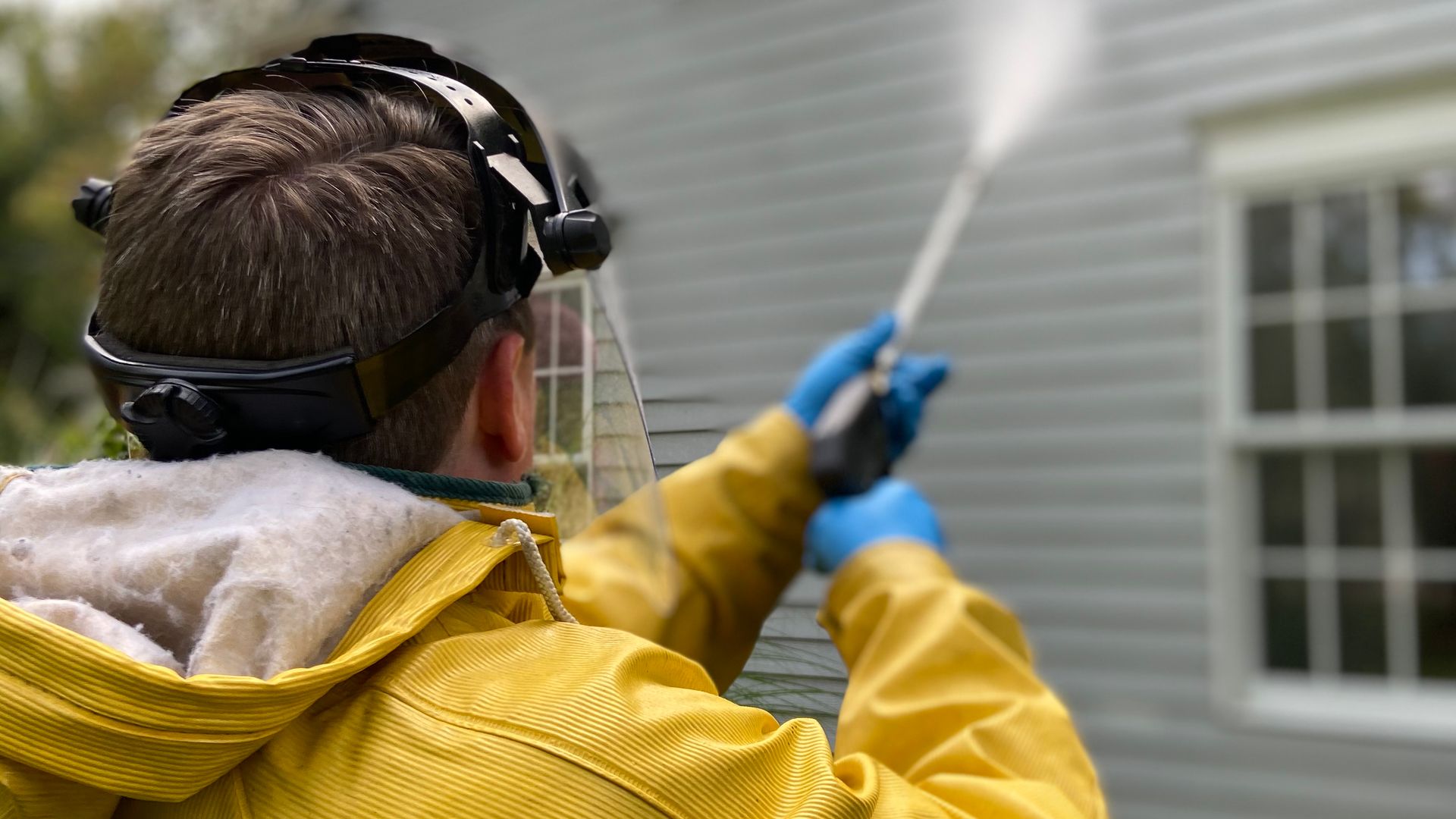
The right way to clean your house exterior depends on what’s on your walls. Exterior house cleaning, what most homeowners call house washing, means removing dirt, algae, mildew, and stains from the outer walls using a method matched to the siding material. Vinyl siding wants a garden hose and a soft brush. Brick tolerates a careful pressure washer. Stucco wants almost no pressure at all. Get the method wrong and you can force water behind the siding, strip paint, or void a manufacturer’s warranty. This guide goes surface by surface: the right method, the right cleaner, and the mistakes that cause real damage.
Soft Wash vs. Pressure Wash: The Distinction That Matters
Pressure washing, which most people just call power washing, cleans with force. Soft washing cleans with chemistry: low-pressure water plus cleaning solutions that kill algae and loosen dirt, followed by a gentle rinse. The industry keeps moving toward soft washing for siding because it treats the growth itself instead of just blasting the visible layer off, which is why the green comes back so fast after a pure pressure wash. We’ll compare the two methods head to head in our soft washing vs. pressure washing guide.
Five Checks Before You Touch a Sprayer
A method that works on one wall can damage another, so run through these first:
- Identify the exact siding and finish. Vinyl, fiber cement, painted wood, engineered wood, stucco, brick, and aluminum all have different rules, and the finish (factory color vs. field-painted) can change them again. Check project records or warranty documents if you have them.
- Inspect the wall from the ground. Loose panels, cracked boards, peeling paint, open joints, failed caulk, soft trim. Those are repair questions first. Washing is not the repair.
- Map the water-entry paths. Windows, doors, vents, light fixtures, outlets, hose bibs, and the underside of every siding lap. Cleaning water must stay out of the wall assembly.
- Test a hidden spot. Run your full method on an inconspicuous section, rinse it, let it dry, and compare color and sheen with the surrounding wall before you commit.
- Protect plants, pets, and nearby materials. Read every cleaner label. Cover or pre-wet landscaping, and keep chemicals off painted metal, masonry, and fixtures.
Vinyl Siding
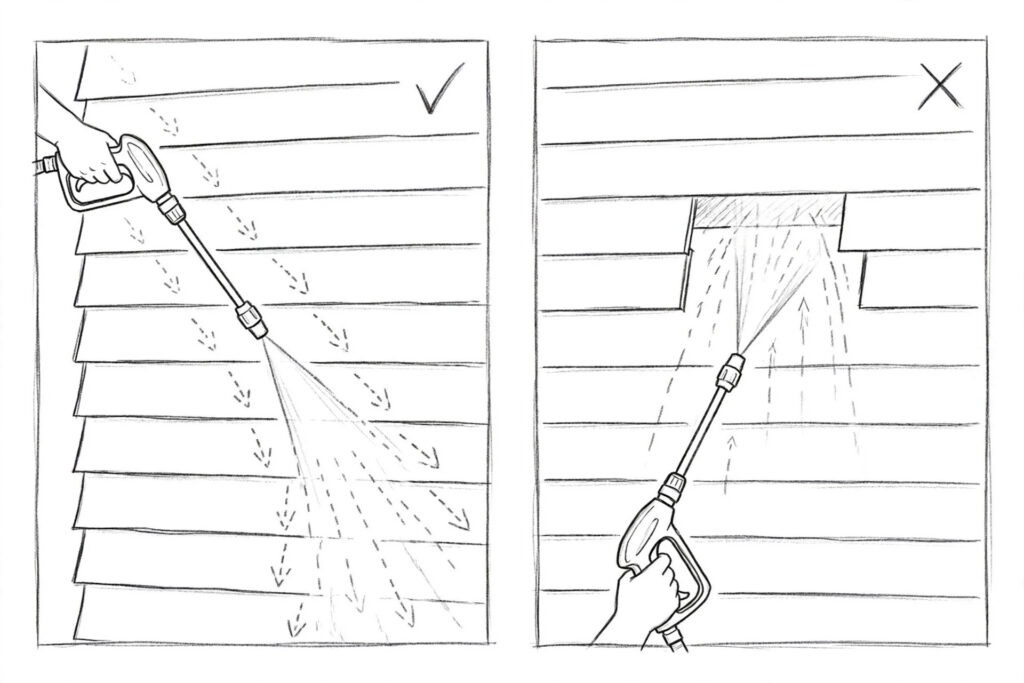
Vinyl is the most forgiving siding to wash, which is probably why it’s also the most commonly damaged by overconfidence. The Polymeric Exterior Products Association recommends mild soap and water applied with a soft cloth or an ordinary long-handled, soft-bristle brush, followed by a garden-hose rinse. That is the whole method for routine dirt. The association also warns that manufacturers differ on power washing, and some don’t recommend it at all. CertainTeed’s homeowner guidance, for example, advises against power washing its vinyl and polymer siding because pressure can drive moisture behind the panels and discolor the finish.
If soap and water don’t cut it, Owens Corning’s vinyl siding care instructions give a classic recipe: one-third cup powdered detergent, two-thirds cup powdered household cleaner, and a gallon of water. In areas where mildew is a problem, they suggest swapping one quart of water for one quart of 5% sodium hypochlorite, ordinary household bleach.
Technique matters as much as chemistry. Keep the spray pointed downward or straight at the face of the siding. Never aim it upward under the laps, at corner posts, through vents, or into window and door assemblies. Vinyl siding is designed to shed water running down, not resist water driven up. Test every cleaner in a hidden area and let the test dry before you expand the work.
For the full vinyl routine, our guide on how to clean vinyl siding walks through the manufacturer-approved recipes, the honest pressure-washer answer, and the cleaners to keep away from the finish.
Brick
Brick looks indestructible, which makes people reach for the strongest setting on the washer. Brick manufacturers say to start at the opposite end. Meridian Brick’s masonry cleaning guide, which follows the Brick Industry Association’s Technical Note 20, says to select the gentlest cleaning method that will effectively clean the brickwork, beginning with the bucket-and-brush method, and to test any method on a small area first.
When pressurized water is appropriate, the guide keeps it modest: 100 to 400 psi, a 25 to 60 degree fan nozzle, held no closer than two feet. Chemical cleaners need the wall saturated with water first so the brick doesn’t drink the cleaner deep into its pores, and the cleaner must never be allowed to dry on the wall. Rinse top to bottom with plenty of low-pressure water.
Two things the guide is blunt about: never use unbuffered muriatic acid, and don’t use high pressure on bricks with sand, slurry, or other surface coatings, because it will wreck the coating. Colored mortars get their own warning. Acids and some proprietary cleaners can bleach them, so a mild detergent solution is the safe play there.
Stucco
Stucco is the surface where a pressure washer does the most damage the fastest. The Stucco Manufacturers Association’s maintenance guide doesn’t include a pressure washer at all. Its method is a garden hose: pre-wet the wall from the bottom up, then direct a pressure stream of water against the wall from the top down to carry the dirt off. Caked-on dirt may need a brush. Mild, water-soluble cleaners handle stains, as long as they won’t attack portland cement, lime, or the oxide pigments that color the finish. Finish with a full rinse, and keep shrubs and plants shielded from any chemicals.
The association also names the best long-term stucco cleaning strategy, and it isn’t washing. It’s gutters and downspouts. Properly routed roof drainage is the best way to prevent the staining and efflorescence that make stucco look dirty in the first place. If your stucco streaks below the roofline every rainy season, the fix is in the drainage, not the detergent. Also worth knowing: keep sprinklers aimed away from stucco walls. Constant wetting is what grows the mildew you’re trying to wash off.
Wood Siding
Real wood siding and engineered wood siding share a name but not a cleaning routine, so check which one you have.
For engineered wood like LP SmartSide, the manufacturer’s line is clear: wash every six to twelve months with a garden hose, a cloth, sponge, or soft brush, and mild detergent for stubborn spots. Do not use a pressure washer. The reason given is moisture intrusion, discoloration, and paint damage. For mold or mildew, a three-to-one mix of water and white vinegar is the recommended treatment.
Solid wood siding deserves similar respect. Wash with the grain using a soft brush, keep pressure low, and remember that wood fibers fuzz up under aggressive spray. That fuzzing isn’t just cosmetic. It opens the surface to faster weathering.
Fiber Cement
Fiber cement, with James Hardie the big name, cleans easily but punishes shortcuts. James Hardie’s Technical Bulletin 20 prescribes a soft cloth or soft brush and a garden hose, with mild liquid dishwashing soap for oil and grease, and a mildew-specific cleaner used exactly per its label for biological growth. Work small sections from the top down, wiping side to side on plank siding, and don’t let soap dry on the surface.
The bulletin is explicit about what not to do: high-pressure water blasting and sandblasting may damage the surface, and acid washing is not recommended. If you do use a pressure washer, keep it under 1500 psi with a wide fan tip held at least six feet from the wall. And note the warranty angle. Damage from improper cleaning may not be covered. When the manufacturer ties the warranty to your wash method, that’s worth listening to.
Aluminum Siding
Aluminum siding washes like vinyl: mild detergent, soft brush, garden hose, gentle pressure. Its weak point is the baked-enamel finish. Abrasive pads and harsh scrubbing can cut through it, and once the finish is gone the aluminum underneath chalks and stains.
Chalking deserves its own mention. That white powdery film on older aluminum, and sometimes vinyl, is oxidation, the finish slowly breaking down in the sun. Light chalking washes off. Heavy chalking that returns weeks after washing means the finish is spent. No cleaner fixes that. It’s a repainting decision, which we’ll cover in our guide to chalky siding.
Painted Surfaces
Painted wood, painted brick, painted stucco: the paint is the surface now, so wash the paint gently. Low pressure, mild detergent, soft brush. Never blast peeling or flaking paint to “clean” it. You’ll strip sound paint along with the loose stuff and send paint chips everywhere.
The serious version of this warning applies to houses built before 1978. Their paint may contain lead, and the EPA’s lead-safe guidance says to find out before you disturb it. Federal rules require contractors doing renovation work on pre-1978 homes to be lead-safe certified, and even DIYers are urged to test, contain dust, and clean up carefully. A pressure washer is a great way to turn old paint into a neighborhood-wide lead dust problem. If the house is old and the paint’s age is unknown, test first.
Surface-by-Surface Cheat Sheet
| Surface | Go-to method | Pressure rules | Cleaner | What ruins it |
|---|---|---|---|---|
| Vinyl siding | Soft brush + garden hose | Avoid pressure washing if you can; if you must, low pressure aimed downward | Mild soap and water; detergent mix for stains | Upward spray under laps; abrasive pads; strong solvents |
| Brick | Bucket and brush | 100 to 400 psi max, 25 to 60 degree fan nozzle, at least 2 feet back | Mild detergent; masonry cleaner per label | Unbuffered muriatic acid; high pressure on coated or soft brick |
| Stucco | Garden hose + soft brush | Skip the pressure washer | Mild water-soluble cleaner | High pressure (chips finish, forces water in); harsh chemicals |
| Wood siding | Soft brush + hose, with the grain | Hand wash preferred; lowest effective pressure | Mild detergent; 3-to-1 water-vinegar for mildew on engineered wood | High pressure (fuzzing, water intrusion); abrasive tools |
| Fiber cement | Soft cloth or brush + hose | Under 1500 psi, wide fan tip, at least 6 feet back, or skip it | Mild dish soap; mildew cleaner per label | High-pressure blast; acid wash; harsh chemicals (warranty risk) |
| Aluminum | Soft brush + hose | Low pressure | Mild detergent | Abrasive pads; scrubbing a chalked, failing finish |
| Painted surfaces | Soft wash | Low; never blast peeling paint | Mild detergent | Pressure stripping; disturbing pre-1978 lead paint |
Safety Rules Worth Taking Seriously
- Pressure washers injure people every year. The CDC’s pressure washer safety page warns that the spray can cause serious wounds that look minor at first, and that minor-looking wounds make people delay treatment, which raises the risk of infection. If a spray breaks skin, get medical attention promptly instead of waiting to see how it looks tomorrow. Never point the wand at yourself, other people, or pets, and keep children well away while you work.
- Electricity and water. Test the GFCI before you start, plug into a properly grounded outlet, and keep cords and connections out of standing water and runoff.
- Gas engines make carbon monoxide. Never run a gas pressure washer in an enclosed space, and keep it at least 20 feet from windows, doors, and vents.
- Ladders. Firm, level ground, a 4-to-1 angle, rails three feet above the edge, a spotter, and distance from power lines, per CPSC ladder-safety guidance. If the job needs a ladder on uneven ground or near service wires, that’s a pro job.
- Chemicals. Never mix bleach with other cleaners. The combination can release dangerous vapors. Wear eye protection and gloves. Pre-wet plants and cover delicate landscaping before any bleach solution goes on the wall, and rinse everything when you’re done.
- Lead paint. Covered above: pre-1978 means test first, and hire lead-safe certified contractors for anything that disturbs the paint.
When to Call a Pro Instead
Most single-story siding washing is reasonable DIY with a hose, a brush, and the safety rules above. Call a pro when the work is two stories up or needs ladder acrobatics, when the house was built before 1978 and paint will be disturbed, when the siding is damaged or the finish is failing, when you’ve never run a pressure washer on a house before, or when staining covers the whole house and keeps coming back. That last one usually means a drainage or moisture problem underneath, and no amount of washing fixes the source.
Frequently Asked Questions
Can I pressure wash vinyl siding?
You can, but most manufacturers say you shouldn’t. CertainTeed advises against it, and the industry association notes that makers differ. A garden hose, a soft brush, and mild soap clean vinyl just as well with none of the water-intrusion risk. If you do use a washer, keep pressure low and the spray pointed down.
What’s the difference between soft washing and pressure washing?
Pressure washing cleans with the force of the water. Soft washing uses low-pressure water plus cleaning solutions that kill algae and loosen dirt, then rinses gently. Soft washing takes longer per section but the results last longer, because it treats the growth instead of just removing the visible layer.
How do I get green algae off my siding?
Match the treatment to the surface first. Mild detergent and a soft brush handle most algae on vinyl and painted surfaces. On engineered wood, a three-to-one water-and-vinegar mix is the manufacturer-recommended approach. Don’t escalate to maximum pressure when a brush doesn’t work on the first pass; let the cleaner dwell, then try again. We’ll go deeper on algae specifically in our green algae cleaning guide.
Will bleach hurt my plants?
It can. Pre-wet all vegetation before you start, cover delicate plantings with plastic sheeting, and rinse everything thoroughly when you’re done. If the garden beds worry you, oxygen bleach is the milder alternative many cleaners reach for instead of chlorine bleach.
How often should I wash my house exterior?
When it looks dirty. Most homes do fine with a wash once a year, more often on shaded or north-facing walls where algae grows fast, and less often in dry climates. James Hardie ties its guidance to condition rather than a calendar, which is the right instinct for every surface: inspect, then clean as needed. If you need the full schedule by siding type, our guide on how often to wash your house exterior lays out yearly intervals by material, climate, and shade.
Should I clean my gutters before washing the house?
Yes, and it’s the step people skip. Overflowing gutters streak siding below the roofline, and washing the wall without fixing the overflow just resets the timer on the stain. Run through our gutter maintenance guide first, and if you see those dark vertical streaks, read up on why gutters overflow before you break out the hose.
How much does it cost to have a house washed?
It depends on the size of the house, the region, and how much growth has to be treated, so get two or three quotes and ask each company which method they plan to use, not just the price. On the DIY side, a gas pressure washer rents for about $75 to $100 a day, per Consumer Reports.
Should I wash my house before painting it?
Yes. Paint bonds best to a clean, dry surface, so a gentle wash is standard prep before any exterior repaint. Keep the wash gentle: the goal is a clean surface, not a stripped one. Then let the siding dry fully, usually a day or two of dry weather, before the first coat goes on.
Sources
- U.S. CDC, “Pressure Washer Safety.” Wound, electric shock, and carbon monoxide risks; GFCI, grounding, and cord safety.
- Owens Corning, “Care for Vinyl Siding.” Garden-hose method; detergent recipe; bleach substitution for mildew areas.
- James Hardie’s Technical Bulletin 20 prescribes a soft cloth or soft brush and a garden hose, with mild liquid dishwashing soap for oil and grease, and a mildew-specific cleaner used exactly per its label for biological growth.
- Stucco Manufacturers Association’s maintenance guide gives the garden-hose method, mild cleaners, plant protection, and names gutters and downspouts as the best stain prevention.
- Meridian Brick’s masonry cleaning guide, which follows the Brick Industry Association’s Technical Note 20: gentlest-method-first rule, 100 to 400 psi with fan nozzle at 2+ feet, no unbuffered muriatic acid.
- U.S. EPA, “Lead-Safe Renovations for DIYers.” Pre-1978 lead paint risk; contractor certification rule; DIY lead-safe practices.
- VIS Exterior, “Choosing Siding: James Hardie vs. LP SmartSide.” LP SmartSide care: 6 to 12 month washing, no pressure washer, 3-to-1 water-vinegar for mildew.
- Southern Home Improvement Center, “How to Clean Vinyl & Hardie Siding Safely.” PEPA and CertainTeed vinyl guidance; downward-spray rule; hidden-area testing; stain diagnosis.

10 Comments
Pingback: Soft Washing vs Pressure Washing: Surface Guide | Home Exterior Lab
Pingback: Why Does Vinyl Siding Look Chalky? Causes & Fixes | Home Exterior Lab
Pingback: Wood Deck Maintenance: Inspect, Clean & Protect | Home Exterior Lab
Pingback: Concrete Driveway Maintenance Guide: Clean, Seal & Repair
Pingback: Fall Exterior Home Maintenance Checklist: 35 Tasks Before Winter
Pingback: Black Spots on Vinyl Siding: Mold, Mildew or Artillery Fungus?
Pingback: Siding Oxidation vs. Dirt: How to Tell the Difference
Pingback: Questions to Ask a Pressure Washing Company: 9 Red Flags
Pingback: Soft Washing Cost Factors: 6 Things That Move Your Quote
Pingback: What Is Vinyl Siding? Types, Materials & Protection Guide