

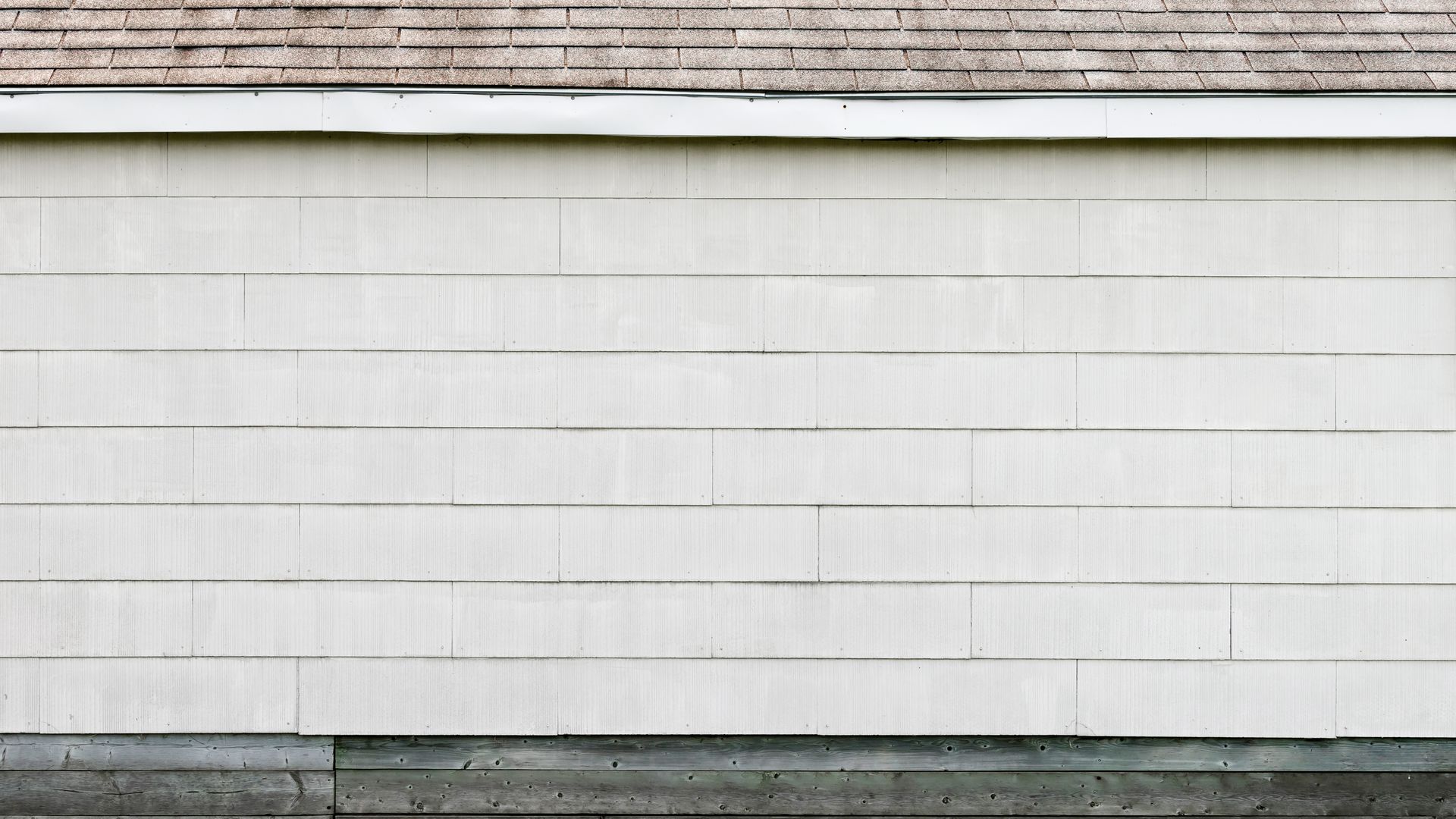
That chalky white film on your vinyl siding is oxidation, not dirt. Years of sun have broken down the very top layer of the vinyl, and the worn-out surface is powdering off on your hand. A normal house wash will not fix it, because there is nothing sitting on top to rinse away. What works is a separate restoration step: an oxidation-dissolving cleaner worked in by hand, panel by panel. And if the siding is brittle or blotchy underneath the chalk, it is telling you its service life is winding down.
I have watched homeowners pressure-wash a chalky wall “just to see,” and the result is always the same: clean stripes carved through the chalk that look worse than what they started with. Five minutes of diagnosis first saves you from that. This guide walks through the test, the lookalikes, and the honest fix ladder.
The 5-Second Test That Settles It
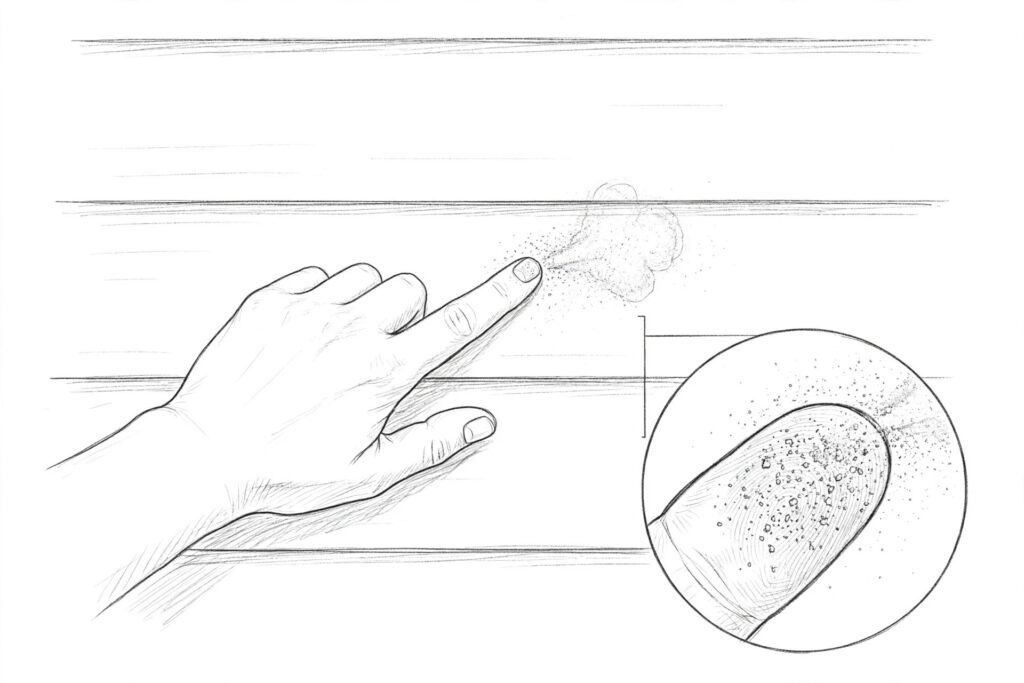
You do not need any tools for this. On a dry day, wipe a dry finger firmly across the siding, then look at your fingertip.
If it comes away with a fine powdery residue in roughly the same color as the wall, that is oxidation. A dark cloth works even better for the test, since the pale residue shows up clearly against it. Run the test on two or three walls, because oxidation is almost always worst where the sun works hardest, and comparing walls tells you a lot.
What the test is really telling you: the chalk is not something that landed on your siding. It is your siding, one worn-out layer of it. That single fact decides everything that follows, because you cannot rinse away a surface that is itself breaking down.
What You Are Actually Looking At
Vinyl siding gets its color and weather resistance from its outer layer. Ultraviolet light, year after year, breaks down the resin and pigment in that top skin. What is left behind is a fine, dull, powdery film of degraded material. The color looks washed out because the pigment in that layer is literally disintegrating.
A little perspective helps here. Some degree of surface weathering is normal, and coatings maker Sherwin-Williams describes chalking as the formation of fine white powder on a surface due to weathering, noting that a light amount is a normal way for an exterior surface to wear. It becomes a problem when the erosion goes heavy: the wall looks permanently dusty, the color is a pale ghost of the original, and your hand comes away white every time you touch it.
Quality siding is built to resist this longer. The Vinyl Siding Institute’s own product data shows titanium dioxide in the formulation, the white pigment that blocks UV, and VSI certifies products against ASTM D3679, which includes color-retention standards verified by independent third parties. Cheaper products with weaker UV packages chalk sooner. None of them chalk never. The sun always wins eventually.
Oxidation, Dirt, or Mold: How to Tell Them Apart
This is where most people go wrong, because three different problems can make a wall look dull and grayish from the driveway. Use this table with the finger test above.
| What you see | What it likely is | How to confirm | What fixes it |
|---|---|---|---|
| Even whitish film, same color as the siding, powder rubs off on your finger, worst on sunny walls | Oxidation | Finger test leaves colored powder | Oxidation remover + hand agitation (see the fix ladder below) |
| Green, brown, or black film, blotchy or streaky, worst on shaded north walls and near damp spots | Algae or mildew | Wipes off as a dark smear; often has a slight odor up close | A proper house wash kills and rinses it; our exterior house cleaning guide by surface covers the routine |
| Dark streaks running down from windows, gutters, or roof edges | Dirt and runoff streaking | Streaks follow drip lines; finger comes away gray, not powdery | Washing; the streaks are sitting on top, so they rinse off |
| Tiny black specks, like pepper, that will not budge with a fingernail | Artillery fungus spores | Specks are glued on and resist scrubbing | Neither washing nor oxidation treatment; needs targeted removal — see our guide to black spots on vinyl siding for the full identification and removal walkthrough. |
You can absolutely have more than one at once. In fact that is the usual case: algae growing on top of siding that has been quietly oxidizing underneath for years. Diagnose each layer separately, and treat the oxidation last, because washing first clears the organics and shows you the true state of the surface.
Why Your Siding and Not the Neighbor’s
Oxidation does not strike evenly. Four things decide how fast it shows up.
Sun exposure. The south- and west-facing walls take the beating in the northern hemisphere, and they chalk years ahead of the shaded sides. If one wall looks a decade older than the rest, check its compass direction before you assume anything is wrong with the product.
Age. The breakdown is cumulative. Siding in its first decade rarely chalks much; somewhere past the 15-to-20-year mark, most products start showing it on the sun sides. The Vinyl Siding Institute puts the useful life of the product at 50 years or more, so chalk at year 15 is a cosmetic chapter, not the end of the story.
Color depth. Deep colors show oxidation first and worst. Blues, greens, and reds fade to a pale ghost of themselves while the white trim beside them looks untouched. That is not a defect in the dark panels. There is simply more pigment in the top layer to break down, so there is more visible change when it does.
Product quality and heat. Products with stronger UV packages hold their color longer; VSI’s certification program exists specifically so you can check that a product meets the color-retention bar. And intense heat accelerates everything. One manufacturer excludes damage from heat sources like grills or reflected window glare above 160°F near the siding, which tells you how seriously heat ages the surface. If your grill lives two feet from a dark wall, that wall is on a faster clock.
The Honest Truth About Washing It
Here is the part worth being blunt about. A house wash removes what is sitting on top of the siding: pollen, algae, mildew, dust. Oxidation is not sitting on top of the siding. It is the siding. So no amount of washing, soft or otherwise, changes it.
Worse, washing can make an oxidized wall look worse at first. All the grime that was muting the fade is gone, and now the chalky panels are the only thing you see. That surprises a lot of people, and it is the reason you diagnose before you wash, not after.
And do not let anyone pressure-wash oxidized siding “to see if it helps.” The jet carves permanent clean streaks through the chalk, and after that the only fixes left are full oxidation removal or paint. Gentle chemistry and hand work are the way; pressure is the enemy here.
What Actually Fixes It: The Fix Ladder
Work cheapest first. Every step starts with a test panel in an inconspicuous spot, behind a downspout or at the back of the house, so you can see the true color underneath before you commit to a whole wall.
Step 1: Hand wash with an oxidation-removing cleaner. For light to moderate chalk, apply a cleaner made to dissolve oxidation, let it dwell so it can soften the film, then agitate by hand with a soft-bristle brush, panel by panel, and rinse thoroughly. The Vinyl Siding Institute’s own guidance says to use a soft long-handled brush and specifically warns that stiff bristles or abrasive cleaners can change the gloss and leave the wall looking splotchy. Work small sections, keep the surface wet while you work, and rinse before anything dries on.
Step 2: Repeat stubborn areas. Sherwin-Williams’ guidance on chalking is practical here: if chalk remains after the first washing, wash again, scrubbing may be necessary, and rinse well with clear water. Heavy oxidation on a dark south wall can take two or three passes. Let the cleaner dwell several minutes each time. One manufacturer suggests a mild detergent mix for general soil and a stronger trisodium-phosphate-based mix for stubborn industrial grime, always with a rinse before it dries.
Step 3: Know when to stop. If the test panel comes back blotchy, with the color uneven underneath the chalk, or if the surface feels brittle, stop. More chemistry will not even it out. That is the wall telling you restoration is not the answer, which brings us to the next section.
A note on recipes you will find online: vinegar-and-water mixes handle mildew fine but do little for true oxidation, which needs a cleaner formulated to dissolve the degraded layer. Whatever you use, spot-test first, protect nearby shrubs from runoff, and follow the cleaner’s label. If a wall needs a ladder to reach, treat it like any exterior job: stable footing, no overreaching, and no leaning the ladder against the siding itself.
When Chalk Means It Is Done
Oxidation is cosmetic until it is not. Here is how to read the signs.
Restore it when the chalk wipes away to reveal even, sound color underneath, the panels are still flexible and intact, and the fading is uniform across each wall. That is a surface at midlife with plenty of years left. The VSI’s 50-year useful life figure means a 15-year-old wall with surface chalk is barely into its second act.
Replace it when you see any of these: panels that crack or feel brittle when you press them, color that comes back blotchy and uneven no matter how carefully you work the test panel, or chalk that returns within a season or two of a careful restoration. Also pay attention to pattern. One manufacturer’s warranty draws the line exactly here: gradual, uniform color change from weather is normal, but fading that varies panel to panel in a checkerboard pattern counts as a defect worth a warranty call. Uniform chalk is aging. Checkerboard chalk is a claim.
There is one more honest limit. Restoration is not permanent. UV never stops working, so a restored wall will slowly chalk again over the years. What you are buying is the color back now, evenly, without painting or replacing, plus a clean slate that is easier to maintain.
Keeping It From Coming Back Fast
You cannot stop UV, but you can slow the clock.
Wash the siding gently once a year. The Vinyl Siding Institute’s standing advice is simple: water and household cleaners, a soft brush, done regularly. Annual washing removes the grime layer that holds moisture against the surface and lets you spot early chalking while it is still light.
Trim shrubs and vegetation back from the walls. Airflow keeps the surface dry, and dry surfaces grow less of the organic film that makes chalk look worse than it is.
And when replacement day eventually comes, buy certified. Look for VSI-certified products meeting the ASTM color-retention standard, and think about color: in brutal sun, lighter colors show their age far more gracefully than deep ones.
DIY or Call a Pro: Where the Line Is
Do it yourself when the chalk is light to moderate, the test panel restores evenly, and you can reach everything from the ground with a brush on an extension pole. This is slow, methodical hand work, not a workout. A single-story ranch wall on a Saturday is the classic DIY case.
Call a pro when it is the whole house, when the worst walls are two stories up, when the test panel comes back blotchy, or when you suspect the job needs the specialized restoration detergents and the day of panel-by-panel labor that goes with them. Also call one before you paint: paint needs a sound surface to grip, and painting over a chalk layer is painting over dust. A good exterior contractor will do the chalk test with you and tell you straight whether restoration or replacement is the honest call.
Frequently Asked Questions
Not by itself. Chalk is surface aging, and siding with decades of structural life left can chalk heavily on the sun sides. Replacement enters the picture when panels turn brittle, crack, or restore blotchy, or when the chalk comes back within a season or two.
Paint needs a sound surface to grip. Chalk is a failing, powdery layer, so paint goes on over dust and lets go with it. If you want a painted finish, the oxidation has to come off completely first, and the surface has to pass the finger test with no residue before a brush touches it. Once the surface passes the finger test, our guide on painting vinyl siding covers the prep, vinyl-safe paints and colour choices that keep the finish sound.
Not to fix the chalk. A pressure washer carves permanent clean streaks through the oxidized film and can force water behind the panels. Low-pressure rinsing as part of a hand-wash routine is fine. The jet-as-a-tool is not.
Early on, no. It is a cosmetic failure of the top layer. Left for many more years, continued UV breakdown can make the surface brittle, which is when cosmetic becomes structural. That transition takes years, not months, so there is no emergency here.
It is not permanent. UV keeps working, so the wall will slowly chalk again over the years. Think of restoration as buying back the original color evenly and getting a clean, easy-to-maintain starting point, not a one-time cure.
Sun exposure. The south- and west-facing walls get dramatically more UV than shaded sides, so they chalk years earlier. Compare walls before you judge the product. If the shaded walls look new and the sunny ones are chalky, that is weathering doing exactly what weathering does.
Usually, yes. When homeowners say their siding looks faded, oxidation is the usual cause: UV has broken down the top layer’s pigment and left the chalky film this guide covers. True manufacturing fade is rare and looks different: it varies panel to panel instead of following the sun. If your faded wall leaves powder on your finger, treat it as oxidation.
The Vinyl Siding Institute puts the product’s useful life at 50 years or more. Chalk at year 15 is a cosmetic chapter, not a death sentence. What ends a wall’s life is brittleness, cracking, or chalk that keeps returning soon after a careful restoration, not the chalk itself.
Sources
Everything below is something I actually read while researching this article.
- Vinyl Siding Institute, Installation Manual (2020). VSI certification to ASTM D3679 including color-retention standards with independent third-party verification; cleaning guidance (soft long-handled brush; avoid stiff bristles and abrasive cleaners, which can change gloss and cause splotchiness). VSI Installation Manual (2020) PDF
- Vinyl Siding Institute, Environmental Product Declaration: Insulated Vinyl Siding (2022). Cleaning with water and household cleaners; useful life of 50 years or more; titanium dioxide in the product formulation. VSI environmental product declaration for insulated vinyl siding (PDF)
- Mitten Inc., solid vinyl siding care and warranty document. Cleaning recipes (detergent + trisodium phosphate; mildew formula with sodium hypochlorite); uniform weathering as normal vs. panel-to-panel variation as defect; fade warranty in Hunter units per ASTM D2244; heat sources above 160°F excluded. Mitten vinyl siding care and warranty document (PDF)
- Sherwin-Williams, “Chalking (Powdering)” pro resources. Chalking defined as fine white powder from weathering that mimics fading; some degree normal; removal by washing or power washing with appropriate cleaner, repeat if needed, rinse well; best resistance from higher-quality coatings. Sherwin-Williams pro guide to chalking
- Nord (exterior cleaning, Ontario), “Faded, Chalky, or Turning Orange? That’s Oxidation.” Oxidation as the surface itself breaking down under UV; finger test (powdery residue the color of the wall); worst on south/west walls and deep colors; wash cannot fix it; restoration via oxidation-dissolving detergent with hand agitation; never pressure-wash oxidized siding (carves permanent streaks); restoration is not permanent. Nord oxidation-removal guide

8 Comments
Pingback: Exterior House Cleaning Guide by Surface | Home Exterior Lab
Pingback: Soft Washing vs Pressure Washing: Surface Guide | Home Exterior Lab
Pingback: Black Spots on Vinyl Siding: Mold, Mildew or Artillery Fungus? - Home Exterior Lab
Pingback: Siding Oxidation vs. Dirt: How to Tell the Difference
Pingback: How to Clean Green Algae from Vinyl Siding Without Damage
Pingback: What Is Vinyl Siding? Types, Materials & Protection Guide
Pingback: Can You Paint Vinyl Siding? What Works & What Fails
Pingback: How Long Does Vinyl Siding Last? Lifespan Explained