


House washing frequency is simply the interval between cleanings of your home’s exterior surfaces, and getting that interval right is what keeps dirt, algae, and pollutants from settling in long enough to stain or damage the siding. For most homes, the answer is once a year. That single yearly wash handles the slow buildup of dust, pollen, and organic growth before any of it gets a real foothold. But “once a year” is a starting point, not a law. Your siding material, how much shade and tree cover you have, and your local climate can all push that schedule shorter or stretch it longer, and this guide lays out exactly how to adjust it for your house.
On this page
- The Short Answer: Once a Year for Most Homes
- Washing Frequency by Siding Type
- What Speeds Up (or Slows Down) Your Schedule
- Wash Now or Wait? A Quick Decision Guide
- What Happens If You Skip a Year or Two
- Signs Your House Is Due for a Wash
- The Best Time of Year to Wash
- DIY or Hire a Pro?
- How Washing Fits Into Your Exterior Routine
- Frequently Asked Questions
The Short Answer: Once a Year for Most Homes
Most homes need their exterior washed once every 12 months. That yearly rhythm clears off the dust, pollen, and early organic growth that accumulate through the seasons, and it keeps any single type of buildup from sitting long enough to stain. Iowa State University Extension puts it plainly: it is a good idea to wash your siding every year, and keeping surfaces clean is what prolongs the life of the siding and keeps the house looking sharp.
Angi’s home maintenance guidance lands in the same place, recommending a yearly pressure washing project with occasional spot cleanings in between for surprises like storm debris or bird droppings. And The Old Farmer’s Almanac, in its vinyl siding maintenance guide, says a yearly rinse with a garden hose is the baseline that prevents grime from building up to the point where only scrubbing will remove it.
So if you remember one thing from this article, make it this: put one full exterior wash on the calendar every year, then adjust from there using the tables below.
Washing Frequency by Siding Type
Different siding materials collect dirt and growth at different speeds, and they tolerate washing differently too. James Hardie’s own maintenance bulletin says the extent of upkeep depends on your geographic location and the building’s exposure, and recommends cleaning as needed to remove dirt, dust, chalking, oil, grease, organic contaminants, and mold. Here is how that plays out by material.
| Siding type | Typical washing interval | Why this interval |
|---|---|---|
| Vinyl | Every 12 months | Shows dust and algae readily, especially in shade; yearly washing keeps buildup from setting in |
| Fiber cement (e.g. Hardie) | Every 12 months | Low maintenance overall, but airborne dirt and mildew still accumulate on the finish |
| Painted wood | Every 12 to 18 months | Paint film can host algae in damp spots; washing protects the coating between repaints |
| Stucco | Every 12 to 18 months | Textured surface traps dirt; in dry climates this can stretch toward 24 months |
| Brick and masonry | Every 24 to 36 months | Hard, dense surface sheds rain well; mortar joints are the part that collects grime |
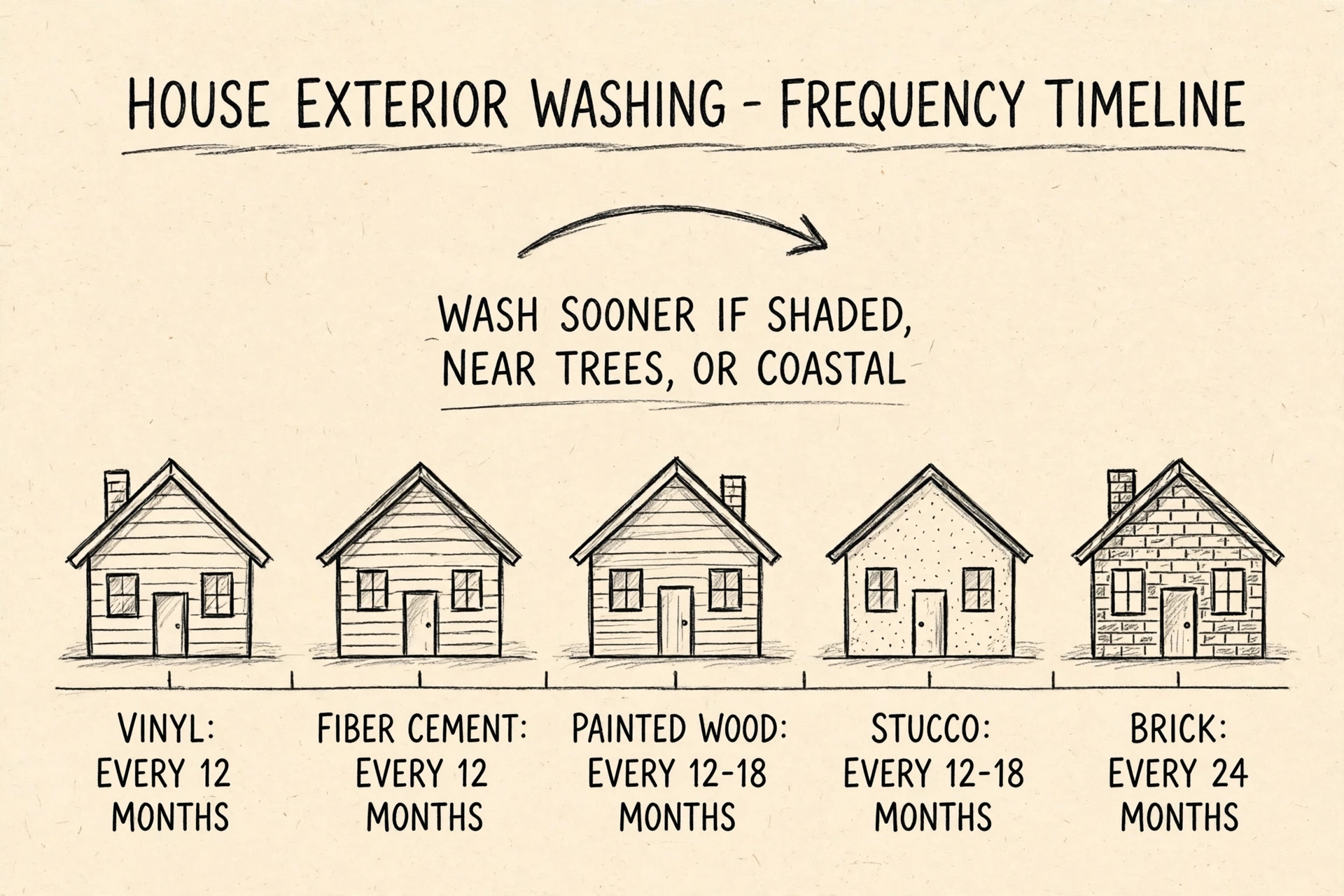
These are starting points. A brick house under heavy oak shade in a humid climate will not make it three years looking clean, and a vinyl house on an open sunny lot might honestly look fine at fourteen months. The factor table in the next section is how you fine-tune.
What Speeds Up (or Slows Down) Your Schedule
Your house is not an average house, so the table above is only half the answer. These are the conditions that genuinely change how fast an exterior gets dirty, and by roughly how much they move the needle.
| Factor | Effect on schedule | What’s happening |
|---|---|---|
| Heavy tree cover or shade | Wash more often (every 6 to 9 months on shaded walls) | Shade keeps walls damp, and damp walls grow algae and mildew fast. Iowa State Extension notes that mold thrives in damp, shaded areas with poor air circulation, and trimming back plants helps. |
| Humid or coastal climate | Wash more often (yearly at minimum, sometimes twice) | Constant moisture feeds organic growth year-round, and coastal homes add salt film to the mix. |
| High pollen seasons | Add a spring wash | Spring pollen coats everything in a sticky yellow film that traps dirt. One wash after pollen season ends resets the surface. |
| Nearby construction or dusty roads | Wash more often | Fine dust settles on siding continuously and bakes on in the sun. |
| Light-colored siding | Wash on the early side of your interval | White and pale siding shows every streak. Darker or mid-tone colors hide buildup longer, though the growth is still there. |
| Full sun, open lot, dry climate | Can stretch the interval | Sun dries walls quickly and discourages growth. These are the homes that can push toward the long end of the ranges above. |
| North-facing walls | Spot-wash between full washes | The north side gets the least sun and is almost always the first wall to go green. A quick rinse of just that wall buys time. |
Notice the pattern: moisture and shade are the two big accelerators. If your house has both, plan on the short end of every range. If it has neither, you can relax toward the long end.
Wash Now or Wait? A Quick Decision Guide
Not every dirty-looking wall needs a full wash this weekend. Use this to decide whether to schedule now or let it ride until your normal wash.
| What you see | Wash now | Can wait |
|---|---|---|
| Green or black streaks spreading on siding | Yes | No, growth spreads and gets harder to remove the longer it sits |
| Dull, dusty film over the whole house | Schedule within the month | It is cosmetic for now, but it is your early warning |
| Thick yellow pollen coating in spring | Yes, once pollen season ends | Washing mid-season just means washing twice |
| Slippery algae on walkways or steps | Yes | This is a safety issue, not just looks |
| Light dust after a dry spell | No | A rain or your next scheduled wash handles it |
| Chalky white residue that smears on your hand | No wash will fix this | That is oxidation, a breakdown of the siding surface itself, not dirt. It needs a different approach than washing. |
| Cobwebs and dirt only under the eaves | Spot-clean | Hit just the eaves with a hose and brush |
The oxidation row deserves a pause. Plenty of homeowners wash and rewash chalky siding and wonder why it never looks clean. If the white powder comes off on your fingers, the surface is breaking down, and no wash schedule fixes that. (We have a separate guide that helps you tell oxidation apart from plain dirt.)
What Happens If You Skip a Year or Two
Skipping a wash is not a disaster, but the buildup does not stay cosmetic forever. A film of dirt and organic matter holds moisture against the siding, and trapped moisture is what shortens the life of paint and encourages rot in wood trim. On vinyl and painted surfaces, algae left for multiple seasons can etch in stains that a later wash will not fully remove. On wood, the combination of grime and moisture speeds up paint failure, which turns a simple wash into a scrape-and-repaint job.
There is also a quieter cost: a dirty exterior hides problems. Cracks in caulking, failing paint, and early rot are much easier to spot on a clean wall. The yearly wash doubles as your annual exterior inspection, and catching a small failure early is almost always cheaper than repairing what it becomes. Think of the wash as the appointment that forces you to actually look at the house.
Signs Your House Is Due for a Wash
If you do not keep a calendar for this, your house will tell you. These are the signs contractors and extension services point to most often:
- Green or black streaks on the siding. This is algae or mildew colonizing the wall, and it almost always starts on the shaded north side or under tree cover.
- A dull, grayish film over everything. That is a full season of dust and pollutants. It sneaks up on you because it builds evenly.
- Dirt splatter along the bottom courses. Rain splashback throws soil onto the lowest rows of siding. It is normal, and it is also the first place grime gets stubborn.
- Cobwebs packed under the eaves and around fixtures. Spiders follow the insects, insects follow the grime. Heavy webbing means the surface has been undisturbed and dirty for a while.
- A musty smell near foundation plantings. Dense shrubs trap moisture against the wall, and that damp pocket grows mildew you can smell before you see.
- Gutters overflowing onto the siding. When gutters spill over, they paint dirty streaks down the wall with every rain. Fix the gutter problem first, then wash.
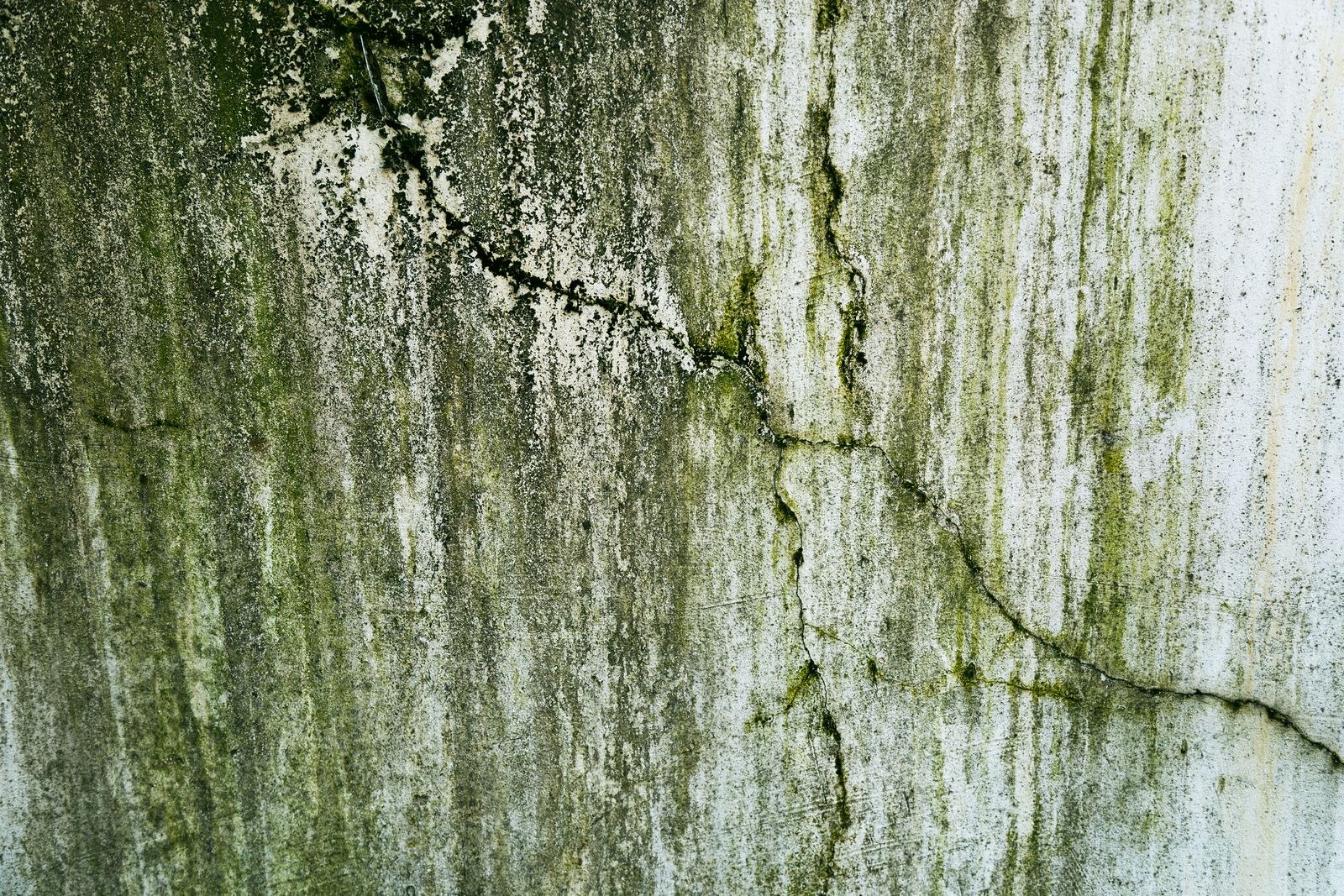
Two or more of these at once means you are overdue. One sign alone, caught early, usually means a spot wash of the affected wall will hold you until the full yearly wash.
The Best Time of Year to Wash
Spring is the best time of year to wash your house exterior for most homeowners, with early fall as the runner-up. A spring wash clears off winter grime and the worst of pollen season in one pass, temperatures are mild so cleaning solutions work properly and dry at a reasonable pace, and you get the whole warm season with a clean house.
Fall works well too, especially as a second wash for shaded or humid homes: it clears summer growth and leaf tannins before winter, so nothing sits under snow or cold rain for months. In the Deep South and other warm regions where growth never really stops, the calendar matters less than the interval: pick two dates about six months apart and hold them. In northern states with real winters, lean on the spring wash as your main one and treat fall as a lighter cleanup before the freeze.
What to avoid is washing in freezing weather, when water turns walkways into skating rinks and cold saps the effectiveness of cleaning solutions, and in the peak heat of summer afternoons, when solutions can dry on the wall before they finish working. Morning washes on mild, overcast days are the sweet spot whenever you schedule.
DIY or Hire a Pro?
For a single-story home with reachable walls, DIY washing is completely reasonable: a garden hose, a soft brush, and a mild detergent handle most yearly maintenance, and manufacturers like James Hardie describe exactly that gentle approach in their care guidance. Iowa State Extension’s recipe is similarly humble, a soft brush on a hose with a mild household cleaner, reserving stronger mixes for actual mold.
Call a pro when the job involves a second story, steep slopes, heavy established growth, or any work from a tall ladder. Pressure washers are powerful tools, and the injury and siding-damage risk climbs fast once you are reaching. On cost, expect quotes to vary widely by region, house size, and how dirty things are. Angi puts the typical professional range for pressure washing a house somewhere between $100 and $750, and the specifics of your quote will depend on the factors we break down in our guide to soft washing cost factors. If you are weighing which method a pro should even use on your siding, our comparison of soft washing vs. pressure washing walks through which surfaces need each.
How Washing Fits Into Your Exterior Routine
House washing does not live alone on the maintenance calendar. It pairs naturally with gutter cleaning, since overflowing gutters streak freshly washed siding and the two jobs share the ladder work. If you are building a full schedule, our guide on how often gutters should be cleaned slots right alongside this one.
For the bigger picture, our surface-by-surface exterior cleaning guide covers what each material needs beyond timing: which wash methods suit which siding, what to avoid, and how to spot trouble early. Timing tells you when. That guide tells you how.
Frequently asked questions
Once a year for most homes. That yearly wash removes the season’s accumulation of dust, pollen, and early organic growth before it stains. Shaded homes, humid climates, and houses under heavy tree cover may need washing every 6 to 9 months on the affected walls, while sunny, open homes can sometimes stretch toward 18 months.
Washing more than needed is mostly a waste of water and money, but aggressive washing carries real risk. High-pressure water can force moisture behind siding, strip paint, and etch soft materials, which is why manufacturers like James Hardie warn against harsh pressure and recommend gentle methods. Stick to the schedule in this guide and spot-clean between washes instead of redoing the whole house.
You can in mild climates, but it is rarely pleasant or effective. Cold water and cold air slow down cleaning, solutions do not work as well, and runoff can freeze on walkways and steps. If winter is your only window, pick the warmest afternoon available and keep the job to reachable areas. Spring and fall remain the better choices.
Regular washing removes the spores, pollen, and grime that mold and algae feed on, so it genuinely slows regrowth. Iowa State Extension notes that keeping siding clean and removing mold when it starts is what prolongs the siding’s life. Washing will not fix the underlying causes, though: shade, poor airflow, and plants touching the wall will keep inviting growth back until those change.
Plan on twice a year, or at least a yearly full wash plus a mid-season rinse of the shaded walls. Trees drop pollen, sap, leaves, and shade all at once, which is the exact combination algae loves. Trimming branches back from the wall helps more than any wash schedule, since sunlight and airflow are what keep growth from returning.
For light maintenance between full washes, yes. The Old Farmer’s Almanac recommends a yearly garden-hose rinse as the baseline for vinyl siding, and it is a fine way to knock dust and cobwebs off reachable walls. A hose rinse will not remove established algae or mildew, though. Once growth has taken hold, you need soap, dwell time, and a brush or a proper wash.
Sources
- James Hardie Technical Bulletin #20, cleaning and maintenance guidance: James Hardie siding cleaning and maintenance bulletin
- The Old Farmer’s Almanac on vinyl siding maintenance: how to maintain vinyl siding
- Angi on pressure washing vinyl siding: how to pressure wash vinyl siding
- Iowa State University Extension on removing mildew and mold from siding: AnswerLine guide to mildew on house siding

2 Comments
Pingback: Exterior House Cleaning Guide by Surface | Home Exterior Lab
Pingback: How to Clean Green Algae from Vinyl Siding Without Damage