

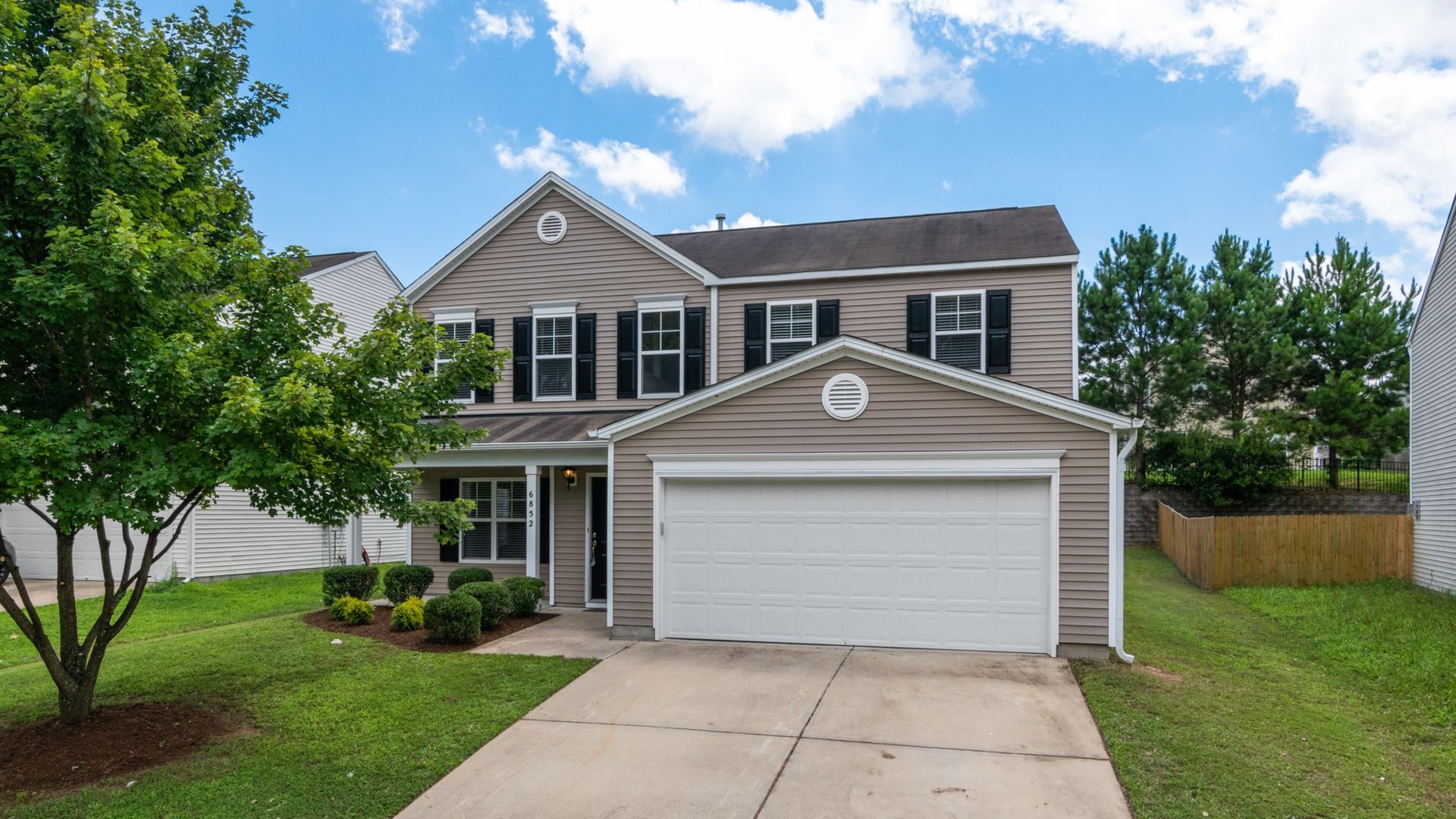
If you are shopping for exterior cladding or trying to figure out what is already on your house, this guide covers the whole picture: what vinyl siding actually is, what it is made of, the profile types you will see in stores, how it shields a house from weather, and where its limits are. Think of it as the starting point. The deeper dives (painting it, installing it, what it costs, how long it lasts) each get their own guide, and they are linked where they belong.
On this page
- What Is Vinyl Siding, Exactly?
- What Vinyl Siding Is Made Of
- How the Panels Actually Protect Your Home
- The Main Types of Vinyl Siding Profiles
- Insulated Vinyl Siding vs Standard Vinyl Siding
- How Long It Lasts and What Wears It Out
- The Honest Pros and Cons
- What It Costs
- DIY vs Hiring a Pro
- Keeping It Looking Good
- Frequently Asked Questions
- Sources
What Is Vinyl Siding, Exactly?
Vinyl siding is an exterior wall cladding made primarily from polyvinyl chloride (PVC) resin, formed into long panels that lock together in overlapping rows. It serves two jobs at once: it is the finished face of the house, and it is a rain-shedding skin that stands in front of the wall assembly and takes the beating from sun, wind, and water so the structure behind it does not have to.
One thing that trips up a lot of homeowners: vinyl siding is not a waterproof seal. It is a water-shedding system. Rain hits the panels and runs off, but the panels are deliberately hung loose so they can expand and contract with temperature. That means some water and air get behind them, which is expected. The real waterproofing happens one layer back, at the house wrap or building paper underneath. If you understand that the siding and the weather barrier are a team, most of the confusion about how vinyl works (and why it fails when installed wrong) disappears.
The material was first introduced to the exterior market in the late 1950s as a replacement for aluminum siding, and it became the most commonly installed exterior cladding for residential construction in the United States and Canada, as the history on Wikipedia’s vinyl siding entry explains. The first generation had problems with cracking and warping, but reformulations starting in the 1970s made it dramatically more durable, and it has held the top spot among new-home wall materials for decades.
What Vinyl Siding Is Made Of
About 80 percent of vinyl siding by weight is PVC resin, with the rest made up of ingredients that give it color, impact resistance, flexibility, and UV durability. Modern panels are usually co-extruded, meaning the panel is formed from two layers fused together: a tough outer capstock that faces the weather, and a structural substrate underneath. Installers who answer these questions daily, like the siding specialists at PJ Fitzpatrick, describe the capstock as the UV and fade shield and the substrate (often reinforced with limestone) as the backbone that keeps the panel rigid.
| Ingredient | What it does in the panel | Why it matters to you |
|---|---|---|
| PVC resin (~80% by weight) | The base plastic everything else is blended into | Gives the panel its body; resists rot, rust, and insects because it is not organic |
| Capstock (outer layer) | A UV-resistant skin fused onto the panel face | This is what keeps color from chalking and fading in the sun |
| Titanium dioxide and other stabilizers | Block UV breakdown and steady the plastic against heat | More stabilizer generally means longer color life, especially in strong sun |
| Impact modifiers | Keep the panel from getting brittle | Panels that crack on the first ladder bump usually skimped here |
| Limestone / fillers | Add stiffness to the substrate layer | Helps the panel lie flat and resist waving in heat |
| Color pigments | Baked through the material, not painted on | Scratches do not show a different color underneath |
How the Panels Actually Protect Your Home
Here is the part most guides gloss over, and it is the part that explains almost every siding failure you will ever see.
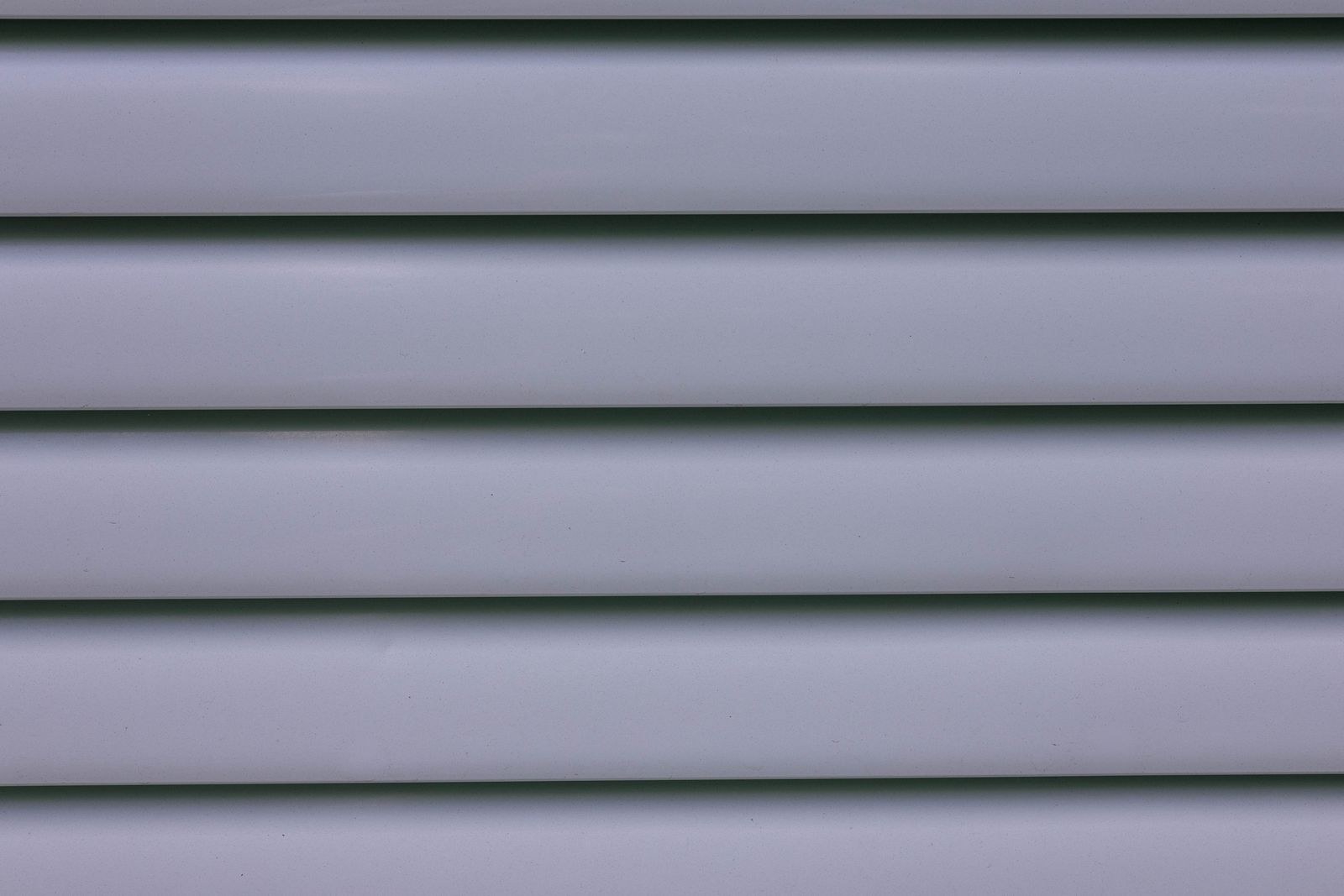
Each panel has a nailing hem at the top with slotted holes, and a shaped lock along the bottom edge. The bottom lock of the upper panel hooks over the top lock of the panel below it, creating a continuous shingled face. Rain lands on the panel and sheds downward, course over course, the same way shingles on a roof do. The lock keeps wind from getting under the panels and lifting them.
The slotted nail holes are there for a reason: vinyl moves with temperature, expanding in heat and contracting in cold. Panels are nailed with room to slide in the slots (fasteners centered in the slot, not driven tight) so the whole wall can breathe a little without buckling. When a contractor drives nails tight or face-nails through the panel, the siding cannot move, and you get ripples, oil-canning, or cracked courses. This is one of the most common installation mistakes in the trade, and it is worth knowing about even if you never pick up a nail gun, because it is the first thing to check on any quote: ask how they handle expansion, and a good crew will have a specific answer.
Behind the panels, a weather-resistive barrier (house wrap) and flashing around windows and doors do the actual job of keeping water out of the wall cavity. Vinyl siding leaks a little by design, as veteran installers put it, so the integrity of that layer behind it matters as much as the siding itself. Good flashing and intact wrap mean the occasional splash behind a panel dries out harmlessly. Skipping the wrap or botching the flashing means trouble that no siding panel can prevent.
The Main Types of Vinyl Siding Profiles
Walk any siding showroom and you will see a wall of samples that all look slightly different. They are all vinyl, but the shape of the panel (the profile) changes the shadow lines, the formality of the house, and the price. Here are the ones you will actually encounter.
| Profile | What it looks like | Typical exposure per panel | Best used for |
|---|---|---|---|
| Clapboard (horizontal lap) | Flat, overlapping horizontal boards; the classic American house look | 4 to 5 inches of visible face per course | The default choice; suits most home styles |
| Dutch lap | Like clapboard, but with a carved groove along the top of each course that throws a deeper shadow line | 4 to 5 inches | Traditional and colonial homes where you want extra definition |
| Board and batten (vertical) | Wide vertical boards with narrow raised strips (battens) covering the seams | 7-inch boards are common | Farmhouse, modern, and cottage styles; also used as an accent on gables |
| Shake and shingle | Short panels molded to look like cedar shakes or shingles | Staggered, hand-laid look | Accents, gables, and cottages; costs more per square foot than lap |
| Beaded | Clapboard with a rounded bead along the bottom edge of each course | 4 to 5 inches | A softer, slightly formal look on historic-style homes |
| Scallop / half-round | Rows of rounded shingle shapes | Decorative courses | Gable accents and Victorian-style details, not full walls |
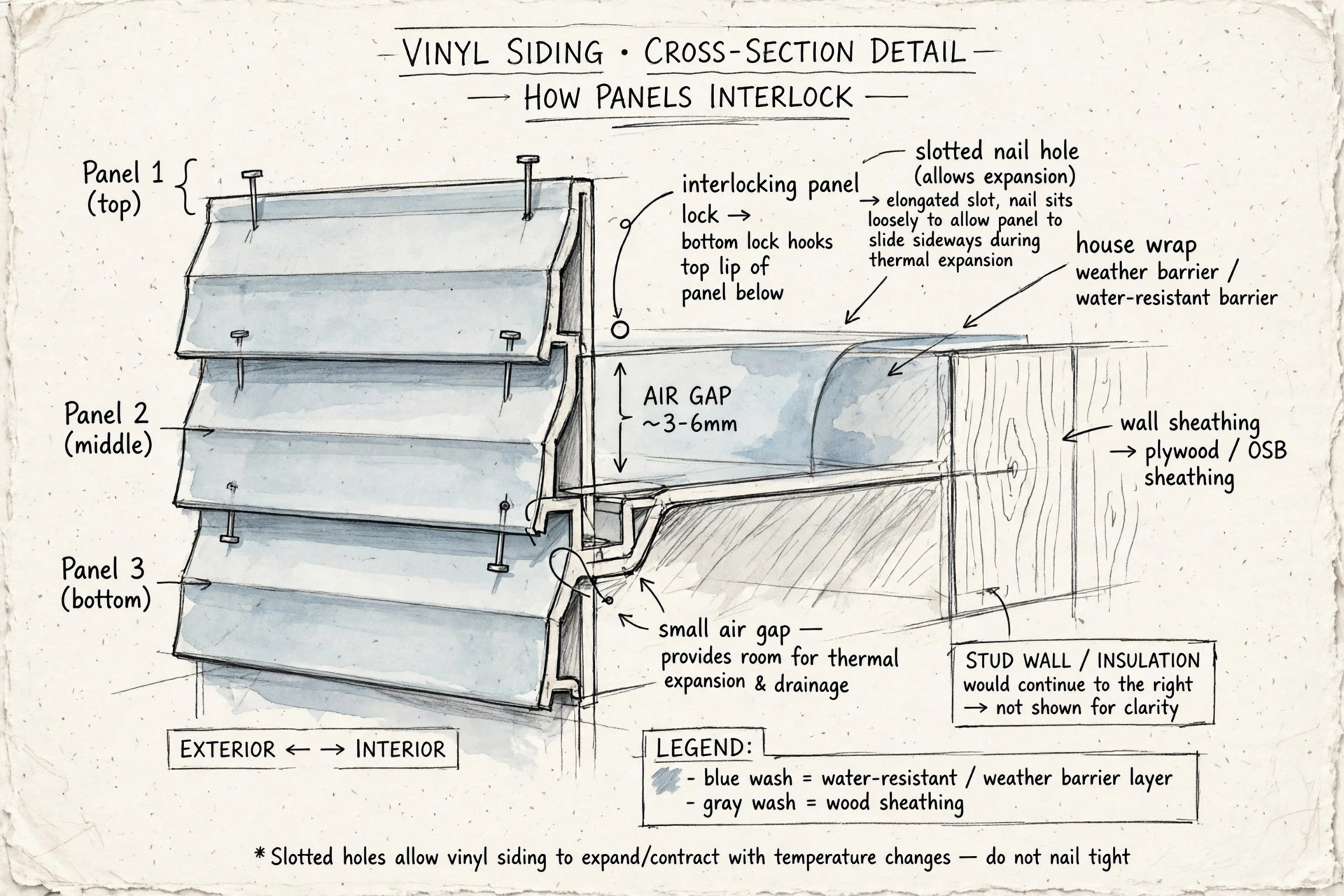
A few practical notes on choosing. Thicker panels (measured in thousandths of an inch; 0.040 to 0.055 is the common range, with premium lines going higher) generally resist denting and wind better than thin ones, and they lie flatter. Panels come in 10- to 12-foot lengths, so longer walls will have staggered seams; a good installer staggers them so they do not line up in an obvious pattern. And nearly every profile comes with matching trim, corner posts, J-channel, soffit, and fascia in the same color family, so the whole exterior reads as one system instead of a patchwork.
Insulated Vinyl Siding vs Standard Vinyl Siding
Insulated vinyl siding is a standard panel with a contoured layer of expanded polystyrene (EPS) foam laminated to its back. The foam fills the hollow behind the panel, which does three things: it adds a modest amount of insulation value to the wall, it stiffens the panel so it resists denting and lies flatter, and it can quiet some outside noise. As Engineer Fix notes in its vinyl siding overview, the foam backing also helps the panel hold its shape and adds impact resistance.
The honest framing: insulated siding is not a substitute for wall insulation. Its R-value contribution is small compared with what is (or should be) inside the wall cavity. Where it earns its keep is on older homes with thin or settled cavity insulation, where every bit helps, and on walls that take a lot of sun, because the stiffer panel resists the wavy look that heat can cause. It costs more per square foot than standard vinyl. If your walls are already well insulated and your priority is appearance on a budget, standard vinyl with a good installation does the job.
How Long It Lasts and What Wears It Out
With decent material and a competent installation, vinyl siding commonly lasts 30 to 40 years, and some premium lines carry lifetime warranties. That is the headline. The spread between a siding job that looks tired at year 15 and one that still looks sharp at year 35 comes down to a short list of factors: the quality grade of the panel (thicker, well-stabilized panels age better), the installation (tight nailing and poor flashing shorten life), the climate (intense sun and hail are the hardest on it), and basic cleaning (dirt and mildew left for years can stain permanently).
The full breakdown, climate by climate, lives in our guide on how long vinyl siding lasts. The short version is that vinyl fails gradually and visibly: fading and chalking first, then brittleness, then cracks. It rarely fails all at once, which means you usually get years of warning.
The Honest Pros and Cons
Every siding material has a tradeoff sheet. Here is vinyl’s, without the sales gloss.
| Pros | Cons |
|---|---|
| No painting, staining, or sealing, ever | Can fade and chalk with heavy sun exposure over time |
| Resists rot, insects, and moisture damage (it is plastic, not wood) | Hail, ladders, and flying debris can crack or puncture it |
| Lower installed cost than fiber cement, brick, or stucco | Dark colors can soften and warp in extreme heat (panels can distort around 165°F) |
| Huge range of colors and profiles | Lower-end panels can look flat or plasticky up close |
| Simple repairs: individual panels can be unlocked and replaced | Color matching old panels years later is difficult |
| Performs from day one with no curing or priming | Contributes little insulation on its own (standard panels) |
Two cons deserve extra honesty because competitors tend to whisper them. First, vinyl is a plastic product made from PVC, so if a petroleum-free or fully recyclable cladding matters to you, other materials fit better. Second, resale value: vinyl is the budget-friendly choice, and appraisers and buyers generally know it. It protects the house and looks clean, but it does not add the premium that brick or fiber cement can. None of that makes it a bad choice; it makes it an honest one.
What It Costs
Installed vinyl siding typically lands well below fiber cement, stucco, or brick for the same house, which is a big part of why it dominates new construction. The final number moves with the profile you pick (shakes cost more than lap), the panel thickness, whether you choose insulated backing, how much old siding has to come off, and your region’s labor rates. Our full cost guide breaks down installed prices by house size so you can sanity-check any quote before you sign.
DIY vs Hiring a Pro
Vinyl siding is one of the more DIY-friendly claddings: the panels are light, the tools are basic (a snap-lock punch, a zip tool, tin snips, a level), and mistakes are usually fixable because panels unlock. That said, a whole-house installation is a different animal from a weekend project. Getting courses level around the entire house, flashing windows and doors correctly, and handling the expansion detailing takes practice, and a bad DIY job shows from the street for decades. Most homeowners land in the middle: they hire a crew for the house and handle small repairs themselves. Our step-by-step installation guide walks through the full process if you want to see what the job actually involves before deciding.
Keeping It Looking Good
Vinyl’s reputation as “maintenance-free” is half true. It never needs paint, but it does need washing. Once a year, a garden hose and a soft brush with mild soap take off the pollen, dust, and mildew that dull the color. Skip the harsh chemicals and be careful with pressure washers: too much pressure or spraying upward can drive water behind the panels or damage the surface, as our exterior house cleaning guide by surface explains in detail.
A few things worth knowing as a vinyl siding owner, since they come up constantly:
- Chalky white film on the surface is usually oxidation, the sun breaking down the outer layer. It is cosmetic and washable up to a point. Our guide on why vinyl siding looks chalky walks through the test.
- Black or dark spots can be mold, mildew, or artillery fungus (tiny tar-like dots that will not wash off). The spot-by-spot diagnosis is in our black spots on vinyl siding guide.
- Green film, especially on the north side, is algae. It cleans off easily with the right method; see our guide to cleaning green algae from vinyl siding without damage.
- Not sure if it is dirt or oxidation? Run the quick oxidation vs dirt test before you pick a cleaning method, because the fixes are different.
Frequently asked questions
Yes. Vinyl siding is made from polyvinyl chloride (PVC), a rigid plastic, blended with additives for color, UV resistance, and impact strength. Calling it plastic is not an insult; it is the reason the material resists rot, insects, and moisture the way it does.
Not exactly. Vinyl siding sheds water off its face very well, but the panels are hung loose for thermal expansion, so some water gets behind them. The house wrap or building paper underneath is the true waterproof layer. Think of the siding as a raincoat and the wrap as the dry clothes underneath: both matter.
It can, mainly by improving curb appeal and removing the maintenance burden of old wood or failing siding. But vinyl is the most economical cladding choice, so it does not add the same premium as brick or fiber cement. Its value play is protection and low upkeep, not luxury signaling.
It can, with the right preparation and vinyl-safe paint, though manufacturers often warn that painting may affect the warranty, and dark colors risk heat warping. The full decision framework (when painting makes sense, when replacement is smarter) is in our guide on painting vinyl siding.
They are the same thing. PVC cladding is just the more technical name for vinyl siding. In the UK and New Zealand you will also hear it called uPVC weatherboarding.
Eventually, yes, though modern capstock layers and UV stabilizers have stretched that timeline considerably compared with the siding of the 1970s. South- and west-facing walls fade first. Regular washing slows the dull look, but once the color itself has faded, replacement of the affected courses is the real fix.
Residential panels typically run from 0.040 to 0.055 inches thick, with premium lines thicker. Thicker is generally better for dent resistance, wind performance, and a flat appearance, but thickness alone does not tell the whole story: UV stabilizers and installation quality matter at least as much.
Sources
- The Polymeric Exterior Products Association (formerly the Vinyl Siding Institute), the industry trade group for vinyl and polymeric exterior products
- Vinyl siding on Wikipedia, covering history, composition, and market position
- PJ Fitzpatrick’s siding experts on vinyl siding types, lifespan, and maintenance
- Engineer Fix on vinyl siding materials, durability, and insulated panels
- Extreme HowTo’s pro installation guide, including thermal expansion handling and the VSI cleaning recipe

5 Comments
Pingback: Why Does Vinyl Siding Look Chalky? Causes & Fixes | Home Exterior Lab
Pingback: Can You Paint Vinyl Siding? What Works & What Fails
Pingback: How to Install Vinyl Siding (Step-by-Step DIY Guide)
Pingback: How Long Does Vinyl Siding Last? Lifespan Explained
Pingback: Vinyl Siding Cost: Installed Prices by House Size (2026)