

Last updated: November 28, 2026
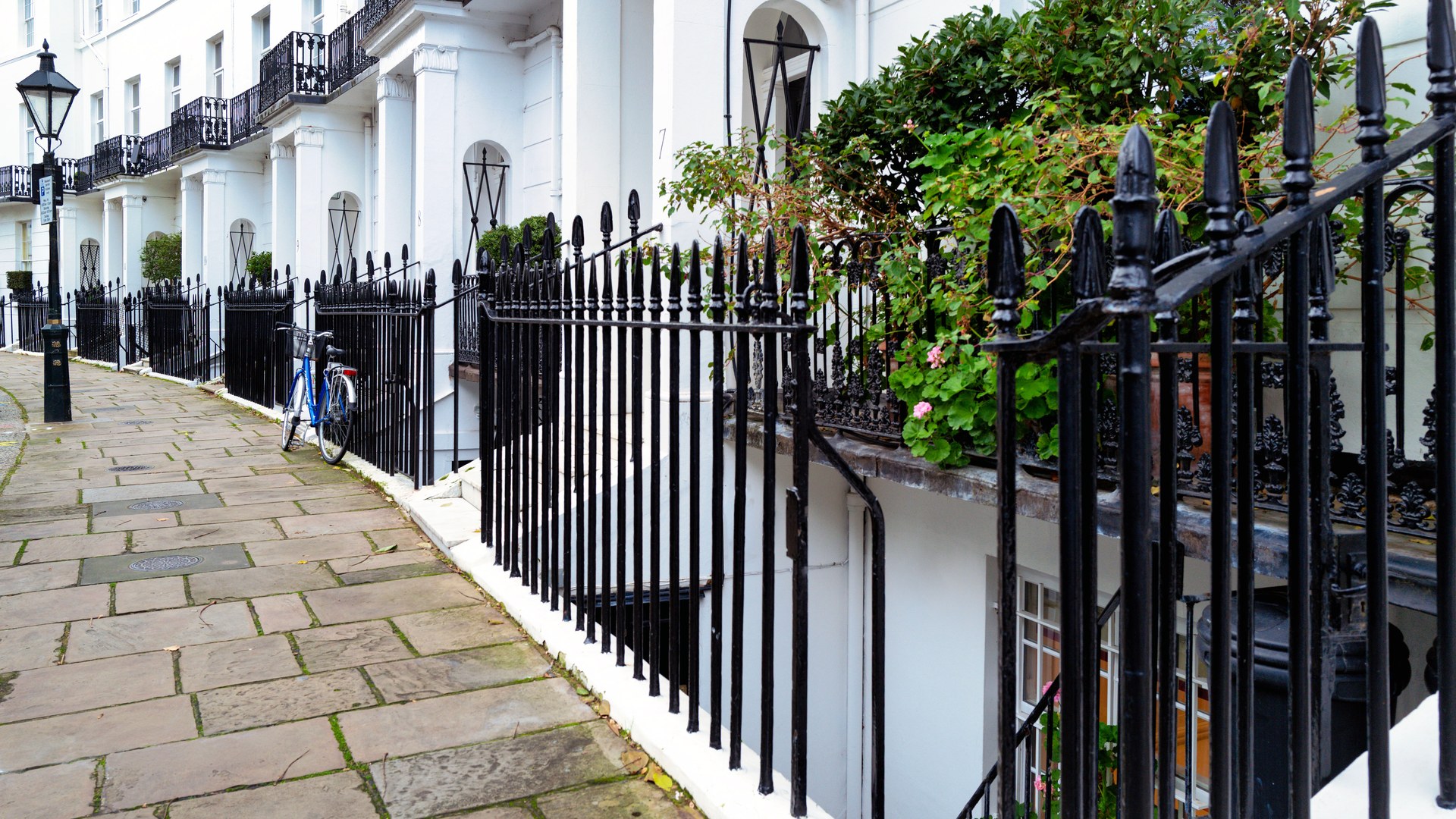
A wrought iron fence is a strong, open metal fence made by heating and shaping iron bars into pickets, rails, and decorative scrolls. Most fences sold under that name today are actually mild steel, not true forged iron, but the look and the strength carry the same idea: slim bars, classic lines, and a boundary you can see through. Expect to pay more than you would for wood or vinyl, and expect to repaint it every several years. In return, a well kept iron fence can outlast the house it guards.
Short answer: Choose wrought iron when you want security, curb appeal, and a fence that lasts decades. Choose something else when you want privacy, a low price, or zero maintenance.
Contents
- What Is a Wrought Iron Fence?
- Wrought Iron vs Steel, Aluminum, and Cast Iron
- Wrought Iron Fence Styles
- Pros and Cons of Wrought Iron Fences
- How Much Do Wrought Iron Fences Cost?
- How Wrought Iron Fences Are Installed
- How to Keep a Wrought Iron Fence From Rusting
- Repair or Replace: Deciding What a Damaged Fence Needs
- How Long Do Wrought Iron Fences Last?
- Wrought Iron vs Aluminum, Wood, and Vinyl
- DIY or Hire a Pro?
- Frequently Asked Questions
What Is a Wrought Iron Fence?
Wrought iron is a very low carbon iron alloy that a smith heats and hammers, twists, or bends into shape: that is what “wrought” means, worked. Gardenista explains that true wrought iron is no longer produced in large quantities, so the term now covers any iron, most often mild steel, shaped or made to look shaped.
A wrought iron fence is built from vertical pickets joined by horizontal rails, set into posts anchored in concrete, with gates to match.
True hand-forged iron still exists, but it comes from small smiths and costs a lot. What most fence companies install is welded mild steel, cut and shaped in a shop, then painted or powder coated. A contractor guide from Ornamental Designer Pro puts it plainly: in most bids, “wrought iron” means welded mild steel, typically A36 hot-rolled bar or tube. You just should not pay a hand-forged price for a welded steel panel.
Wrought Iron vs Steel, Aluminum, and Cast Iron
Wrought iron is the historic material, low carbon iron worked by hand. Steel is the modern stand-in, welded rather than forged, and what nearly every new “wrought iron” fence is made of. Cast iron is poured into a mold, which allows fancy shapes but leaves it brittle. Aluminum is light and rust-proof, shaped into panels that copy the iron look.
| Material | What it is | Strength | Rust risk | Repairability |
|---|---|---|---|---|
| True wrought iron | Low carbon iron, hand forged | Very high | Rusts if coating fails | Excellent |
| Mild steel (“wrought iron” today) | Welded steel bar or tube | Very high | Rusts wherever coating breaks | Excellent |
| Cast iron | Iron poured into molds | Strong but brittle | Rusts and flakes over time | Poor |
| Aluminum | Extruded aluminum, powder coated | Moderate | Does not rust | Fair |
If a quote says “wrought iron” and the price looks modest, you are almost certainly buying steel, and that is fine. If it says “ornamental iron” or “tubular steel,” it is the same family under a different label. Angi notes that many manufacturers advertise steel as wrought iron, so reading the fine print before you sign is worth the five minutes it takes.
Wrought Iron Fence Styles
Iron can be bent into almost any shape. Flat tops are the plainest, best for modern and ranch houses. Arched tops curve gently upward and suit cottages and traditional homes. Spear tops end each picket in a pointed finial, the classic look, and the points discourage climbing. Fleur-de-lis tops add a stylized lily finial for older homes. Ball tops cap each picket with a small sphere, a softer spear for homes with small children. Scrollwork weaves curved ornaments between the pickets, and these panels turn a fence into a feature.

Heights run from about 3 feet for a garden border to 6 feet for a security fence, with 4 feet the common front yard height. Check local rules first, since many towns cap front yard fences at 4 feet. Black is the default: it recedes, it matches everything, and touch-up paint is easy to find.
Iron also pairs well with masonry, and short iron panels work as garden edging: our guide to garden fences covers the lighter options that suit that job.
Pros and Cons of Wrought Iron Fences
On the plus side, iron is one of the strongest fence materials you can buy: hard to cut, hard to climb, and hard to knock down. It lasts for decades when the coating is kept up, and century-old iron fences still stand. It does not rot, warp, or attract termites, and it will not burn.
On the minus side, it costs more than wood, vinyl, or chain link, sometimes several times more, and installation is heavy, slow work that usually needs a crew. It gives no privacy at all unless you add screens or plantings. It rusts, and that is the real running cost: chips in the coating let moisture in, and once rust starts it spreads if you ignore it. It gets hot in direct sun, which matters if small children grab the rails. On a slope it is less forgiving than aluminum, since heavy steel panels often have to be stepped down the grade.
The honest summary: iron is the best fence for looks and security, and the worst for privacy and low upkeep.
How Much Do Wrought Iron Fences Cost?
Wrought iron fences cost more than most other fence types. Published ranges put standard installed iron fencing roughly between $25 and $65 per linear foot. Angi lists material at around $26 to $34 per foot, and FenceLevel, an independent research site, estimates $30 to $65 installed, and $50 to $100 or more for genuine forged iron. Treat these as planning estimates, not quotes.
Five cost drivers matter more than the per-foot figure: height, since a 6 foot fence uses more steel and deeper footings than a 4 foot one; custom work, since every scroll and finial adds shop time; gates, since a wide driveway gate needs heavier posts and hinges; ground conditions, since rocky soil or a steep slope adds labor; and the finish, since a factory powder coat over galvanizing costs more up front and is the money better spent.
Do not forget the running cost. A steel fence needs a repaint every 8 to 10 years, sooner near the coast, and FenceLevel estimates a full repaint at roughly $8 to $20 per linear foot each time. On a 200 foot fence, that is $1,600 to $4,000 per repaint, twice inside twenty years. That is the real price of steel, and it never appears on the installation quote. See our guide to what a fence costs for the full breakdown, and run your own numbers through our fence cost calculator.
How Wrought Iron Fences Are Installed
Installing an iron fence is heavy, precise work, and the posts carry the whole job: a panel that looks fine on day one will lean within a year if its posts were set shallow or out of plumb.
- Mark the line and call before you dig. Stake and string the fence line, mark gate openings, and have underground utilities located. In the US, call 811 a few days ahead: it is free.
- Check the rules. Confirm the property line, the local height limit, and any homeowners association rules.
- Dig the post holes. Holes usually go 24 to 36 inches deep, below the frost line in cold climates.
- Set the posts in concrete. Level each post on two sides, brace it, and pour concrete crowned so water runs away. Let it cure fully, usually a day or two, before hanging panels.
- Hang the panels. Panels attach with brackets and screws, or are welded to the posts on custom jobs.
- Hang and adjust the gates. Gates go on last, with heavy hinges and a latch that closes cleanly.
- Touch up the finish. Every cut end and scratch gets sealed with zinc-rich primer and topcoat. Bare steel at a cut is where rust starts first.
Most homeowners hire this out, and for a full perimeter that is the right call: the panels are heavy, the posts need to be exact, and a crew finishes in days what takes a solo DIYer weeks. A short, straight run of pre-made panels on flat ground is the exception, and the video after the intro shows how a bracket-mounted panel system goes together.
How to Keep a Wrought Iron Fence From Rusting
Rust is the one weakness that matters, and it is also the one you can control. It starts wherever the protective coating is broken: a chip from a mower or a scratch from a branch. Walk the fence once a year and look for orange spots and bare metal. Catching a chip early is a ten-minute touch-up.
Treat rust in order: skip a step and it comes back under the new paint.
- Clean the fence. Wash it with mild soap and water and let it dry fully. Big Easy Ironworks recommends starting with a clean surface, since paint will not stick to a dirty or greasy bar.
- Remove the loose rust. Use a wire brush or 80-grit sandpaper on small spots, and a wire wheel on a drill for larger areas. Wear gloves, goggles, and a mask while you work.
- Treat stubborn spots. A phosphoric acid rust converter turns remaining rust into a stable, paintable black surface. It works best on light surface rust, not deep corrosion, and it is a helper, not a shortcut.
- Prime with a zinc-rich primer. Zinc-rich primer is the key layer: the zinc corrodes first and protects the steel underneath, the same idea as galvanizing. Fence Connection, a Chicago-area fence company, recommends two thin coats, with joints sealed in paintable outdoor caulk before topcoating.
- Topcoat with a rust-inhibiting paint. Two thin coats of alkyd enamel or acrylic urethane beat one thick coat, which is more likely to crack. Urethane adds UV resistance, which matters on a south-facing fence.
- Keep water away. Aim sprinklers away from the fence, trim back vines and shrubs so air can move around the rails, and clear leaves and soil from the bottom rail. Vines look charming on iron, but they hold moisture against the metal and hide rust until it is advanced.
Expect a full repaint every 8 to 10 years in a mild climate, and every 5 to 7 years near the coast or where road salt is used. The best finish you can buy is a duplex system, hot-dip galvanizing under powder coating, which puts a zinc layer between the weather and the steel and a hard color layer over that. It needs a shop to apply, so it is a new-install decision, not a field repair.

What the rust on your fence is telling you
| What you see | What it usually means | What to do |
|---|---|---|
| Small orange spots on the paint | Surface rust at a chip or scratch | Sand the spot, prime with zinc-rich primer, touch up the topcoat |
| Paint bubbling or lifting in patches | Rust growing under the paint | Scrape to solid paint, sand to bare metal, prime and repaint |
| Orange streaks running down from joints or welds | Water sitting in a joint | Clean, treat, and seal the joint with caulk before repainting |
| Flaking metal or thinning pickets | Deep corrosion | Weld in a replacement section, or replace the panel |
| Rust at the base of posts, at ground level | Standing water or piled soil | Clear soil away, improve drainage, treat and recoat |
Repair or Replace: Deciding What a Damaged Fence Needs
An old iron fence usually deserves a second chance: steel can be cut, welded, and refinished section by section. The decision comes down to how much of the fence is sound and how much is gone.
| Condition | Best move | Why |
|---|---|---|
| Surface rust on a few pickets, posts solid | Repair: sand, prime, repaint | Cheap, fast, and the fence has decades left |
| One bent or broken panel, rest of the run fine | Repair: replace the panel | A single panel costs a fraction of a new fence |
| Gate sagging or dragging | Repair: new hinges or re-hang | Usually a hardware problem, not a fence problem |
| Rust at many post bases, posts wobbling | Replace posts, keep panels if sound | Loose posts mean the whole run will lean |
| Deep corrosion across most panels, pickets thinning | Replace the run | Repair costs approach replacement |
| Fence no longer meets pool code or local rules | Replace with a compliant design | No repair fixes a spacing or height violation |
Before you commit to a full replacement, get a restoration quote from an ironwork shop: on a historic or heavily ornamented fence, restoration is often cheaper than a new fence of the same quality.
How Long Do Wrought Iron Fences Last?
A wrought iron fence lasts 40 to 70 years with ordinary care, and genuine forged iron often past a century. FenceLevel gives the same range for steel sold as wrought iron, against 30 to 50 years for aluminum. The finish decides the number: a fence inspected yearly and repainted on schedule sits at the top of the range.
Climate sets the pace: dry inland yards are kind to iron, while coastal air, road salt, and daily sprinklers speed up corrosion and shorten the repaint cycle to 5 to 7 years. Iron rarely fails all at once: it thins slowly at the bottom rail and post bases, where water sits longest.
Wrought Iron vs Aluminum, Wood, and Vinyl
Cost and lifespan figures for iron and aluminum below come from FenceLevel’s 2026 planning estimates, linked above.
| Factor | Wrought iron (steel) | Aluminum | Wood | Vinyl |
|---|---|---|---|---|
| Installed cost per linear foot | About $30 to $65 | About $28 to $55 | Lower, varies by species | Mid-range, varies by style |
| Lifespan | 40 to 70 years | 30 to 50 years | 15 to 20 years | 20 to 30 years |
| Maintenance | Medium: repaint every 8 to 10 years | Very low: occasional wash | High: stain or seal often | Low: occasional wash |
| Security | Excellent | Good, but bends easier | Good, but can be cut through | Fair: panels can crack |
| Rust or rot | Rusts if coating fails | Does not rust | Rots and warps | No rust or rot |
The choice turns on one question: what do you need the fence to do? For security and looks, iron wins. For a pool barrier or a coastal yard where rust is a losing battle, aluminum wins, and our guide to aluminum fences walks through that material in detail. For privacy, neither metal fence helps, and wood or vinyl is the honest pick. For a short-term need, temporary fences are the cheaper answer.
If you are still choosing between metal types, our metal fences comparison weighs aluminum, steel, iron styles, chain link, and welded wire by job.
DIY or Hire a Pro?
A short run of pre-made iron panels is a realistic DIY project, and the Iron Fence Shop video linked after the intro shows why: bracket-mounted panels go up with a level, a drill, and self-tapping screws. That applies to flat ground, straight runs, and standard panels, not to a sloped yard, a custom gate, or a full perimeter.
Hire a pro for a driveway gate, a slope that needs stepping, masonry pillars, custom scrollwork, or more than about 50 feet of fence. A pro crew brings the tools that make the job straight, and they carry the risk: if a post settles or a gate sags, they come back and fix it.
DIY saves real money, often close to half the installed cost, since labor is a large share of an iron fence quote. But it costs time and it costs mistakes: a post set out of plumb cannot be nudged later, and a panel cut wrong cannot be uncut. My rule of thumb: if you have set fence posts before and you can rent an auger, a short straight run is a fair weekend project. If not, hire the posts and hang the panels yourself, or hire the whole job.
Either way, call 811 before you dig, and wear gloves, eye protection, and a mask when cutting, grinding, or sanding old paint, which may contain lead on a fence installed before 1978. If a test shows lead paint, stop and bring in a certified contractor.
Frequently Asked Questions
Usually not. Most fences sold as wrought iron today are welded mild steel, not hand-forged iron. True wrought iron is a low carbon iron alloy worked by a smith, and it is rarely produced commercially anymore.
Expect roughly $30 to $65 per linear foot installed, based on 2026 planning estimates from FenceLevel, with Angi listing material around $26 to $34 per foot. Custom work, gates, slopes, and rocky soil add to the bill.
Yes, if the protective coating fails. Rust starts wherever paint or powder coating is chipped or scratched, and it spreads if ignored. Regular inspection, quick touch-ups, and a full repaint every 8 to 10 years keep it under control.
About 40 to 70 years with ordinary care; genuine forged iron can last over a century. The finish decides the number: a fence inspected yearly and repainted on schedule lasts far longer than one painted once and forgotten.
Yes. Steel pickets are hard to cut, hard to climb when topped with spear finials, and hard to knock down. Pair it with a locking gate and good lighting, and it is a real deterrent.
A short, straight run of pre-made panels on flat ground is a realistic DIY job for two adults. Hire a pro for long runs, slopes, custom gates, or masonry work, since the posts need to be exact and the panels are heavy.
Sources
- Gardenista, Hardscaping 101: Wrought Iron Fences
- Angi, 8 Types of Metal Fences for Yards, Pools, and More
- FenceLevel, Aluminum vs Wrought Iron Fence: Cost, Rust and Strength
- Ornamental Designer Pro, Wrought Iron vs Aluminum Fences: A Contractor’s Guide
- Big Easy Ironworks, How to Prevent Rust on Outdoor Iron Installations
- Fence Connection, How to Prevent Wrought Iron Fence From Rusting in Chicagoland’s Climate
- Iron Fence Shop, Can I DIY Install an Iron or Aluminum Fence on My Own?, YouTube video
