

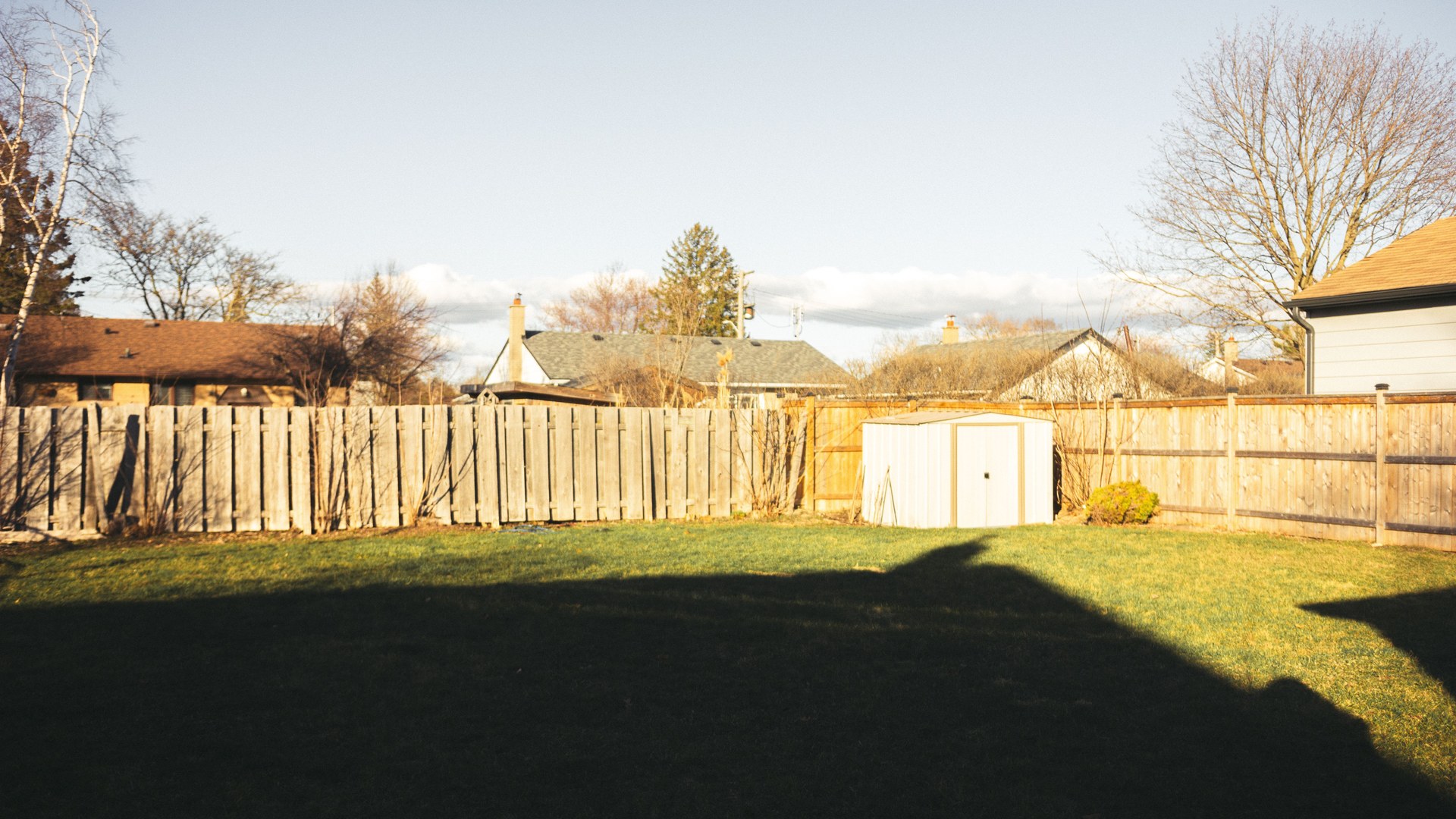
A privacy fence is one of the simplest upgrades a yard can get, and one of the hardest to price from a web search. Type the question into Google and you get three different answers before you finish your coffee. One guide says $10 a foot, another says $60, and both sound sure of themselves. They are not both wrong. They are measuring different fences.
This guide sorts that out: the per-foot price for each material, the totals by fence length, the cost of going from 6 feet to 8, and the extras that turn a tidy quote into a surprise. Every figure comes from a cost guide I actually opened, and where the guides disagree, I say so.
Last updated: November 16, 2026
The short answer: what a privacy fence costs in 2026
A 6-foot privacy fence costs $17 to $60 per linear foot installed, and most projects land between $1,800 and $8,000 all in. Angi puts the national average at $4,300. A typical 150-foot backyard run costs $3,150 to $9,000, with pressure-treated pine at the low end and composite or premium vinyl at the high end.
That range is wide because the price depends on four things more than anything else: the material, the height, the length of the run, and the board style. Change any one of them and the per-foot number moves, so the tables below let you price your own yard instead of trusting a single national average. For the all-in number for a fence project of any type, see our guide to what a whole fence project costs. This article stays on privacy fences only.
At a glance
- 6-foot privacy fence: $17 to $60 per linear foot installed.
- Most projects: $1,800 to $8,000 all in. Angi puts the national average at $4,300.
- A typical 150-foot backyard run: $3,150 to $9,000.
- Cheapest to dearest: pressure-treated pine at the low end, composite or premium vinyl at the high end.
Contents
- The short answer: what a privacy fence costs in 2026
- Why three cost guides give three different answers
- Privacy fence cost per foot by material
- Wood vs vinyl: which privacy fence costs less over 20 years
- How much does a privacy fence cost by length
- 6-foot vs 8-foot privacy fence cost
- Board style changes the price more than wood species does
- Labor vs materials: where the money goes
- The extra costs that catch people out
- How to read a privacy fence quote
- How to bring the price down without cutting corners
- Questions people ask
- Sources
Why three cost guides give three different answers
The big cost guides disagree because they are not pricing the same fence. Angi reports $10 to $50 per linear foot and a $4,300 average, HomeGuide reports $25 to $60 per foot at 6 feet, and FenceLevel reports $20 to $55. DecorPlume, the one guide that lines the figures up side by side, gives $17 to $60 per foot at 6 feet. Four honest sources, four different ranges, and the gap is easy to explain.
First, the base year moves. Some guides still carry figures gathered in early 2025, while Angi updated its numbers in September 2026, and lumber and labor prices shift enough in a year to move a per-foot range by several dollars. Second, the material mix differs: a range that bundles pine, cedar, vinyl and composite into one number will always be wider than a range for one material. Angi’s $10 to $50 span covers everything from basic pine stockade to premium vinyl, while HomeGuide’s $25 to $60 span is for a 6-foot fence in wood or vinyl only, which is why its floor sits higher.
Third, some totals include the extras and some do not. Gates, old fence removal, permits and grading can add $1,000 or more, so check whether they are in or out before you trust a number. Fourth, the length of the run changes the per-foot price, because setup, delivery and crew time spread across the whole job. One Florida contractor prices the same 6-foot board-on-board fence at about $26 a foot on a 150 to 250 foot job and about $53 a foot on a 25 to 50 foot run. A per-foot figure without a length attached is only half a price.
Use these ranges as a planning band, then get three local quotes for your exact fence, length and height. Only a local bid tells you what your fence costs.
Privacy fence cost per foot by material
Material is the first price decision, and it sets the band everything else sits inside. At 6 feet high, installed, pressure-treated pine is the cheapest way to get a solid privacy fence, vinyl sits in the middle, and composite costs the most. The table below pulls the per-foot ranges from the guides I opened, so you can see where they agree and where they part. For the full picture across every fence type, see our guide to fence costs by material.
| Material (6 ft, installed) | Per linear foot | 150 ft backyard | What you get for the money |
|---|---|---|---|
| Pressure-treated pine, stockade | $18 to $32 | $2,700 to $4,800 | Lowest price, needs staining every few years |
| Wood, all types | $25 to $50 | $3,750 to $7,500 | Most flexible on style, height and stain color |
| Cedar | $35 to $40 | $5,250 to $6,000 | Natural rot resistance, ages to silver-grey |
| Vinyl, white | $26 to $28 | $3,950 to $4,200 | No staining, hoses clean, bright finish |
| Vinyl, all types | $40 to $60 | $6,000 to $9,000 | Premium colors and woodgrain cost more |
| Composite | $55 to $85 | $8,250 to $12,750 | Highest upfront cost, very low upkeep |
| Bamboo | $20 to $30 | $3,000 to $4,500 | Warm look, shorter life in wet climates |
| Chain link with privacy slats | $14 to $48 | $2,100 to $7,200 | Cheapest if the chain link is already there |
The per-foot figures come from HomeGuide and FenceLevel, with the Florida contractor prices from All County Fence for the stockade and white vinyl rows. The 150-foot totals are simple multiplication, not quotes, and they leave gates and removal out.
Two things in that table surprise most people. White vinyl is no longer far above pine: in the Florida contractor’s recent estimates it ran $26 to $28 per foot against $24 to $26 for pine board-on-board. The big vinyl premium shows up in colors and woodgrain finishes, at $31 to $45 a foot. And cedar overlaps vinyl, at $35 to $40 a foot against mid-range vinyl, so that choice is about look and upkeep, not price.
Wood vs vinyl: which privacy fence costs less over 20 years
Wood wins on day one and vinyl wins on upkeep, and the honest answer is that neither wins in every yard. Angi’s averages for a 150-foot run put wood at $2,700, vinyl at $3,700 and composite at $4,200. That is a $1,000 gap between wood and vinyl at install. The question is whether the staining, sealing and repairs on the wood side eat that $1,000 over the years you own the fence.
Here is a worked example with the assumptions stated, so you can swap in your own numbers. Take a 150-foot, 6-foot pine privacy fence at $2,700 installed and the same run in white vinyl at $3,700, a $1,000 premium. HomeGuide puts staining or painting at $2 to $14 per linear foot, or $300 to $2,100 per round on 150 feet. Stain every four years at $4 a foot, about $600 a round, and the upkeep averages roughly $150 a year, plus a small repair reserve.
At $150 a year, the $1,000 vinyl premium takes about seven years to recover. At $250 a year it takes four, and at $100 a year, because you do all the staining yourself, it takes ten. The math is that sensitive to who holds the brush, which is exactly why Fence Report warns there is no defensible universal break-even year. Any seller who promises vinyl pays for itself in exactly eight years is selling one scenario, not a rule.
Three things tip the balance: how long you will stay, your climate, and the species. Selling in five years favors wood, because you pay the install price and only one round of staining. Staying twenty years favors vinyl, with every staining cycle you skip. Wet, humid yards rot pine posts faster, which also favors vinyl. And cedar costs about the same as mid-range vinyl, so the long-term case for vinyl over cedar is much weaker than over pine.
Vinyl is not maintenance-free, it is low maintenance: it still needs washing, and a cracked panel costs more to replace than a single pine picket. Our guide to fence cleaning covers the washing routine for both materials, and our guide to how long wood fences last gives the lifespan numbers by species.

How much does a privacy fence cost by length
Fence pricing rewards long runs: the crew, the delivery truck and the layout work cost roughly the same whether the fence is 50 feet or 200, so short runs carry a much higher per-foot price. To price your privacy fence for your own length, start with the per-foot figure for your material.
| Fence length (6 ft) | Typical total, installed | What that means per foot |
|---|---|---|
| 50 feet | $1,250 to $3,000 | $25 to $60 |
| 100 feet | $2,500 to $6,000 | $25 to $60 |
| 150 feet | $3,750 to $9,000 | $25 to $60 |
| 200 feet | $5,000 to $12,000 | $25 to $60 |
| 300 feet | $7,500 to $18,000 | $25 to $60 |
Those totals come from HomeGuide. Angi’s table runs lower, $1,000 to $5,000 for 100 feet and $2,000 to $10,000 for 200, because its per-foot band starts at $10 instead of $25. Use the overlap, roughly $2,500 to $5,000 for 100 feet and $5,000 to $10,000 for 200, as your planning band, and let local quotes pin it down.
6-foot vs 8-foot privacy fence cost
Before you price a taller fence, check whether you are allowed to build one. Most cities cap backyard fences at 6 feet, with 4 feet in front yards, and anything taller needs a permit and sometimes a variance. In Orlando the limit is 6 feet in side and rear yards, or 8 feet where the yard backs onto commercial property. Corner lots have their own rule, the sight triangle near the street often caps fences at 3 to 4 feet, and your HOA may set a lower limit than the city, so check both before you order materials.
Once the height is legal, the price jump is real: an 8-foot fence uses a third more board area than a 6-foot fence, and it usually needs deeper posts and more concrete. HomeGuide puts a 6-foot privacy fence at $25 to $60 per linear foot installed and an 8-foot fence at $50 to $85, and Angi’s averages for a 150-foot run tell the same story, about $4,700 at 6 feet against about $6,300 at 8 feet. If you are still deciding on the height itself, our guide to how tall privacy fences can be walks through the limits by yard, the sightline test, and when 8 feet is worth it.
| Height | Per linear foot, installed | 150 ft total | Notes |
|---|---|---|---|
| 4 feet (partial privacy) | $30 to $55 | $4,500 to $8,250 | Front yards, pool barriers, low sections |
| 6 feet (standard privacy) | $25 to $60 | $3,750 to $9,000 | Most common height, usually permit-free in back yards |
| 8 feet (full screen) | $50 to $85 | $7,500 to $12,750 | Needs a permit in most cities, deeper posts |
The 4-foot row looks odd, because it costs more per foot than some 6-foot fences. That is the short-run effect again: 4-foot fences are usually short front-yard sections, so the setup cost spreads across fewer feet. The per-foot figures come from HomeGuide, and the 150-foot totals are my multiplication of those bands.
Board style changes the price more than wood species does
Most cost guides quote “wood” as one number, which hides the real price lever: how the boards are arranged. Three styles cover nearly every wood privacy fence.
Stockade is the budget pick: boards sit side by side on one face of the rails, using the least lumber per foot, though thin gaps can open as the wood shrinks. Board-on-board alternates boards front and back so they overlap, leaving no straight-through gap even after the wood dries. Shadowbox alternates boards on either side of the rail with a gap between them, so it looks the same from both sides and lets air through, but you can see through it at an angle.
| Style | Wood, per linear foot | Privacy | Best for |
|---|---|---|---|
| Stockade | $20 to $45 | Full, until boards shrink | Lowest price, tight budgets |
| Board-on-board | $28 to $55 | Full, no gaps even as wood dries | Privacy that has to last |
| Shadowbox | About $26 | Full head-on, partial at an angle | Windy yards, fences both neighbors see |
| Horizontal boards | $47 to $60 | Full | Modern look, design-led projects |
The style figures come from FenceLevel and the Florida contractor’s own estimates at All County Fence, which price stockade at about $24 a foot and board-on-board and shadowbox at about $26 on a 150 to 250 foot run. Horizontal boards cost the most because they take more framing and labor than a vertical fence.
Species matters less than style. Upgrading pickets from pressure-treated pine to cedar added about $4 per foot on a recent Florida job, roughly $600 on a 150-foot run, which is smaller than the gap between stockade and board-on-board. If your budget is tight, pick stockade in pine and spend the savings on deeper posts and good concrete. If privacy is the whole point, board-on-board is worth paying for: it is the only wood style that stays gap-free as the boards dry.
Vinyl has its own version of the same choice. White vinyl is the cheapest vinyl option at $26 to $28 a foot, while tan runs about $31 and woodgrain $43 to $45. A lattice top adds a similar premium, about $46 a foot in tan vinyl, and it needs proper fastening in windy areas, because a lattice panel catches wind differently from a solid one.
Labor vs materials: where the money goes
On a typical privacy fence job, labor is about half the total. Angi reports labor at roughly 50 percent of project cost, around $50 an hour or $10 to $15 per linear foot, and HomeGuide puts it at $10 to $20 a foot. The split flips by material, which is worth knowing before you compare two quotes.
| 6-foot fence | Materials per foot | Labor per foot | Total per foot |
|---|---|---|---|
| Wood | $10 to $30 | $15 to $20 | $25 to $50 |
| Vinyl | $30 to $45 | $10 to $15 | $40 to $60 |
Wood is labor-heavy because each board is cut, placed and nailed on site, while vinyl is materials-heavy because the panels arrive ready made and go up faster. That is why a vinyl quote can look high on materials and still be fair. Judge a quote by its bottom line and by what it includes, not by any single line.
Doing it yourself saves real money but less than the headline suggests. Angi puts the average DIY privacy fence at $3,300, a saving of about $10 per linear foot. But a standard privacy fence takes 13 to 16 hours of build time per 100 feet for a crew, according to HomeGuide, and a first-timer working alone should expect at least double that. Add tool rental and the cost of fixing the posts that go in crooked, and the gap narrows further.
DIY makes sense when the run is short, the ground is flat and the soil is easy digging. Hire a pro when the run is long, the yard slopes, the soil is rocky, or the fence has to meet a wind code. A fence that leans after the first storm costs more to fix than the labor you saved.
Before you reach for the calculator, watch this short video from K and C Fence Company, where a working fence company walks through real per-foot prices for wood, vinyl and composite, and shows how gates and terrain push the total up.
The extra costs that catch people out
The fence run is only part of the bill. The extras below are the lines that surprise people, because most per-foot guides leave them out, so ask every bidder to price each one separately.
| Extra | Typical cost | Notes |
|---|---|---|
| Walk gate, wood | $200 to $700 | Manual wood gate averages about $400 |
| Double drive gate | $575 to $8,000 | Wide, automated and vinyl gates cost the most |
| Old fence removal | $3 to $5 per foot | Removal plus disposal runs $10 to $20 per foot |
| Permit | $20 to $150 | Some cities charge nothing for a 6-foot back-yard fence |
| Land survey | $200 to $1,200 | Needed when the property line is unclear |
| Grading or leveling | $500 to $3,000 | Sloped yards need stepped panels or regrading |
| Staining or painting wood | $2 to $14 per foot | $750 to $4,250 for a whole project |
| Tree or stump removal | $100 to $2,000 | Stump grinding alone runs about $320 |
| Repair instead of replace | $300 to $950 | Worth pricing before you commit to a full rebuild |
Those figures come from Angi and HomeGuide, with gate prices from All County Fence. The wide range on drive gates is real: a basic wood walk gate and an automated double vinyl gate are barely the same product.
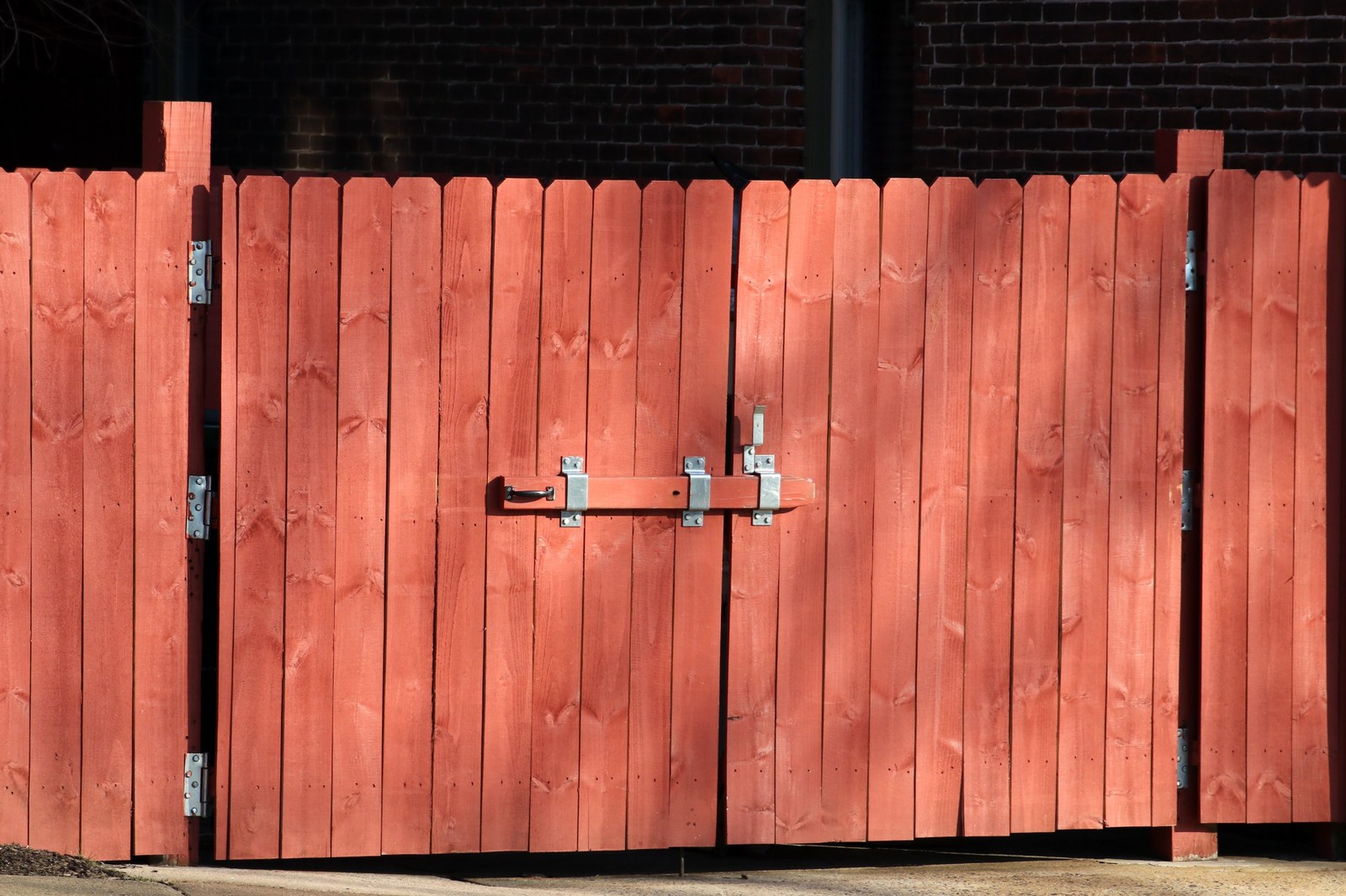
Gates deserve special attention, because two quotes with the same linear footage can differ by hundreds of dollars on gates alone. A walk gate needs heavier posts, hinges and a latch, and a double drive gate needs wider posts and a stronger frame. Ask for each gate priced as its own line, with the width and the hardware named. A quote that says “gates included” without a count is not a complete quote.
Two more costs hide in the ground. The first is the old fence: removal alone runs $3 to $5 a foot, but removal plus disposal runs $10 to $20, and the difference is the dump fee. The second is the property line: if you are not sure where your lot ends, a survey at $200 to $1,200 is cheap insurance against building on your neighbor’s land and moving the fence later. Call 811 before anyone digs, so the underground utilities get marked. It is free, and hitting a line is not.
Storm damage is the other cost people forget to plan for. A fence that blows down may or may not be covered, depending on your policy. Our guide to fences and home insurance walks through what policies usually cover and where the gaps sit.
How to read a privacy fence quote
A good quote reads like a parts list, not a single number. Every line should name what it covers, how much of it there is, and what it costs. If a quote gives you one total and a handshake, you cannot compare it with anything, and you cannot tell what is missing until the crew is digging.

Here is a worked example for a 150-foot, 6-foot pine board-on-board fence, using the figures from this guide. A quote near these numbers is sane; one far outside them needs a question, not a signature.
| Line item | Worked figure |
|---|---|
| Fence run, 150 ft board-on-board pine at $26 per foot | $3,900 |
| One wood walk gate | $400 |
| Old fence removal and disposal, 150 ft at $10 per foot | $1,500 |
| Permit | $60 |
| Staining, first coat at $4 per foot | $600 |
| All-in total | $6,460 |
Notice how the fence itself is barely more than half the total: removal, the gate and the stain add $2,500. That is normal, and it is why a per-foot price quoted on the phone tells you so little. The same fence in white vinyl would run about $4,050 for the run at $27 a foot, with no staining line, but a vinyl gate costs more than a wood one, so the totals end up closer than the per-foot gap suggests.
Run through this checklist before you sign anything. The quote should state the height, material, species and board style, because “wood fence, 150 feet” is not a specification. Post depth and concrete should be named in writing: one Florida contractor sets every post two feet deep in a full 50 lb bag of concrete mix. Every gate should be its own line, with width, material and hardware. Removal and disposal should be priced, or the quote should state plainly that the old fence stays. The permit, survey and warranty should be named, with who pays for each, and the quote should be dated, because lumber prices move.
Red flags are just as useful. A per-foot price with no height attached is not a price. A quote that bundles gates, removal and permits into one line hides the parts most likely to be cut. A price far below the band in this guide usually means thinner boards, shallower posts, or extras charged later. And a contractor who will not put the post depth in writing is telling you something about the posts.
How to bring the price down without cutting corners
The cheapest privacy fence is rarely the cheapest quote. The savings that hold up are the ones that change the scope, not the quality of the work. Start with the fence itself: stockade pine is the lowest-priced full privacy style, about $2 a foot less than board-on-board, which saves about $300 on 150 feet. The only cost is the chance of thin gaps opening as the boards dry.
Shorten the run before you shorten the fence. Fence only the sides that need privacy, usually the patio and the back, and leave the front open or step it down to a shorter section. A privacy screen around one spot, the pool equipment or the patio, can solve the problem for a fraction of a full fence. If chain link is already in place and in good shape, a mesh privacy screen runs about $4 to $6 a foot added and slats about $15, which beats a new fence by a wide margin.
Get three quotes for the same specification: same height, same style, same gates. Three quotes show you the real market in your town far better than any national guide can. Do the easy work yourself: clear brush along the fence line, remove the old fence if you have the tools and a way to haul it, and stain the new fence yourself. Leave the posts to the crew, because post depth and concrete are where a fence succeeds or fails, and they are the hardest part to fix later. And check the property line before the first post hole: a survey costs $200 to $1,200, which feels like a lot until you compare it with moving a finished fence.
Questions people ask
A 6-foot privacy fence costs $17 to $60 per linear foot installed, depending on the material. Pressure-treated pine runs $18 to $32 a foot for stockade, white vinyl runs $26 to $28, and composite runs $55 to $85. Short runs cost more per foot than long ones.
A 100-foot, 6-foot privacy fence costs $2,500 to $6,000 installed, before gates and removal, according to HomeGuide. Angi’s table runs lower, $1,000 to $5,000, because its per-foot band starts at $10. The overlap, roughly $2,500 to $5,000, is a sensible planning band.
A 150-foot, 6-foot privacy fence costs $3,150 to $9,000 installed, depending on the material. Angi puts the average 150-foot wood fence at $2,700, vinyl at $3,700 and composite at $4,200, before gates, removal and permits.
A 6-foot pressure-treated pine stockade fence is the cheapest full privacy fence, at about $18 to $32 per foot installed, or about $24 a foot in recent Florida contractor estimates. A mesh privacy screen on chain link you already own is cheaper still, about $4 to $6 a foot, but it does not block the view completely.
An 8-foot privacy fence costs $50 to $85 per linear foot installed, or about $6,300 for a 150-foot run against about $4,700 at 6 feet. Check your city and HOA height limits first, because most cities cap backyard fences at 6 feet and anything taller needs a permit.
Yes, by about $10 per linear foot on average, according to Angi, which puts the average DIY privacy fence at $3,300. The saving shrinks once you add tool rental and the extra time, and DIY makes most sense on short, flat runs in easy soil. Leave the posts to a pro on long runs and sloped yards.
A privacy fence can help a sale, especially for buyers with kids or dogs, but it rarely pays back its full cost at resale. Treat it as a purchase for your own use, not an investment. The value is the privacy and the use of the yard, which is hard to put a number on and easy to enjoy.
Sources
- Angi, How Much Does a Privacy Fence Cost to Install? [2026 Data], updated September 21, 2026, for the national average, per-foot range, material averages, labor share, gate and removal costs, and DIY figures.
- HomeGuide, How Much Does a Privacy Fence Cost? (2026), updated December 22, 2025, for the per-foot ranges by material and height, the length table, the labor and materials split, and the extra costs.
- FenceLevel, Privacy Fence Cost Per Foot and Cheapest Options (2026), reviewed October 2026, for the per-foot ranges by material and board style, the 8-foot uplift, and the walk gate price.
- DecorPlume, Privacy Fence Cost per Foot by Material and Height, for the reconciled $17 to $60 per-foot span and the side-by-side comparison of the other guides.
- Fence Report, Vinyl Fence Cost vs. Wood: Species, Scope and Upkeep, for the warning that there is no defensible universal break-even year and the checklist for comparing equivalent fences.
- All County Fence, 12 Privacy Fence Ideas for Central Florida (Real Prices), updated November 11, 2026, for the contractor’s own installed prices by style and finish, the short-run price effect, gate prices, and the Orlando height and permit rules.
- K and C Fence Company, How Much Does a Fence Cost in Nashville? on YouTube, for the video walkthrough of real per-foot prices by material.
