
Last updated: October 30, 2026
Roof cleaning is the careful removal of algae, moss, lichen, leaves, and grime from a roof surface using low-pressure water and cleaners made for roofing, so the roof sheds water properly and looks cared for again. It is maintenance, not a makeover. Done gently, it clears the growth that traps moisture. Done harshly, it can strip granules, crack tiles, and void a warranty, which is why the method matters more than the muscle.
Most roofs do not get dirty the way a driveway does. What you see from the ground is usually living growth, not dust, and each kind calls for a different response. This guide covers what those stains are, which methods suit which roof, how to stay safe, when to hire help, and what drives the cost.
Contents
- What Roof Cleaning Actually Means
- What Is Growing on Your Roof?
- Roof Cleaning Methods Compared
- How to Choose the Right Method for Your Roof
- A Safe DIY Roof Cleaning Sequence
- Roof Cleaning Safety: The Part That Matters Most
- How Often Should You Clean Your Roof?
- What Affects Roof Cleaning Cost?
- DIY or Hire a Pro?
- Hiring a Roof Cleaning Company: Red Flags and Good Signs
- Keeping the Roof Cleaner for Longer
- Frequently Asked Questions
- Sources
What Roof Cleaning Actually Means
Roof cleaning means removing biological growth and debris from a roof with gentle, roof-safe methods, rather than blasting the surface clean with high pressure. The goal is a roof that drains well, dries out between rains, and keeps its protective surface intact.
A clean roof is really a roof that can dry. Shingles, tiles, and metal panels shed water downward, not sit damp for days. When growth and debris hold water against the surface, the roof ages faster in that spot, and cleaning breaks that cycle. It also gives you a clear view of the roof, so cracked shingles and lifted flashing show up before they leak.
What Is Growing on Your Roof?
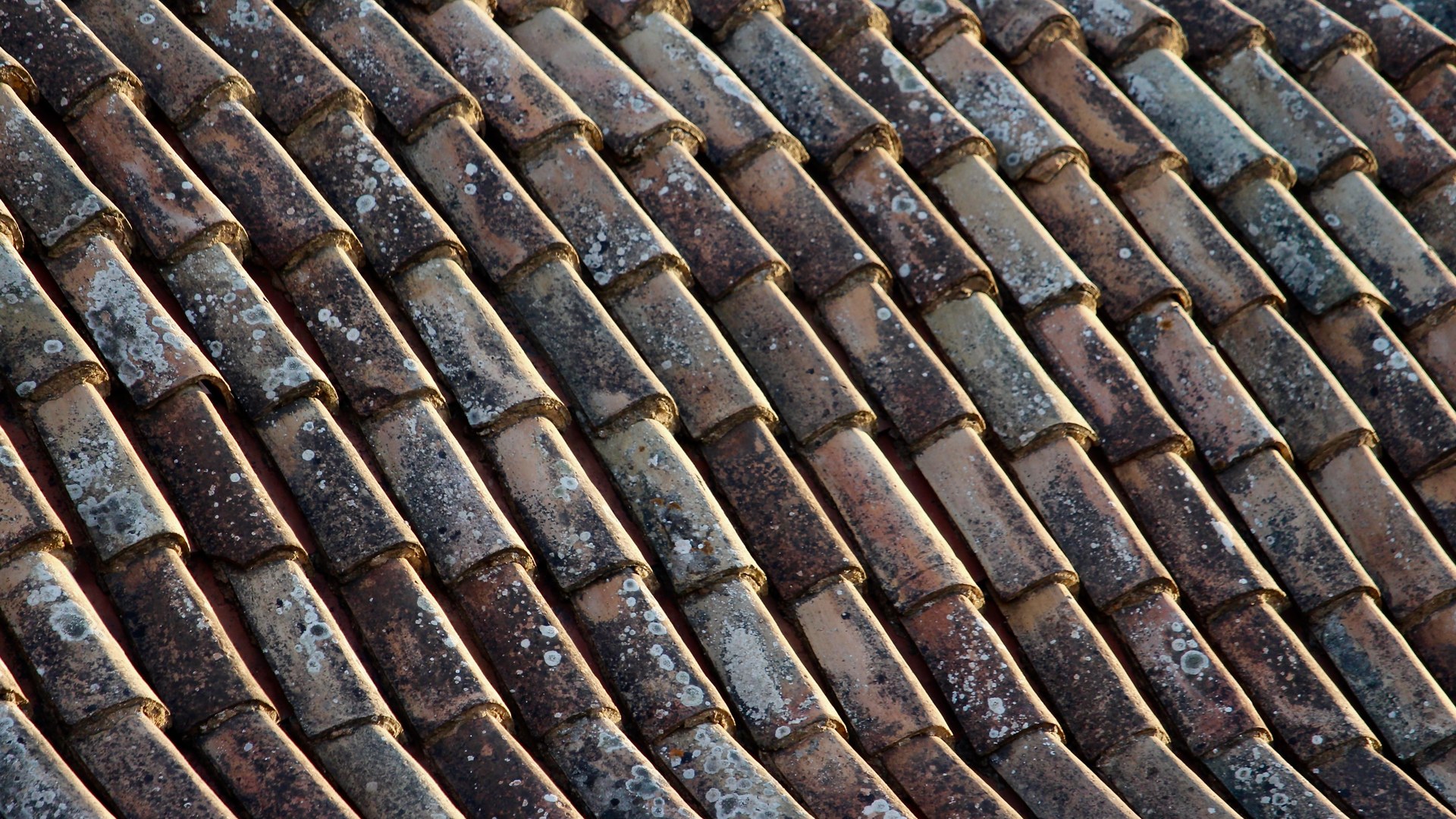
Black streaks, green patches, and crusty spots on a roof are usually algae, moss, or lichen, and telling them apart matters because each one needs different handling. Algae stains the surface, moss lifts and traps water, and lichen grips the surface tightly.
Start from the ground with binoculars and look for the patterns below. North-facing slopes and shaded sections show growth first, since they stay damp longest. GAF notes that blue-green algae spreads through airborne spores and favors northern exposures.
| What you see | What it usually is | Why it matters | First response |
|---|---|---|---|
| Dark brown to black streaks running down the slope | Algae, most often Gloeocapsa magma | Mostly cosmetic on shingles, but it darkens the roof and holds surface moisture | Gentle treatment, no scrubbing or pressure |
| Thick green tufts or cushions, often in shade | Moss | Holds water against the roof, can lift shingle edges | Kill first, lift gently once dead and dry |
| Flat, crusty patches in green, gray, orange, or white | Lichen | Grips firmly, so scraping can take granules or finish with it | Treatment and patience, not scraping |
| Leaves, pine needles, and twigs in valleys and behind chimneys | Debris buildup | Traps water, blocks drainage, feeds new growth | Hand or blower removal, working downward |
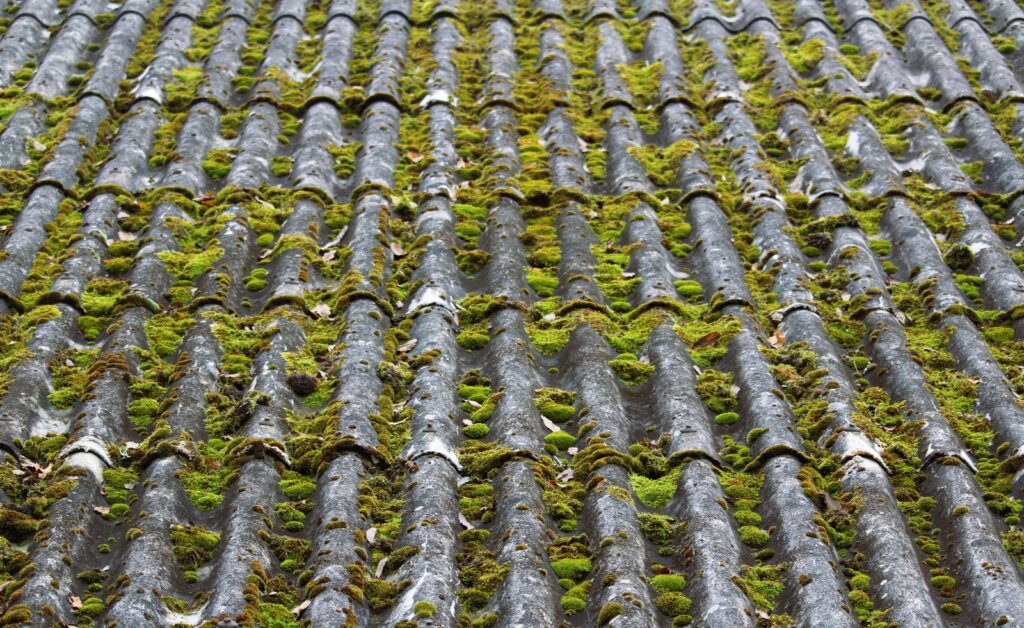
The most common mix-up is calling everything mold. True mold on a roof surface is less common than algae. Algae responds to diluted bleach treatments, moss needs a kill step before removal, and lichen needs the longest patience of all, since it clings even after it dies.
One honest note: GAF, writing through Ask a Roofer, reports that ARMA has found no scientific evidence that algae itself damages asphalt shingles. Clean for moisture control and inspection, never accept a harsh method justified by a claim that the stain is eating your roof alive.
Roof Cleaning Methods Compared
The main roof cleaning methods are gentle chemical treatment at low pressure, manual debris removal, and, on a few hard surfaces only, careful pressure washing. For asphalt shingles, the safe choice is a gentle chemical treatment, since high pressure strips the granules that protect the shingle.
Soft washing is the term most pros use for low-pressure chemical application: a solution applied at garden-hose-like pressure, left to dwell so it kills growth, then rinsed gently or left for rain to finish. The chemical does the work, not force. A detailed soft wash versus pressure wash comparison is a separate guide on this site, so this section stays at overview level.
| Method | How it works | Best for | Risk if misused |
|---|---|---|---|
| Gentle chemical treatment (soft wash approach) | Roof-safe cleaner at low pressure, dwell, gentle rinse | Shingles, tile, metal, cedar in careful hands | Plant damage from runoff, harm from strong mixes |
| Manual debris removal | Blower, soft brush, or hand removal | Leaves and twigs in valleys and behind chimneys | Lifted shingles if brushed upward |
| Pressure washing | High-pressure jet strips surface material | Some hard surfaces, never shingles for algae | Granule loss, cracked tile, water under laps |
| Oxygen bleach treatment | Oxygen bleach mixed with water, applied and rinsed | Lighter growth, cedar, chlorine-sensitive sites | Slower, weaker on heavy moss |
The pressure washer warning is not a preference, it is manufacturer guidance. GAF’s technical bulletin on algae staining states that shingles should not be power washed, since it may dislodge granules and lead to premature shingle failure. The Asphalt Roofing Manufacturers Association bulletin goes further, warning that high pressure systems are likely to damage asphalt roofing and should not be used on it for any purpose. If a contractor’s whole plan is a pressure washer, get a second opinion.
For asphalt shingles, GAF describes 4 gallons of water, 1 gallon of bleach, and 1 cup of TSP or a phosphate-free substitute, applied with a garden sprayer, left up to 20 minutes, then rinsed at low pressure, with shrubs protected. ARMA describes a typical mix of one part bleach to one part water, left 15 to 20 minutes, then gently rinsed, with no scrubbing. Your shingle maker’s label comes first if it differs. Never mix bleach with ammonia or acids, and never assume stronger cleans better.
How to Choose the Right Method for Your Roof
Choose a roof cleaning method by matching the roof material and the growth type, not by picking the strongest tool available. Asphalt shingles and delicate tile need gentle chemical treatment, heavy moss needs a kill step first, and debris alone needs no chemicals at all.
Work through the decision table before you buy anything or book anyone. It keeps the choice tied to the roof in front of you, not to a sales pitch.
| Your situation | Start here | Avoid |
|---|---|---|
| Shingles with black streaks only | Gentle treatment per the shingle maker, low-pressure rinse | Pressure washing, stiff brushing |
| Thick moss, any roof | Kill the moss, then gentle removal once dry | Pulling live moss off by force |
| Lichen patches | Treatment and time, repeat if needed | Scraping crusts off by hand |
| Debris only, no growth | Blower or hand removal | Unneeded chemicals |
| Tile or metal, sound condition | Low-pressure treatment, care around coatings | High pressure on coated or fragile surfaces |
| Cedar shake | Oxygen bleach or cedar-safe cleaner, soft brush | Chlorine-heavy mixes, pressure |
| Old, brittle, or damaged roof | Pro inspection before any cleaning | DIY cleaning before assessment |
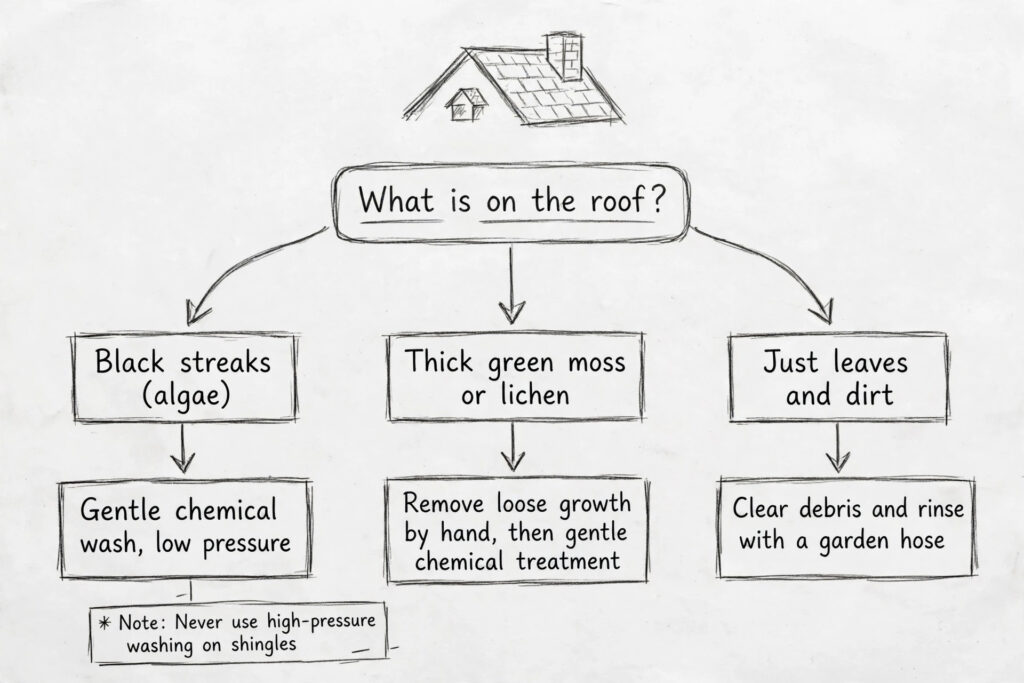
Two questions settle most cases: what is the roof made of and what does its maker allow, and is the problem growth, debris, or damage? Growth gets treatment, debris gets removal, damage gets a roofer. If you cannot identify the material, ask a roofer before anyone treats it.
A Safe DIY Roof Cleaning Sequence
A safe DIY roof cleaning sequence starts on the ground, treats growth gently from a ladder or walkboard where possible, and finishes with a rinse and a gutter check. If any step feels unsafe, stop there, since a half-cleaned roof is fine and a fall is not.
This sequence assumes a low, walkable, single-story roof in good condition, dry weather, and a helper on the ground. Steep, tall, or damaged roofs belong to a pro, full stop.
- Inspect from the ground first. Walk around with binoculars and note stain types, loose shingles, sagging sections, and debris spots. If you spot damage, call a roofer before cleaning.
- Clear debris by hand or blower. Remove leaves and twigs from valleys and behind chimneys, working downward. Bag debris rather than pushing it into the gutters.
- Protect plantings and water features. Soak shrubs and grass below the work area before you start, and rinse again after. Keep runoff out of ponds and vegetable beds.
- Set the ladder right. Place it on firm, level ground, extend it three feet past the eave, and keep the base one foot out for every four feet of height. Have your helper foot the ladder.
- Work from a ladder or walkboard when you can. ARMA suggests this to avoid direct contact with the roof surface, and a wet, treated roof is slippery, so limit time on the slope.
- Apply the cleaner gently. Use a garden sprayer at low pressure, following your shingle maker’s mix. Wet the surface evenly and let it dwell for the label time, usually 15 to 20 minutes for bleach-based mixes.
- Rinse with low pressure only. Use a garden hose aimed downward, never upward under the laps. Do not scrub, and do not chase a stain that has only lightened.
- Check the gutters and downspouts. Cleaning washes growth and grit downward, so finish by clearing the gutters and confirming downspouts run free. See our gutter maintenance guide for that check.
Expect slow results. Algae lightens then fades, moss turns brown and brittle before it releases. Scrubbing a stain off by force probably takes granules with it.
Roof Cleaning Safety: The Part That Matters Most
Roof cleaning safety means treating every roof visit as fall-risk work: stable footing, a helper on the ground, eye and skin protection, and no work in wet, windy, or icy conditions. A wet treated roof is slicker than it looks, and most roof cleaning injuries come from slips, not chemicals.
The fall risk is the headline. OSHA’s guidance on fall protection for roof work describes guardrails, safety nets, travel restraint, personal fall arrest systems, and designated areas as the accepted ways to protect workers on roofs. That rule governs employees, not homeowners, but the physics is the same for everyone.
Chemical safety is the second layer. Wear eye protection and rubber gloves with bleach solutions, as ARMA recommends. Never work alone with a sprayer on a roof, and stop if wind carries spray back toward you.
Memorize a few hard stops: a wet, icy, or steep roof, dizziness or unsure footing, a ladder that cannot be set safely, or a soft, crumbly roof surface pointing to rot. This Old House advises the same caution: if you are afraid of heights or new to roof work, hire a professional.
How Often Should You Clean Your Roof?
Most roofs need a proper cleaning every two to three years, with debris removal and a visual check in between, though shaded, tree-covered, and humid-climate roofs often need attention sooner. Watch the roof, not the calendar, since growth returns at its own pace.
Frequency is a function of shade, moisture, and tree cover. A sunny, open roof in a dry climate can go years between treatments, while a shaded slope under trees in a humid region can show fresh algae within a season or two. Look from the ground each spring and fall, clear debris as needed, and treat when growth is obvious. For a wet-climate example, see this definitive guide to roof cleaning in Portland, Oregon.
Cleaning too often has its own cost: every treatment wears plantings a little, and every roof visit carries fall risk. Letting thick moss sit for years is not saving money either, since it lifts shingles and turns cleaning into repair. Inspect often, treat when growth is present, leave a clean roof alone.
Season matters a little. Mild, dry days in spring or fall are easiest. Avoid extreme heat, when solutions dry too fast, and freezing weather, when footing gets risky. A dedicated preventative maintenance checklist for roofs is planned as a separate guide on this site.
What Affects Roof Cleaning Cost?
Roof cleaning cost is driven by roof size, pitch, height, material, the type and weight of growth, access, and any add-ons such as gutter cleaning. Quotes vary widely by region and company, so the factors matter more than any single national figure.
Size is the starting point: a larger roof needs more solution, time, and labor. Pitch and height come next, since a steep roof needs more safety setup and a two-story roof needs longer ladders. Valleys, dormers, and chimneys add time too.
Condition changes the job too. Light algae is straightforward, while heavy moss or lichen can need repeat applications and careful manual removal. Tight side yards and delicate plantings slow a crew down, and add-ons such as gutter clearing are often quoted separately.
Ask every company for the same scope in writing: method, solution type, plant protection, gutter handling, and what happens if stains remain. A quote naming the method and protections beats a cheaper one naming neither. Our guide to gutter cleaning cost factors explains the same logic. Contractor guides commonly put typical professional jobs at a few hundred dollars for an average home, rising for large, steep, or heavily grown roofs, but your roof and region set the real number, so get two or three written quotes.
DIY or Hire a Pro?
DIY roof cleaning suits a low, walkable, single-story roof in good condition with light staining and safe ladder access. Hire a pro for steep, tall, fragile, or heavily grown roofs, and for any roof where you doubt your footing, your ladder setup, or the material.
The DIY case is narrow on purpose. You save labor cost and control the solution, but you carry the fall risk and need a sprayer and safety gear. One wrong choice, a pressure washer or a stiff brush, can cost more in roof life than the pro visit.
The pro case is about equipment, insurance, and judgment. A good crew arrives with fall protection, spray gear, plant protection routines, and experience telling algae from lichen from damage. Ask for insurance proof before work starts.
There is a middle path: do the ground-level work yourself, debris checks, gutter clearing, trimming, and watching for new growth, and leave the slope to a pro when the roof is high, steep, or mossy. That pairs well with regular checks on how often gutters need cleaning.
Hiring a Roof Cleaning Company: Red Flags and Good Signs
A good roof cleaning company names its method, protects your plantings, carries insurance, and explains what results to expect over days and weeks. A bad one leans on pressure, promises instant perfection, and cannot say what is in the tank.
Use this checklist on every quote, and walk away from any company that fails the first three items:
- Red flag: pressure washing asphalt shingles. If the plan starts with a pressure washer on shingles, the crew does not follow manufacturer guidance. Move on.
- Red flag: no insurance proof. A crew at height without liability coverage leaves you exposed. Ask to see it.
- Red flag: secret mixes. You should be told what will be applied and how plantings will be protected.
- Red flag: instant, perfect results promised. Algae lightens over days, moss loosens over weeks. Perfection on day one is a sales line.
- Red flag: no written scope. Method, areas, gutter handling, plant protection, and cleanup should all be in writing.
- Good sign: method named up front. Low-pressure treatment, dwell time, gentle rinse, plant protection, stated without hedging.
- Good sign: before photos and an honest assessment. A crew that photographs problems and points out damage is inspecting, not just selling.
- Good sign: realistic timeline. Stains fade over days, moss releases over weeks, with a follow-up look if needed.
- Good sign: clear answers to direct questions. Our questions to ask before hiring a cleaning company work just as well for a roof crew.
One more check costs nothing: ask how the crew protects the roof itself, not just the plantings. The answer should mention low pressure, no scrubbing on shingles, and working downward. If it leans on how powerful the equipment is, that tells you what you need to know.
Keeping the Roof Cleaner for Longer
A roof stays cleaner longer when it gets sun, airflow, and clear drainage, since shade, debris, and standing water are what let algae and moss settle in. Trimming branches, clearing debris, and keeping gutters flowing do more long-term good than any single treatment.
Trim branches so sunlight reaches the slope, clear debris after storms and in fall, and keep gutters flowing, since a backed-up gutter keeps the eaves damp. After cleaning, zinc or copper strips near the ridge discourage new growth, and algae-resistant shingles are worth asking about at reroofing time, though neither replaces inspection. For the wider inspection, symptom and record-keeping routine behind cleaning, see our broader guide to roof maintenance.
For a routine that goes beyond cleaning, follow our seasonal preventative roof maintenance checklist through spring, summer, fall, and winter.
Two cautions: keep zinc and copper runoff away from ponds, fish tanks, and vegetable beds, and remember that prevention slows regrowth, it does not stop spores from landing, so faint streaks returning is normal, not failure.
Roof and gutter work is often quoted together, and bundling them can make sense when both need attention at once, but keep the scopes separate in writing. See our guide to whether to clean the roof and gutters together for the right order, savings factors, and when separate visits make more sense.
Frequently Asked Questions
Roof cleaning is the gentle removal of algae, moss, lichen, and debris from a roof using low-pressure water and roof-safe cleaners. It helps the roof dry between rains and makes damage easier to spot.
Black streaks are usually algae called Gloeocapsa magma, which spreads through airborne spores and feeds on the limestone filler in asphalt shingles. It shows most on shaded, north-facing slopes.
Pressure washing is not safe for asphalt shingles, since it can strip protective granules and force water under the laps. GAF and ARMA both advise against it. Low-pressure chemical treatment is safer.
You can, if the roof is low, walkable, in good condition, and safely reachable with a well-set ladder and a helper on the ground. Hire a pro for steep, tall, fragile, or mossy roofs, or if you are uneasy at height.
Most roofs need a full cleaning every two to three years, with debris checks each spring and fall. Shaded, tree-covered, and humid-climate roofs often need treatment sooner.
Bleach-based cleaners can harm plantings if runoff is not managed. Soak shrubs and grass before and after treatment, cover delicate plants, and keep runoff out of ponds and vegetable beds.
No, cleaning is temporary, since airborne spores keep landing on the roof. ARMA notes that discoloration will likely recur, though trimming, debris clearing, and ridge metal strips slow it down.
Sources
Sources consulted for this guide, limited to pages actually opened during research:
- GAF technical bulletin on blue-green algae staining of shingled roofs
- Asphalt Roofing Manufacturers Association bulletin on roof discoloration from algae, as reproduced by Honest Home Inspections
- OSHA interpretation letter on fall protection for temporary work on roofs
- This Old House guide to cleaning and preventing a mossy roof
- Oregon State University Extension answer on removing moss from a roof
- GAF article on fighting algae and keeping a roof stain free, via Ask a Roofer

6 Comments
Pingback: Questions to Ask a Gutter Cleaning Company: Hiring Checklist
Pingback: Gutter Maintenance Guide for Homeowners
Pingback: Soft Wash Roof Cleaning vs Pressure Washing: Why Soft Wash Wins
Pingback: Should You Clean Roof and Gutters Together? Bundling Guide
Pingback: Preventative Roof Maintenance Checklist by Season - Home Exterior Lab
Pingback: Roof Maintenance Guide for Homeowners