


Gutter cleaning frequency is simply how often you clear debris from your gutters and downspouts so water keeps flowing off the roof instead of spilling over the sides. The standard answer is twice a year, but the honest answer is that your trees, your climate, and whether you have gutter guards set the real schedule. A house under mature oaks and a house on an open lot do not share a cleaning calendar, and pretending they do is why so many gutters clog between cleanings.
I have cleaned gutters in late October with leaves still raining down and in April with last year’s muck turned to something like potting soil. Both jobs taught me the same thing: the calendar matters less than the conditions. This guide gives you the standard schedule, the conditions that change it, and a simple way to find your own number.
The short answer
Most homes need their gutters cleaned twice a year, once in late spring and once in late fall. West Virginia University Extension puts the baseline at “at least twice a year,” adding that homes exposed to severe storms often need more. That twice-a-year rule is the starting point, not the finish line. Homes under pine trees, heavy leaf cover, or frequent storms often need three or four cleanings, while a home on an open lot with gutter guards can sometimes stretch to one full cleaning a year with quick inspections in between.
Watch: TechnicallySteve explains how tree cover changes your cleaning frequency, what a proper inspection looks like, and how overflow water damages foundations.
In this guide
- Find your schedule: the frequency decision table
- When to clean: the seasonal calendar
- Let the trees set your schedule
- Regional adjustments
- Signs your gutters are already overdue
- Gutter guards: do they change how often you clean?
- The 10-minute post-storm check
- DIY or hire it out
- Frequently asked questions
- Sources
Find your schedule: the frequency decision table
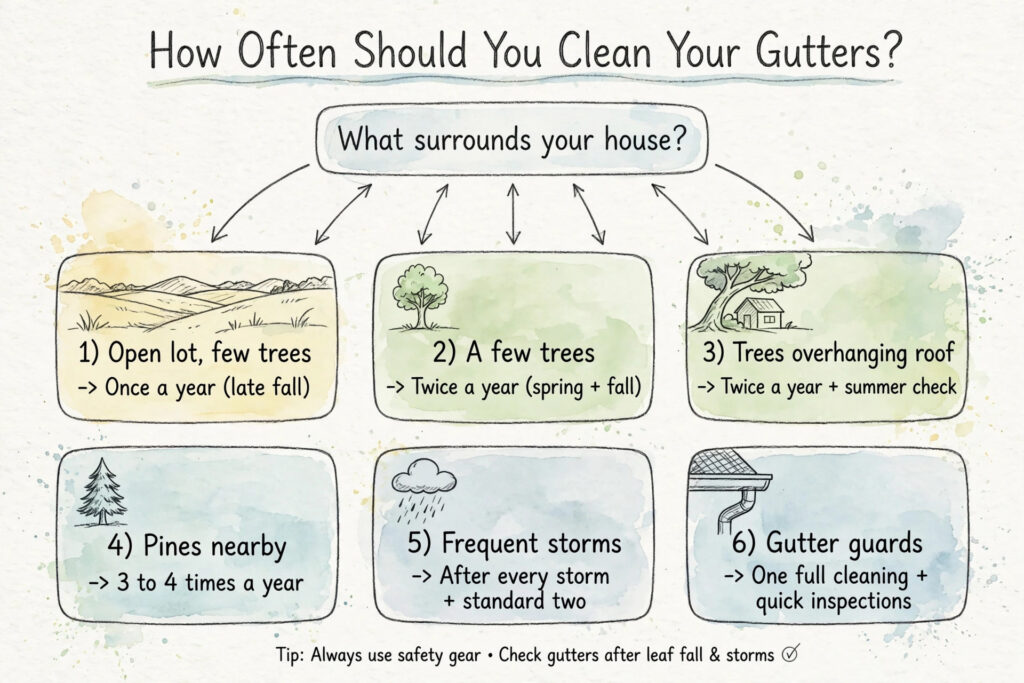
Stop counting months and start looking at your yard. Three things decide your number: how much debris your surroundings produce, how harsh your weather is, and whether anything is filtering the debris before it settles. Find the row that looks most like your house.
| Your situation | Suggested schedule | Why |
|---|---|---|
| Open lot, few or no trees near the roof | Once a year, in late fall | Little debris falls in; one thorough cleaning after leaf season keeps the system clear |
| A few trees, but none overhanging the roof | Twice a year, late spring and late fall | Wind-blown leaves and seed pods still collect; the standard schedule covers it |
| Mature trees overhanging the roof | Twice a year, plus one mid-summer check | Heavy leaf and seed load; a quick mid-season look catches clogs before fall |
| Pine or evergreen trees near the house | Three to four times a year | Pine needles shed heavily from late summer through early winter and pack into dense mats that block drainage, as Bob Vila’s pine-needle testing notes |
| Frequent severe storms in your area | After every major storm, plus the standard two | Storms dump branches, shingles, and debris all at once; WVU Extension flags storm exposure as the reason to clean more often |
| Any of the above, with quality gutter guards | One full cleaning a year, plus quick inspections | Guards cut debris entry sharply but are not maintenance-free: Bob Vila’s guard testing found guarded gutters need a thorough washout only once every few years, with semi-regular inspection and post-storm clearing of debris sitting on top |
Treat the table as a starting guess, then adjust after your first year. If you scoop out handfuls of muck every time, move up a row. If the trough is nearly clean, you can stretch the interval. Your gutters will tell you the truth each time you open them up.
When to clean: the seasonal calendar
Gutter cleaning follows the debris, and debris follows the seasons. Here is the rhythm that works for most of the US, adjusted to the months when each job actually pays off.
Late spring (May or early June). Clean out everything that fell since fall: seed pods, maple helicopters, oak tassels, and the shingle grit and small twigs winter storms worked loose. A spring cleaning also resets the system before summer downpours, which are the heaviest rain many roofs see all year.
Mid-summer (July, optional). Not a full cleaning for most homes, just a quick check. Walk the perimeter after a big storm and look up: overflowing corners and streaked siding mean something is blocked. Homes with pines should treat this as a real cleaning, since needle drop is already underway by late summer.
Late fall (after most leaves are down, usually November). This is the big one. Wait until the bulk of the leaves are off the nearby trees, then clean thoroughly. A fall cleaning protects the system through winter: clogged gutters in snow country hold meltwater that can freeze into ice dams, and in milder climates they hold the soggy leaf mat that rots fascia and breeds mosquitoes.
Before the first freeze. In cold climates, that late-fall cleaning doubles as freeze prep. Water trapped in a clogged gutter has nowhere to go when temperatures drop, and the freeze-thaw cycle works hangers loose over the winter. Gutters are just one stop on the seasonal roundup, so once they are clear, work through the rest of the fall exterior home maintenance checklist before the first hard freeze: roof, grading, caulking, and faucet shutoffs.
One timing trap to avoid: cleaning too early in fall. A clean September gutter can still get overwhelmed by a second wave of leaves in November, so the final cleaning should come after the trees near your house are mostly bare, not on the first crisp weekend.
Let the trees set your schedule
Not all trees fill a gutter the same way. The kind of tree matters as much as the number of trees, because each species drops its debris on its own timetable.
Pines and other evergreens are the hardest on gutters. They shed needles heavily from late summer through early winter, and the needles slip past many standard guards, then knit into dense mats that block drainage. If pines overhang your roof, plan on three or four cleanings and pay special attention to the downspout outlets, where needle mats pack tightest.
Oaks drop tassels and catkins in spring, then their leaves late in fall, and in some regions live oaks drop a wave of leaves in spring too. An oak-heavy yard usually means a solid spring cleaning plus a late-fall cleaning, with the fall one timed after the last of the leaves are down.
Maples shed their winged seeds (helicopters) in spring and leaves in fall. The seeds are sneaky: they wedge into downspout elbows and sprout in damp trough debris, so a spring check after seed drop saves trouble later.
Sweetgum and other seed-pod trees drop spiky balls and pods that roll straight into gutters and lodge in the outlets. One good cleaning after pod drop, plus a look after storms, usually handles them.
If you are not sure what is growing over your roof, spend one season watching. Note what lands in the gutters each month. After a year you will have a custom debris calendar for your house, and that calendar beats any generic schedule anyone can give you.
Regional adjustments
The twice-a-year baseline assumes an average American climate, and few homes actually live in one. Adjust for where you live.
| Region | What changes | Adjustment |
|---|---|---|
| Pacific Northwest | Long wet season, heavy moss and fir-needle load | Clean in early fall before the rains start, again in spring; check moss buildup |
| Southeast and Gulf Coast | Hurricane and thunderstorm debris, year-round growing season | Add post-storm cleanings to the standard schedule; vegetation regrows fast |
| Midwest and Northeast | Heavy fall leaf drop, ice-dam risk in winter | Late-fall cleaning after leaf drop is critical; a mid-winter visual check from the ground helps |
| Desert Southwest | Monsoon dust storms, few trees | Once a year is often enough, but check after monsoon season for packed sediment |
| Florida and subtropical areas | Live-oak spring leaf drop, storm season | Spring cleaning after oak drop matters as much as fall; inspect before and after storm season |
These are starting points, not local rules. Microclimates, elevation, and how your specific lot is landscaped can push a home in either direction. When in doubt, look at what your neighbors’ gutters collect: if their troughs fill fast, yours will too.
Signs your gutters are already overdue
You do not need to wait for the calendar if the gutters are telling you they are full. Learn these signs and you will catch clogs before they turn into repairs.
Clean now (this weekend, not next month):
- Water pouring over the front edge during ordinary rain. Overflow in a normal shower is not normal; it means the trough or downspout is blocked.
- Water spilling behind the gutter, down the fascia. This rots the fascia board and is the sign I take most seriously. For the full diagnosis, see why water drips behind gutters.
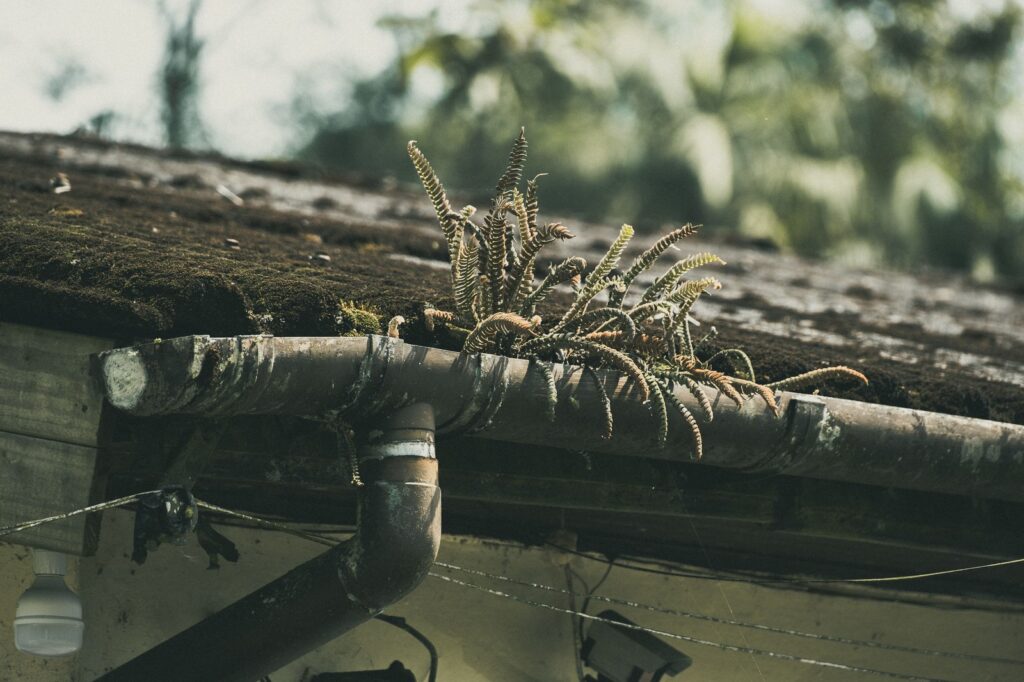
- A visible plant growing in the gutter. If it has roots, it has been there a while.
- Water standing in the trough the day after rain, or pooling instead of draining to the downspout during a hose test.
Schedule soon (within a few weeks):
- Streaks or stains on the siding under the gutter line, suggesting repeated overflow.
- A gutter section sitting visibly lower than the rest, or gaps opening between the gutter and the fascia. Weight from trapped debris pulls hangers loose.
- Rust spots, flaking finish, or small holes at the seams. Standing water accelerates corrosion, so clogs and rust feed each other.
- With gutter guards: debris piled on top of the guard, water sheeting over the front edge instead of dripping through, or buildup visible in the channel underneath. Guards reduce cleaning; they do not eliminate it.
If overflow during heavy rain is the main symptom, our guide on why gutters overflow in heavy rain walks through whether the cause is a clog, an undersized system, or a pitch problem. And if a downspout looks like the bottleneck, check how far downspouts should drain from the house when you plan the discharge. If the overflow is concentrated at one downspout, see our guide to the signs of a clogged downspout and what to check first.
Gutter guards: do they change how often you clean?
Yes, but not the way the brochures imply. Guards reduce how often the inside of the gutter needs a full cleanout, but they add a new chore: keeping the guard surface itself clear. The effect depends on the guard type.
| Guard type | Full cleanout interval | What still needs doing |
|---|---|---|
| Screen or perforated metal | Every 1 to 2 years | Brush larger debris off the screen surface once or twice a year; check underneath for needles that slipped through |
| Micro-mesh | Every 2 to 3 years | Occasional rinsing to clear fine buildup; the mesh blocks needles and shingle grit well but is not maintenance-free |
| Brush inserts | Every year | Brushes trap debris in their bristles and are prone to clogging with larger material; plan on clearing them like an unguarded gutter |
| Foam inserts | Every year | Foam can pack with fine sediment and seed debris; lift and check sections during your normal schedule |
| Reverse-curve (surface tension) | Every 2 to 3 years | Keep the curved surface clear so water adheres; check the narrow slot for packed debris |
The pattern across guard types is consistent: guarded gutters need a thorough interior washout far less often, sometimes only once every few years, but the guards themselves need semi-regular inspection and post-storm clearing. Skip the guard-top check and you get the worst of both worlds: a clog you cannot see until water sheets over the edge.
That breakdown is here: our guide on whether gutter guards are worth it compares all six guard types, their limits with pine needles and ice dams, and which homes they actually pay off for. Treat any guard as a frequency reducer, never as a reason to stop looking.
The 10-minute post-storm check
Storms reset the debris clock, so a quick check after every major storm keeps the schedule honest. You can do this entire routine from the ground, no ladder needed.
- Walk the perimeter during or right after steady rain and watch each gutter run. Note any section where water pours over the front edge.
- Check the bottom of each downspout. Strong, steady flow means the run above is clear; a trickle or nothing during rain means a blockage upstream.
- Look at the siding under the gutter line for fresh streaks or splatter marks that were not there before the storm.
- Check where downspouts discharge. Storm runoff should be moving away from the foundation, not pooling against it. The EPA recommends redirecting downspouts away from paved surfaces and sewer connections, since polluted runoff is one of the greatest threats to clean water in the US.
- From the ground, scan for new sags, separated joints, or a downspout that has pulled away from the wall. Storms and the weight of sudden debris cause the mechanical damage that cleaning alone cannot fix.
If the check turns up a blockage you cannot reach safely from the ground, that is a cleaning or a pro call, not a taller ladder and a longer reach.
DIY or hire it out
Cleaning gutters yourself is straightforward work with real fall risk, so the decision comes down to your comfort on a ladder and the shape of your house. Here is how the two options compare.
| DIY | Professional | |
|---|---|---|
| Typical cost | Your afternoon and basic tools (gloves, scoop, hose, sturdy ladder) | Around $163 to $333 per visit nationally, per Thumbtack data cited by weather.com |
| Time | A few hours for an average single-story home | Usually under two hours on site |
| Best for | Single-story homes, reachable runs, routine seasonal cleanings | Two-plus stories, steep rooflines, guards tucked under shingles, blockages that survive a hose flush |
| What it catches | What you can see and reach | Hidden blockages, pitch problems, failing hangers, early fascia rot, guard issues |
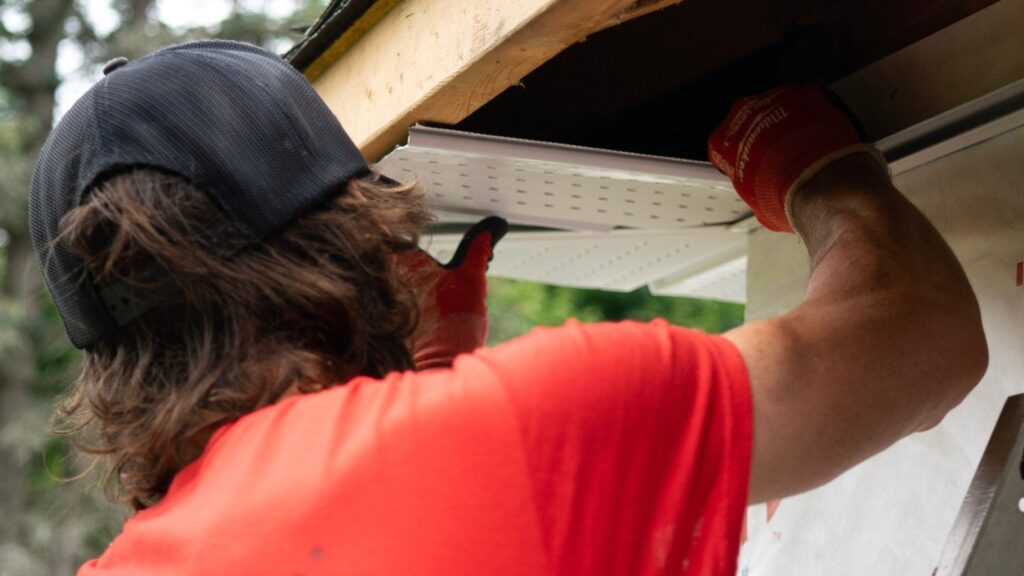
If you do it yourself, the safety rules are not optional. West Virginia University Extension’s gutter safety guidance lays out the basics: a sturdy ladder on level ground, heavy gloves and eye protection, never stepping on the top two rungs of a step ladder, extending an extension ladder three rungs past the roof edge and securing it, and never working in rain, wind, or any weather with possible ice. OSHA’s ladder rules add the 4-to-1 angle rule (one foot out for every four feet up), three points of contact, and never overreaching, which is one of the main causes of ladder falls.
Call a professional when the house is more than two stories, the roofline is steep, the ladder footing feels unsteady, a blockage survives everything reachable from your ladder, a gutter section is pulling away from the house, the fascia is soft or rotted, or rust and holes have spread past one small spot. Those are repair or replacement signs, and no amount of scooping fixes them.
Our gutter maintenance guide covers the full inspection routine these cleanings fit into, including what to check on the roof side while you are up there.
Frequently asked questions
Is it better to clean gutters before or after the leaves fall?
After most of them are down, but before the first freeze. Cleaning too early means a second wave of November leaves refills the trough; cleaning too late means working in freezing weather on a system that is about to hold ice. The sweet spot is late fall, once the trees near your house are mostly bare.
Can I clean my gutters in winter?
You can, but only in the right conditions: dry weather, no ice on the roof or ladder, and temperatures above freezing. Never clean gutters in rain, snow, or any weather with possible ice on the surfaces you are standing on. In practice, winter cleanings are emergency clearings of ice-blocked outlets, not routine maintenance.
Do gutter guards mean I never have to clean my gutters?
No. Guards keep most large debris out of the trough, but debris still collects on top of the guard, fine material still gets through, and outlets still need checking. Expect to inspect guarded gutters semi-regularly and after storms, with a full interior washout roughly once every few years depending on the guard type.
How often should downspouts be checked?
Every time you clean the gutters. After scooping the trough, flush each run with a hose toward the downspout and confirm water exits the bottom freely. If it does not, the downspout is blocked: spray the hose directly down the spout, and if that fails, a plumber’s snake usually clears it. A gutter system is only as clear as its downspouts.
What happens if I skip gutter cleaning for a year or two?
Debris compacts into a soggy mat that holds water against the fascia and roof edge. Standing water breeds mosquitoes, adds weight that sags the run and loosens hangers, accelerates rust, and sends overflow toward the foundation, where it can crack and settle concrete. Clogs left long enough also attract nesting insects and rodents. A skipped year rarely ends the story at one year, because the damage compounds.
How much does professional gutter cleaning cost?
Nationally, most homeowners pay between $163 and $333 per visit, according to Thumbtack data reported by weather.com. Two-story homes, heavy clogging, and guard maintenance usually land on the higher end. Regular cleanings tend to cost less per visit than rescue cleanings after years of neglect.
Does gutter size change how often I should clean?
A wider gutter (6-inch versus the standard 5-inch) holds more debris before it clogs, so it buys you margin, not a different schedule. Keep the same cadence and treat the extra capacity as insurance against the storm that drops a season’s worth of debris in one afternoon.
Sources
- West Virginia University Extension’s gutter safety guide: cleaning frequency baseline of at least twice a year, storm-exposure adjustment, scoop-then-flush DIY method, and ladder safety rules.
- Bob Vila’s 2026 gutter guard testing: how guards change cleaning intervals, which guard types still need regular attention, and why brush guards are not maintenance-free.
- Bob Vila’s gutter guard testing for pine needles: pine shedding season, dense needle mats, and micro-mesh performance against fine debris.
- Home Inspection Insider’s fall gutter checklist, via WonderHowTo: the five-point inspection, timing advice, guard maintenance intervals, and DIY-versus-pro boundaries.
- OSHA gutter-safety standards, summarized by Occupational Health & Safety: ladder angle and extension rules, three points of contact, fall-protection thresholds.
- The Weather Company’s gutter-cleaning safety guide: ladder-fall causes, DIY safety tips, and national professional cleaning cost data.
- Michigan State University Extension on the EPA’s Soak Up the Rain program: redirecting downspouts away from pavement and sewer connections, and polluted runoff as a threat to clean water.
- “How Often Should You Clean Out Gutters?” by TechnicallySteve: frequency by tree cover, minimum annual inspection, and how overflow damages foundations.

7 Comments
Pingback: Gutter Maintenance Guide for Homeowners | Home Exterior Lab
Pingback: Water Dripping Behind Your Gutter? Causes and Fixes
Pingback: Black Spots on Vinyl Siding: Mold, Mildew or Artillery Fungus?
Pingback: 7 Signs Your Downspout Is Clogged (and What to Check First)
Pingback: Are Gutter Guards Worth It? | Home Exterior Lab
Pingback: Questions to Ask a Gutter Cleaning Company: Hiring Checklist
Pingback: Gutter Cleaning Cost Factors: 10 Things That Change Your Quote (2026)