


Last updated: November 1, 2026
Preventative roof maintenance is a scheduled routine of small checks, cleanings, and minor fixes, done each season, that keeps a roof watertight so small failures never grow into leaks, rot, or an early replacement. It is not a repair job and it is not a one-time inspection. It is a habit: look, clear, note, and fix the little things on time For the system behind this checklist, from symptoms to repair-or-replace decisions, see our broader roof maintenance guide.
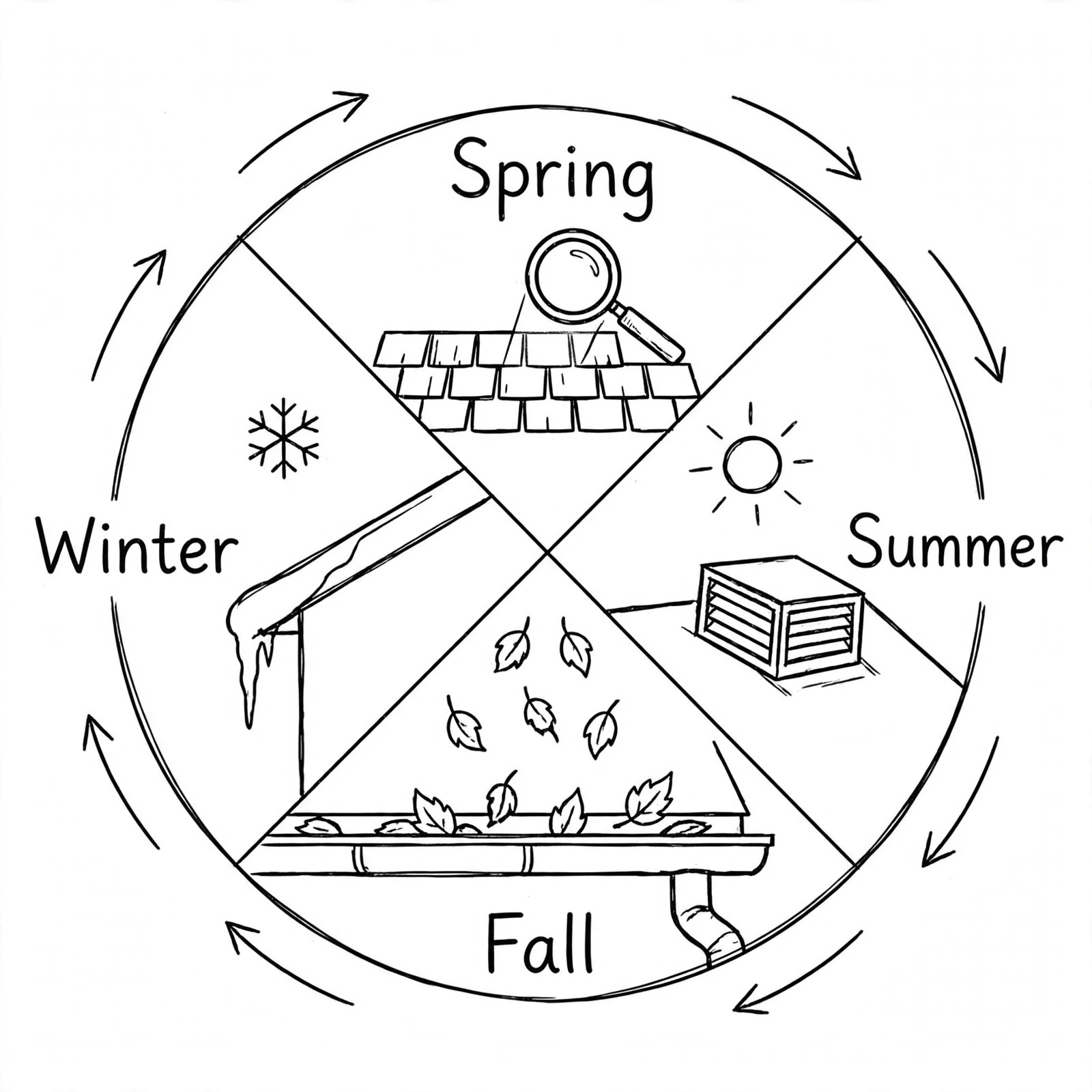
Most roof problems do not start as emergencies. A shingle lifts in a winter storm, a valley fills with leaves in October, a vent boot cracks in summer heat, and nothing leaks for months. Then one hard rain finds the weak spot. A seasonal routine catches those weak spots while they are still cheap and simple. The National Roofing Contractors Association recommends scheduled inspections at least twice a year, in spring and fall, and that rhythm is the backbone of this checklist. The rest of the year is lighter work: summer for heat and ventilation, winter for watching from the ground.
This guide works for the common asphalt shingle roof most US homes have, with notes where metal, tile, and low-slope roofs differ. You can do nearly all of it from the ground, from a stable ladder at gutter height, and from inside the attic. You do not need to walk on the roof, and for most people, you should not.
Contents
- What preventative roof maintenance actually covers
- The year at a glance
- How to inspect from the ground
- Spring checklist: find what winter did
- Summer checklist: heat, ventilation, and growth
- Fall checklist: get ready before the weather turns
- Winter checklist: watch, do not climb
- What your findings mean: call now, schedule soon, or monitor
- The attic check most checklists skip
- How the checklist changes by roof type
- DIY or call a pro: where the line sits
- Keeping records that protect your warranty
- After a storm: run an extra round
- Frequently asked questions
- Sources
What preventative roof maintenance actually covers
Preventative roof maintenance covers the whole roofing system, not just the shingles you can see from the street. A roof is a set of parts that have to work together: the covering sheds water, flashing seals the joints, gutters and downspouts carry water away, and ventilation and insulation keep the attic dry and close to outside temperature. When one part fails, the others pick up strain they were not built for.
| System part | What it does | What goes wrong when it is ignored |
|---|---|---|
| Shingles or covering | Shed water down the slope | Cracks, curling, and missing pieces let water reach the deck |
| Flashing | Seals chimneys, vents, valleys, and walls | Gaps and rust open a direct path for leaks |
| Gutters and downspouts | Carry water off the roof and away from the house | Clogs push water back under edges and toward the foundation |
| Ventilation | Moves air through the attic | Trapped heat ages shingles early and feeds condensation |
| Insulation | Keeps attic temperature steady | Thin or patchy insulation feeds ice dams in winter |
| Valleys and penetrations | Channel water and seal pipe and vent openings | Debris and cracked boots are the most common leak starts |
That table is also your inspection order. Start at the covering, work through the joints, then check drainage, then go inside and check the attic. If you follow the same order every season, you stop missing the same quiet spot twice.
The year at a glance
Two seasons do the heavy lifting and two seasons are mostly watching. Spring finds winter damage before summer storms test it. Fall prepares the roof for rain, leaves, and freeze-thaw cycles. Summer is for heat, ventilation, and small repairs in dry weather. Winter is for monitoring from the ground only.
| Season | Main job | Time to allow | Best timing |
|---|---|---|---|
| Spring | Find and log winter damage, clear drainage | 1 to 2 hours, plus a pro visit if needed | After the last hard freeze, before spring storms |
| Summer | Check heat damage, ventilation, and growth; book repairs | 1 hour, plus repair scheduling | A dry, mild day, not peak afternoon heat |
| Fall | Clear leaves, re-check seals, confirm drainage | 1 to 2 hours, twice if trees are heavy | Early fall, then again after most leaves drop |
| Winter | Watch for ice dams, snow load, and new stains | 15 minutes after each storm | From the ground and the attic only |
Set two calendar reminders now, one for spring and one for fall, so the two thorough passes do not slip. The summer pass and winter monitoring are short, but they only help if the spring and fall work has been done.

How to inspect from the ground
A ground-level inspection finds most of what you need to know, without the risk of walking on the roof. The National Roofing Contractors Association advises ground-level inspection only for homeowners, with a professional assessment after severe weather. Walk all four sides of the house with binoculars, look for lifted, curled, or missing shingles, sagging sections, and damaged flashing, and photograph each side from the same spot every season so changes are easy to compare.
Then go inside. The attic tells you what the outside cannot. Look for water stains on the decking, damp or clumped insulation, daylight showing through gaps, and a musty smell that was not there before. Check
after rain if you can, when a fresh leak is easiest to see, and note the date and location of anything unusual.
Watch a walkthrough of a professional inspection before your first round, so you know what a trained eye looks for: Watch a roof inspection walkthrough from Puetz Construction showing what a professional checks on a typical inspection.
If anything on the ground pass worries you, or the attic shows an unexplained stain, book a professional inspection rather than climbing up to look closer.
Spring checklist: find what winter did
- Walk all four sides and note lifted, curled, or missing shingles.
- Check for granule piles in gutters and downspouts, a sign of shingle wear.
- Check flashing around chimneys, skylights, and vents for gaps or rust.
- Clear and flush gutters and downspouts so spring rain drains freely.
- Check the attic for stains, damp insulation, daylight, and a musty smell.
- Clear valleys of leaves and debris that trap water.
- Look for algae and moss on shaded slopes, and note it for treatment.
- Trim branches that grew over the roof in winter.
- Book a professional inspection if the roof is over 15 years old, damage is unexplained, or last fall’s check was skipped.
Our complete roof cleaning guide explains how to tell algae, moss, and lichen apart, and which cleaning method suits each one, before you treat any growth you found in spring.
Finish by confirming downspouts discharge well away from the foundation, with extensions attached and clear, so spring rain does not pool against the house.
Summer checklist: heat, ventilation, and growth
- Look for blistered, warped, or curled shingles, especially on south- and west-facing slopes.
- Check sealant for cracks and shrinkage around flashing and penetrations.
- Check attic ventilation: the attic should feel hot but not stifling, with no condensation on the underside of the deck.
- Confirm bathroom and kitchen fans vent outside, not into the attic.
- Treat algae and moss only with a roof-safe method, never with high pressure.
- Trim branches again so leaves and limbs stay clear of the roof.
- Schedule any repairs that were waiting from spring, while dry weather lasts.
- Note any upstairs rooms that overheat, which can point to poor ventilation or thin insulation.
See our soft wash vs pressure wash for roofs comparison before cleaning any growth, so the method you choose does not shorten the life of the shingles.
Poor ventilation cooks shingles from underneath, so a summer attic check is worth the effort even when the roof looks fine from the ground.
Fall checklist: get ready before the weather turns
- Clean gutters and downspouts after most leaves drop, and again if trees are heavy.
- Re-check flashing and sealant before freeze-thaw cycles begin.
- Secure loose or lifted shingles before the first storm.
- Clear valleys of leaves and debris.
- Confirm downspouts discharge away from the foundation, with extensions attached.
- Check attic insulation depth and coverage, and confirm vents are clear.
- Trim branches that could drop limbs or scrape the roof under snow.
- Book a pre-winter professional inspection if spring or summer items are still unresolved.
See our guide to whether gutter guards are worth it and whether to clean the roof and gutters together before deciding how to handle heavy leaf fall this season.
Fall is the season to be thorough: a clear roof and clear drainage going into winter prevent most of the problems that show up as spring leaks.
Winter checklist: watch, do not climb
- Do not climb on the roof in icy or snowy conditions.
- After each storm, walk the perimeter from the ground and look for damage, displaced shingles, and ice ridges.
- Treat icicles and ice ridges as a possible sign of an ice dam, and check the attic above them.
- After storms, check the attic for drips, wet rafters, and new stains, and photograph anything new with the date.
- Use a roof rake from the ground if needed, leaving a thin layer of snow, and never use a metal tool on the roof.
- Note any new ceiling stain at once, with the date it first appeared.
- Note meltwater running over a gutter edge for the spring check.
- Call a roofer promptly for an active leak, a sagging section, or a large ice dam with interior water.
IKO’s seasonal guidance is clear that homeowners should avoid climbing on the roof in icy or snowy conditions, and that winter work is monitoring from the ground and the attic only. In a mild winter, the same rule applies: watch, note, and schedule repairs for a safe, dry day.
What your findings mean: call now, schedule soon, or monitor
Not every finding needs the same urgency. Sort each one into a bucket, so you act on the serious items first and do not lose track of the small ones.
| Finding | Bucket | Why it lands there |
|---|---|---|
| Active drip, wet attic decking, ceiling stain that grows | Call now | Water is already getting in and damage is spreading |
| Sagging roof section or daylight through the deck | Call now | Structure may be compromised |
| Missing shingles after a storm, lifted flashing, cracked vent boot | Schedule soon | An opening exists, but no active leak yet |
| Granule piles in gutters, curling across one slope | Schedule soon | Wear is advanced on that slope |
| A few lifted shingle edges, small sealant cracks | Schedule soon | Small openings that will grow |
| Light algae streaks, a little moss on a shaded slope | Monitor | Cosmetic for now, with no leak symptom |
| Minor granule loss with no other symptom | Monitor | Normal wear, watched over time |
The monitor bucket still needs a note and a date, and a re-check next season. When two monitor items appear on the same slope, treat the pair as schedule soon.
The attic check most checklists skip
Make an attic pass twice a year, in spring and fall, and after any worrying storm. Take a flashlight and look up first for stains, darkened wood, and damp spots on the decking, then check the insulation: it should lie flat, dry, and even, not clumped, damp, or patchy. Then look for daylight showing through gaps around vents and pipes. A musty smell after rain suggests moisture is getting in and staying, even if no stain is visible yet.
How the checklist changes by roof type
| Roof type | Seasonal extras to watch | What to avoid |
|---|---|---|
| Asphalt shingles | Granule loss, curling, and lifted edges, especially after heat and storms | Pressure washing, which strips granules |
| Metal | Loose fasteners, rust at seams, and sealant at penetrations | Walking on seams and using abrasive cleaners |
| Tile and slate | Cracked, slipped, or broken tiles after storms and freeze-thaw | Walking on tiles, which can crack them |
| Low-slope and flat | Ponding water more than 48 hours after rain, blocked drains, and membrane seams | Ignoring standing water, which shortens membrane life |
DIY or call a pro: where the line sits
| Task | DIY | Call a pro |
|---|---|---|
| Ground-level visual check | Yes | |
| Gutter and downspout cleaning from a ladder | Yes | |
| Attic inspection | Yes | |
| Branch trimming clear of the roof | Yes | |
| Snow raking from the ground | Yes | |
| Shingle replacement, flashing repair, sealing penetrations | Yes | |
| Post-storm damage assessment | Yes | |
| Moss and algae cleaning | Yes, roof-safe method only | Yes, for steep or tall roofs |
| Any work on a steep, tall, or multi-story roof | Yes |
The National Roofing Contractors Association warns that homeowners should never climb on a damaged roof themselves. If the roof is damaged, steep, or high, the ground pass and the attic check are your job, and everything on the roof itself belongs to a licensed professional.
Keeping records that protect your warranty
A single page per year is enough. Keep receipts and professional reports with the log, and keep photos in a dated album, so you can show what was checked, what was found, and what was done, year by year.
| Record entry | What to write | Why it helps |
|---|---|---|
| Date and season | When the check was done | Shows a regular routine |
| What you checked | Ground pass, gutters, attic | Proves the full system was covered |
| Photos | Each side of the roof, dated | Makes changes easy to compare |
| Findings and bucket | Call now, schedule soon, or monitor | Shows issues were triaged, not ignored |
| Work done | Cleaning, trimming, repairs | Documents maintenance for warranty claims |
| Professional reports | Inspection and repair reports | Supports warranty and resale claims |
A dated roof log is also a selling point: it shows a buyer that the roof was looked after, not just lived under.
After a storm: run an extra round
After hail, high wind, or a fallen branch, do a fast ground pass within a day or two. Photograph anything new with the date, and book a professional inspection promptly for missing shingles, lifted flashing, or interior stains. Our gutter maintenance guide covers the drainage checks in full, so run those checks again after a storm as well as in spring and fall.
Frequently asked questions
Twice a year, in spring and fall, with a quick pass in summer and monitoring in winter, plus an extra round after any major storm. The National Roofing Contractors Association recommends scheduled inspections at least twice a year, in spring and fall, and roofs older than 15 years benefit from an annual professional inspection on top of your own checks.
You can handle ground-level checks, gutter cleaning from a stable ladder, attic checks, and branch trimming yourself. Leave roof walking, shingle replacement, flashing repair, and post-storm assessment to a licensed professional. IKO’s seasonal guidance draws the same line: tasks that involve climbing on the roof or sealing penetrations belong to a trained contractor.
Fall, for most homes, with spring a close second. Fall clears leaves and re-seals the roof before rain and freeze-thaw cycles arrive, while spring catches winter damage before summer storms. If you can only manage one thorough pass a year, make it fall, and add the spring pass as soon as you can.
Use the triage rule in this guide. Active drips, growing ceiling stains, and sagging sections mean call now. Missing shingles, lifted flashing, and cracked vent boots mean schedule soon. Light algae streaks and minor granule loss with no other symptom mean monitor and re-check next season. When two monitor items appear on the same slope, treat the pair as schedule soon.
It protects the life the roof was built for, rather than adding a fixed number of years. Regular checks catch the small failures that let water reach the deck, and deck damage is what shortens a roof’s life. Well-kept asphalt roofs reliably reach their full expected lifespan, while neglected ones often do not, and documented maintenance also helps keep warranty coverage intact.
Move valuables, place a bucket, photograph the stain and the attic above it if you can do so safely, and call a roofer promptly. Do not climb on the roof to chase the entry point, since water often travels before it shows inside, and the drip location is rarely the entry point. A professional can tarp the area if needed and trace the path properly.
Sources
- IKO’s seasonal roof maintenance tips for homeowners, covering ground-level checks, DIY tasks, and when to call a professional: https://www.iko.com/na/blog/roof-maintenance-tips-for-homeowners/
- The National Roofing Contractors Association’s guidance on storm inspection safety, covering ground-level inspection only and prompt professional assessment after severe weather: https://www.nrca.net/PressReleases/Details/11533
- Shamrock Roofing‘s seasonal checklist and maintenance guide, covering the twice-a-year rhythm and the 15-year threshold for annual professional inspections.
- Roof Express‘s seasonal maintenance calendar, covering the fall twice-cleaning rule, the 48-hour ponding flag for low-slope roofs, and the fix-now versus monitor priority split.

2 Comments
Pingback: Roof Cleaning Guide: Methods, Safety & When to Hire
Pingback: Roof Maintenance Guide for Homeowners