

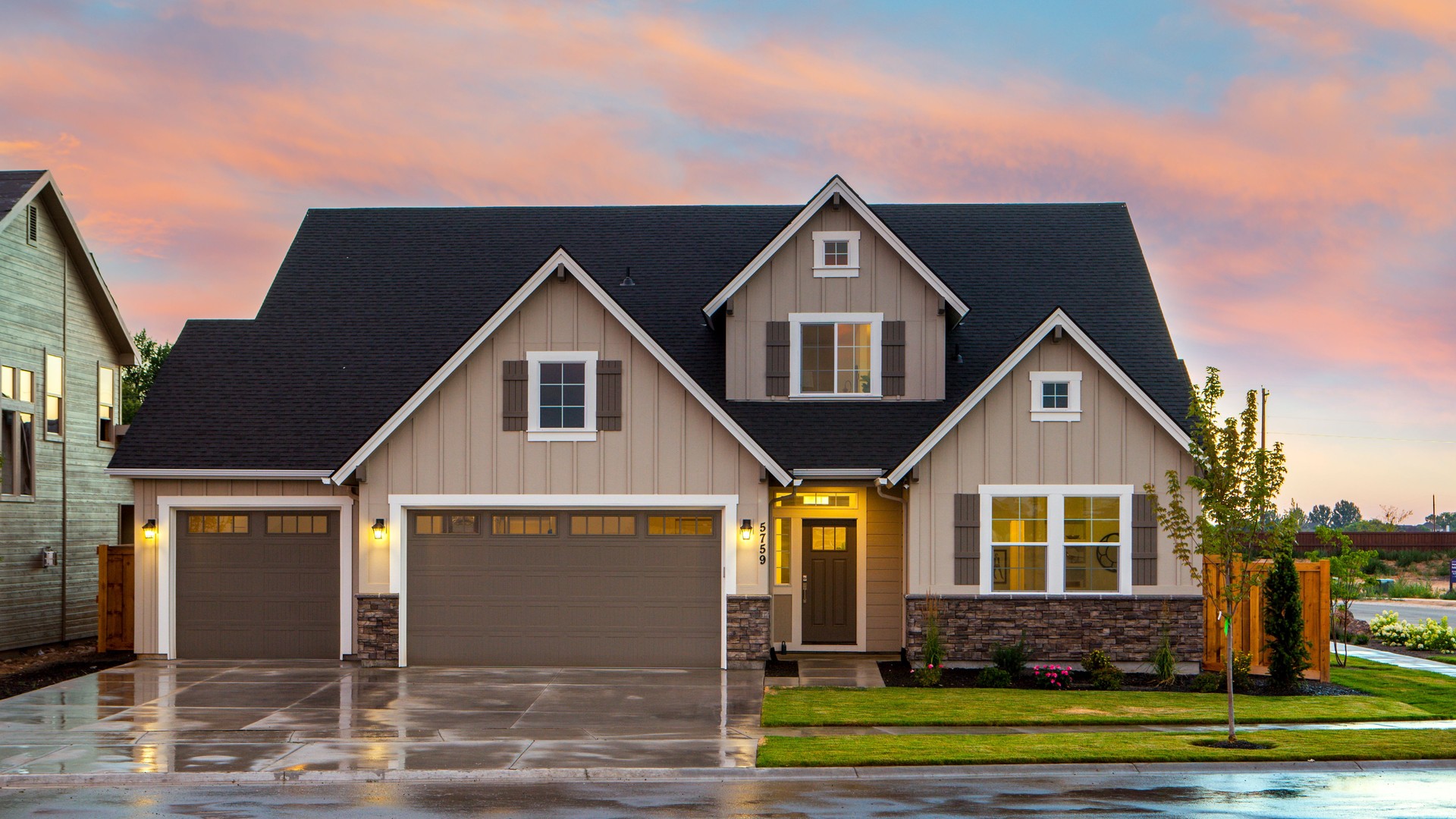
The short answer: Vinyl siding costs $3 to $12 per square foot installed in 2026, and most homeowners pay $6,000 to $18,000 for a full house. Your final number comes down to your actual wall area (not your floor area), the panel grade you pick, how complex your house is, and whether old siding has to be torn off first.
What “installed vinyl siding cost” actually means
When contractors talk about installed vinyl siding cost, they mean the all-in number: the panels themselves, the trim pieces that finish every edge, the house wrap behind it, the labor to hang it all, and any tear-off or repair work underneath. It is always priced by the square foot of wall, and sometimes by the square (a square is 100 square feet, and This Old House notes that standard vinyl runs $300 to $1,200 per square, materials plus basic installation).
This is a pricing guide, start to finish. If you are still deciding whether vinyl is the right material at all, start with our overview of what vinyl siding is, the profiles it comes in, and how it protects a house, the pillar guide for this whole cluster, then come back here to price it out.
Table of contents
- How much does vinyl siding cost by house size?
- Wall area vs floor area: why your square footage misleads you
- Where your money actually goes: the cost anatomy
- How panel grade changes the price
- What makes your quote higher or lower
- DIY vs hiring a pro: the real math
- How to read a vinyl siding quote
- Is vinyl siding worth the cost?
- Frequently asked questions
- Sources
How much does vinyl siding cost by house size?
Vinyl siding costs $3 to $12 per square foot installed, so the fastest way to estimate your project is by house size. Angi’s 2026 national data puts the average full project at $12,303 across more than 5,200 verified jobs, with most homeowners paying $6,368 to $18,377.
Use the table below as a starting range for 2026, assuming typical mid-grade panels and a straightforward house. The low end is builder-grade on a simple one-story with no tear-off; the high end is premium or insulated panels on a two-story with tear-off and full trim.
| House size (floor area) | Typical wall area | Installed range |
|---|---|---|
| 1,000 sq ft | ~900–1,100 sq ft | $4,000–$12,000 |
| 1,500 sq ft | ~1,300–1,600 sq ft | $6,000–$18,000 |
| 2,000 sq ft | ~1,700–2,100 sq ft | $8,000–$24,000 |
| 2,500 sq ft | ~2,100–2,500 sq ft | $10,000–$30,000 |
Hover’s own sizing example lines up with this: a home with about 1,500 square feet of exterior wall area, common for a smaller single-story house, typically runs $6,000 to $18,000 installed. Vinyl is also America’s most-used cladding by a wide margin: SidingCosts cites Census Bureau data showing roughly 27% of new single-family homes built in 2023 were sided in vinyl, so plenty of contractor competition sits behind these numbers.
Wall area vs floor area: why your square footage misleads you
Siding is priced by wall area, not floor area. As This Old House puts it plainly, a home’s square footage isn’t the best measure of its exterior surfaces, because two homes with the same interior square footage can need very different amounts of siding.
A single-story 1,500-square-foot ranch has a big footprint and a lot of wall, so its siding area roughly equals its floor area. A two-story 1,500-square-foot colonial has a smaller footprint, so it needs less siding per square foot of living space. Gables, dormers, and bump-outs all add wall area that floor square footage never counts.
The exact math is simple enough: measure each wall’s length times height, subtract the openings, and add 10 to 15 percent for waste. Most homeowners never do it before calling contractors, though. Our siding calculator walks through that wall-area math square by square, and it is worth running before you collect bids so you can tell whether a quote is built on real measurements or a guess.
Where your money actually goes: the cost anatomy
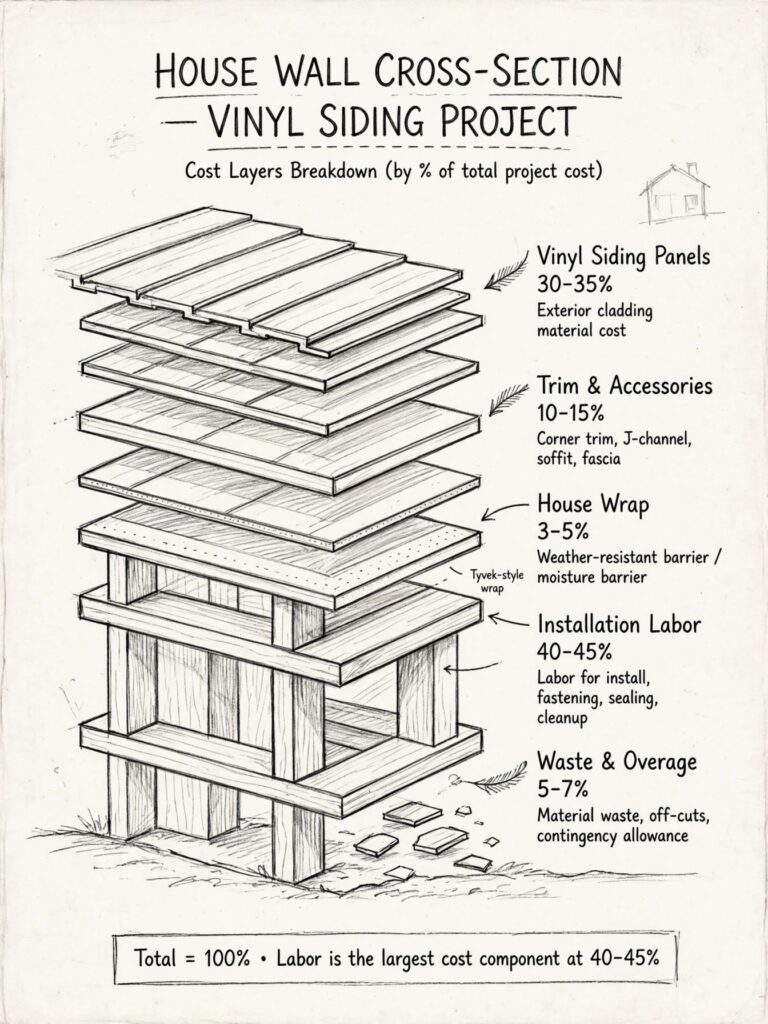
Labor is the biggest single line item on every vinyl job, typically 40 to 50 percent of the total. SidingCosts’ 2026 breakdown of a standard installed project shows where each dollar lands, and it is worth knowing because contractors pad different lines:
| Cost component | Per sq ft | Share of total |
|---|---|---|
| Vinyl siding panels | $1.50–$3.50 | 30–35% |
| Trim, J-channel, corner posts, soffit | $0.50–$1.00 | 10–15% |
| House wrap / moisture barrier | $0.15–$0.30 | 3–5% |
| Installation labor | $1.50–$2.75 | 40–45% |
| Waste and overage (10–15%) | $0.20–$0.45 | 5–7% |
| Typical installed total | $3.50–$7.00 | 100% |
HomeGuide’s 2026 figures tell the same story at a higher level: materials and supplies run $2 to $7 per square foot, labor $2 to $6, and labor makes up 45 to 50 percent of the project. SidingCosts notes the national median wage for siding installers sits around $24 to $28 an hour, but what a contractor charges you includes overhead, insurance, and profit, pushing the effective rate to $40 to $75 an hour depending on your market.
Beyond the basic five, the extras land on real invoices: old siding removal ($1,000–$3,000), window trim and flashing ($1,500–$3,000), soffits and fascia ($1,000–$4,000), permits ($50–$500), and structural repairs ($500–$5,000), all from Angi’s 2026 figures. None of these appear in a per-square-foot headline number, which is why the quote checklist later in this guide exists.
How panel grade changes the price
Grade is the biggest price lever you actually control. Vinyl siding is sold by panel thickness, measured in thousandths of an inch, and thicker panels cost more but resist warping, cracking, and wind damage better. Angi’s 2026 grade table maps thickness to installed price and shows why the choice matters more than most people expect:
| Grade | Thickness | Installed $/sq ft | What to know |
|---|---|---|---|
| Builder’s grade | 0.040″ or thinner | $2–$4 | Cheapest; thin, less durable, minimal insulation; ~15-year life |
| Thin residential | 0.042″ | $3.50–$5 | A step up; fine for mild climates |
| Standard residential | 0.044″ | $4.50–$6 | The most common choice; lasts 20–25 years |
| Thick residential | 0.046″ | $5.50–$6.50 | Better weather and impact resistance |
| Super thick | 0.050″ | $6.50–$9 | Heavier panels, often foam-backed |
| Premium | 0.052″ or more | $8–$12 | Best durability and appearance; insulated; 30+ years |
This Old House’s contractor sources frame it similarly: panels run from roughly 0.040 inches at the economy end to 0.055 at the top, with most residential work landing between 0.042 and 0.048. Their practical advice is worth repeating. Thickness is the single best quality indicator on a spec sheet, and thicker panels are stiffer, more impact-resistant, and less likely to sag or warp over time.
What does the grade jump cost in real money? On a 2,000-square-foot wall area, moving from builder-grade to premium can add $8,000 or more to the project. That is not necessarily bad money: premium panels buy longer life and better curb appeal, and the grade you choose is the main reason two quotes for “vinyl siding” can look like they describe different materials. If you want the full lifespan picture for each grade, our guide on how long vinyl siding lasts breaks it down panel by panel.
Insulated vinyl siding deserves its own note because contractors upsell it hard. The panels carry a bonded foam backer that adds roughly R-2 to R-2.7 of continuous insulation to the wall, and SidingCosts reports installed prices of $5 to $9 per square foot against energy-bill savings of 5 to 10 percent a year. It also feels more solid and hangs straighter on wavy walls. Whether the premium pays back depends on your climate and how long you plan to stay. In a cold climate with high heating bills, it is a reasonable buy; in a mild one, it is mostly a comfort and appearance upgrade.
What makes your quote higher or lower
Two houses with the same wall area can get quotes thousands apart. These are the factors contractors actually price in:
Stories and access. A two-story home costs more per square foot than a ranch because crews need scaffolding or ladder jacks, which slows the work and adds safety overhead. SidingCosts puts the premium at roughly 10–15% for two stories and 15–20% for three.
Architectural complexity. Every window, door, dormer, inside corner, and roof transition means cutting, fitting, and trim work. A simple rectangular ranch sides fast; a Victorian with bump-outs and gables does not. SidingCosts notes contractors commonly apply a complexity multiplier (about 1.0x for simple homes, 1.15x for moderate, and 1.30x for complex ones), so count your corners before you compare bids.
Tear-off and repairs. Going over old siding is sometimes possible (more below), but a full tear-off adds real money: Angi puts total removal at $1,000–$3,000 for a typical house. Tear-off is also when crews find the surprises: rotted sheathing, old water damage, which Angi budgets at $500 to $5,000 to fix. This is the line item most likely to blow up a budget, and the honest contractors quote it as an allowance, not a promise.
Where you live. Labor rates swing totals more than material prices do. Angi’s 2026 city data is striking: the same project averages about $16,500 in Boston, $14,400 in New York, $11,800 in Chicago, $8,400 in Raleigh, and $7,100 in Houston. If your quote looks nothing like the national averages in this guide, your zip code is probably why.
Season. Siding crews are busiest from late spring through early fall, and HomeGuide notes contractors often charge a premium in those months. Angi reports some contractors offer 10 to 20 percent off in the off-season, so a late-fall booking can genuinely save money in most climates.
Style and profile. Plain horizontal lap is the cheapest profile to make and hang. Decorative profiles (board and batten, shake, scallop) raise both material and labor costs, and Angi’s 2026 style pricing shows the spread clearly, from $2–$7 per square foot for basic clapboard to $5–$10 for scallop.
DIY vs hiring a pro: the real math
Vinyl siding is one of the more DIY-friendly exteriors, and DIY can cut up to half the project cost. The panels are light, they snap together, and This Old House notes a professional crew can side a whole house in a week or less. But “DIY-friendly” and “cheap to DIY” are different things. Here is how the math actually compares on a typical 2,000-square-foot wall area:
| DIY | Professional | |
|---|---|---|
| Materials (panels, trim, wrap, fasteners) | ~$3,000–$7,000 | Included in the bid |
| Tools, scaffolding or ladder jacks, dumpster | A few hundred to ~$1,500+ | Included |
| Labor | Your weekends | $3–$6 per sq ft (40–50% of the job) |
| Typical all-in range | ~$3,500–$9,000 | $8,000–$20,000+ |
| Warranty risk | High: many manufacturers require pro installation | Manufacturer + workmanship coverage |
Angi puts the potential DIY savings at up to 50% of the total project cost, which is real money. The risks are real too: badly hung vinyl warps, buckles, and lets water behind the wall, and many manufacturers require professional installation, so a DIY job can void the panel warranty.
Our honest take: a single-story garage or a small, simple wall is a fair DIY project if you have solid carpentry skills. A full two-story house with tear-off, rot repair, and scaffolding is not where most homeowners should learn. If you are weighing it seriously, our step-by-step vinyl siding installation guide walks the whole process so you can judge the difficulty before you commit.
How to read a vinyl siding quote
This is the part most cost guides skip, and it is where homeowners actually lose money. Before you sign anything, make the contractor give you these line items in writing:
- Measured wall area, not floor area. The quote should state the square footage of wall being sided and how it was measured. If it just says “2,000 sq ft home,” that is a guess, not a measurement.
- The exact panel named. Brand, profile, color, and thickness (e.g., “0.044-inch double-4 clapboard”). “Mid-grade vinyl” means nothing enforceable.
- Tear-off and disposal as a separate line. Removing old siding runs $0.50–$1.25 per square foot for vinyl or aluminum (SidingCosts), and you want to see it priced, not buried.
- Trim, soffit, and fascia itemized. These add $1,000–$4,000 on real jobs (Angi), and “trim included” is where vague quotes hide their padding.
- House wrap or moisture barrier listed. It should be on the quote at roughly $0.50–$2 per square foot (Angi), not assumed.
- The waste factor disclosed. Ten to 15 percent overage is standard; if it is not shown, you are paying for it anyway.
- Sheathing repairs as an allowance. No contractor can see under your siding before tear-off. An honest quote prices repair work as a per-sheet or per-hour allowance, not a fixed number they will “revisit later.”
- Permit responsibility named. Permits run $50–$500 (Angi). Know who pulls it.
- Both warranties in writing. The manufacturer’s panel warranty and the installer’s workmanship warranty are separate documents with separate terms. Get both, and check whether the manufacturer requires certified installation.
And the red flags that should send you to a second bid: a single lump-sum price with no breakdown, no brand or thickness named, pressure to sign today for a “today only” discount, or a request for most of the money up front. The cheapest bid on siding is very often the one that skips the house wrap or disappears when the first panel buckles.
Is vinyl siding worth the cost?
Cost per year is the fairest way to judge it. Take a typical mid-grade job at $12,000 on a house where the panels last 25 years: that is about $480 a year for the entire exterior skin, with no painting or staining beyond an occasional wash. Fiber cement costs half again as much installed. HomeGuide puts it at $6–$15 per square foot, and wood needs repainting every several years on top of that.
Resale math helps too. Angi’s 2026 data puts the return on a vinyl siding replacement at roughly 80% of the project cost, one of the stronger paybacks in exterior remodeling, because buyers read new siding as “this house has been maintained.”
One more comparison worth making before you replace: painting. If your current vinyl is faded but structurally sound, painting it costs a fraction of replacement. HomeGuide’s numbers put painting vinyl at $1.00–$3.00 per square foot, or roughly $1,700–$5,100 for a 2,000-square-foot house. Our guide on painting vinyl siding covers when paint is the smart call and when it is just delaying the inevitable. Replacement wins when panels are cracked, warped, or letting water in; paint wins when the only problem is the color.
Frequently asked questions
How much does vinyl siding cost per square foot installed?
Vinyl siding costs $3 to $12 per square foot installed in 2026, according to Angi, This Old House, and HomeGuide. Builder-grade lands near the bottom of that band, premium and insulated panels near the top, and most mid-grade projects fall between $4 and $8.
How much is vinyl siding for a 1,500 sq ft house?
For a 1,500-square-foot house with a typical amount of wall area, expect $6,000 to $18,000 installed. Hover’s 2026 guide uses exactly that example: a smaller single-story home with about 1,500 square feet of exterior wall area runs $6,000–$18,000 depending on grade and complexity. Simple ranches with builder-grade panels land near the low end.
How much does it cost to remove old siding before installing vinyl?
Tear-off and disposal typically adds $1,000 to $3,000 to the project (Angi), or about $0.50–$1.25 per square foot for old vinyl or aluminum siding (SidingCosts). Old wood siding costs more to remove: $1.00–$2.00 per square foot. Any rotted sheathing found underneath is extra.
Is insulated vinyl siding worth the extra money?
It can be. Installed insulated vinyl runs about $5 to $9 per square foot (SidingCosts), adds roughly R-2 to R-2.7 of wall insulation, and can trim heating and cooling bills by 5 to 10 percent. It also hangs straighter and feels more solid. It makes the most sense in cold climates and on homes you plan to keep for a decade or more.
Does vinyl siding increase home value?
Yes. Angi’s 2026 remodeling data credits a vinyl siding replacement with roughly an 80% return on investment, driven mostly by curb appeal and the signal that the house is well maintained. It will not return the full project cost, but few exterior projects return more.
Can you install new vinyl siding over old siding?
Sometimes. This Old House and HomeGuide both note that new siding can go over old siding if the existing surface is flat, sound, and well fastened, which saves the tear-off cost. But one hard rule from This Old House: you cannot install new vinyl over existing vinyl, and any rot, moisture, or insect damage underneath means the old siding has to come off.
Sources
- Angi’s 2026 vinyl siding installation cost guide: national averages from 5,282 verified projects, grade and style pricing, regional city data
- This Old House: How Much Does Vinyl Siding Cost?: cost by house size and style, thickness grades, installation guidance
- HomeGuide: How Much Does House Siding Cost to Install or Replace?: material comparison table, labor rates, permit and removal costs
- Hover: How Much Does Vinyl Siding Cost?: grade breakdowns, regional factors, line-item cost example
- SidingCosts: Vinyl Siding Cost (2026): per-square-foot component breakdown, cost by home size, example project sheet

1 Comment
Pingback: What Is Vinyl Siding? Types, Materials & Protection Guide