

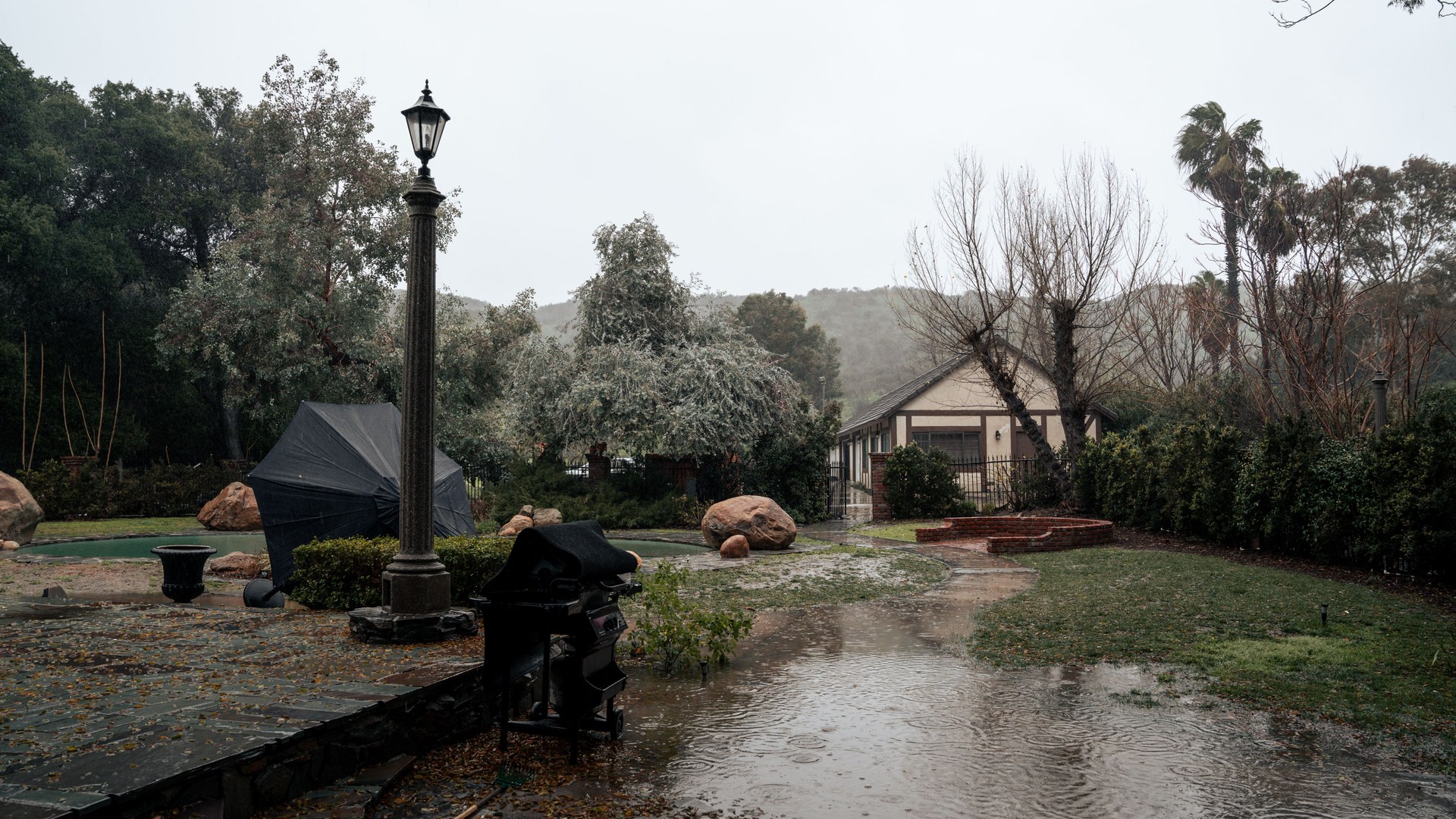
The short answer: A yard drainage problem means rainwater cannot soak into the soil or flow away from it, so the ground stays wet long after rain stops. Most soggy yards come down to one of nine causes: heavy clay soil, compacted ground, wrong grading, low spots, downspouts dumping roof water into the yard, a high water table, hidden leaks, hardscaping that reroutes runoff, or irrigation watering the same soil twice. The pattern of the wetness tells you which one you have.
Contents
- Start with the clock: how long water sits says everything
- Read the pattern before you name the cause
- When the soil itself refuses water: clay and compaction
- When the ground tilts the wrong way: grading and low spots
- When your roof does the watering: downspouts and overflow
- When the wet never leaves: groundwater and hidden leaks
- When patios, driveways, and roots reroute the rain
- Three backyard tests that name your cause
- What each cause points toward next
- What you can diagnose yourself, and what belongs to a pro
- Frequently asked questions
- Sources
Start with the clock: how long water sits says everything
If puddles dry within a day or two after rain, your yard is behaving normally. If water stands for several days after every storm, you have a surface problem: grading that traps water or soil that will not absorb it. If the ground stays wet for months, even between rains, the source is underneath you, either groundwater or a leak.
This time test is the fastest way to narrow things down. A yard that dries out within a day or two is considered normal by the Northern Virginia Soil and Water Conservation District, whose drainage problem page splits the whole topic on this axis: wet for days after rain is a grading or soil-infiltration issue, while wet for months or all the time usually traces to high groundwater or leaks from pipes and irrigation. For a harder number, NDS lists standing water still sitting in the yard 24 hours after a hard rain as a clear indicator of a drainage problem. So watch your yard the morning after a storm. Water gone by then is normal. Water still sitting is your yard telling you something a dry-day walk never could.
Read the pattern before you name the cause
Once you know you have a real problem, look at where the wetness lives. Different causes leave different signatures, and matching the pattern beats guessing. Work through this table during or right after the next rain.
| What the wetness looks like | The likely cause | How to confirm it |
|---|---|---|
| A puddle in the same spot every storm, drying between rains | A low spot or depression in the grade | Watch during rain: water visibly flows into the spot from higher ground |
| A broad soggy area across open lawn that lasts for days | Compacted soil or heavy clay | Push a screwdriver into the ground: if it barely penetrates, run the percolation test below |
| Wet ground near a downspout outlet or along the foundation | Roof runoff dumped too close to the house | Watch the downspout during rain and see where the water lands |
| Ground that stays squishy all the time, rain or shine | High water table or a hidden leak | Shut off irrigation for a week; check the water meter for movement when nothing is running |
| Water sheeting off a patio or driveway onto the lawn | Hardscape runoff | Watch during rain; look for mud or silt washed onto the flatwork itself |
| A soggy strip along a walkway, bed edge, or fence line | Tree roots or edging damming the flow | Dig a small test pit where the wet zone starts and look for roots or buried barriers |
| Lush green patches where sprinkler zones overlap | Irrigation double-watering the same soil | Run each zone separately and mark the overlap; check heads for stuck valves |
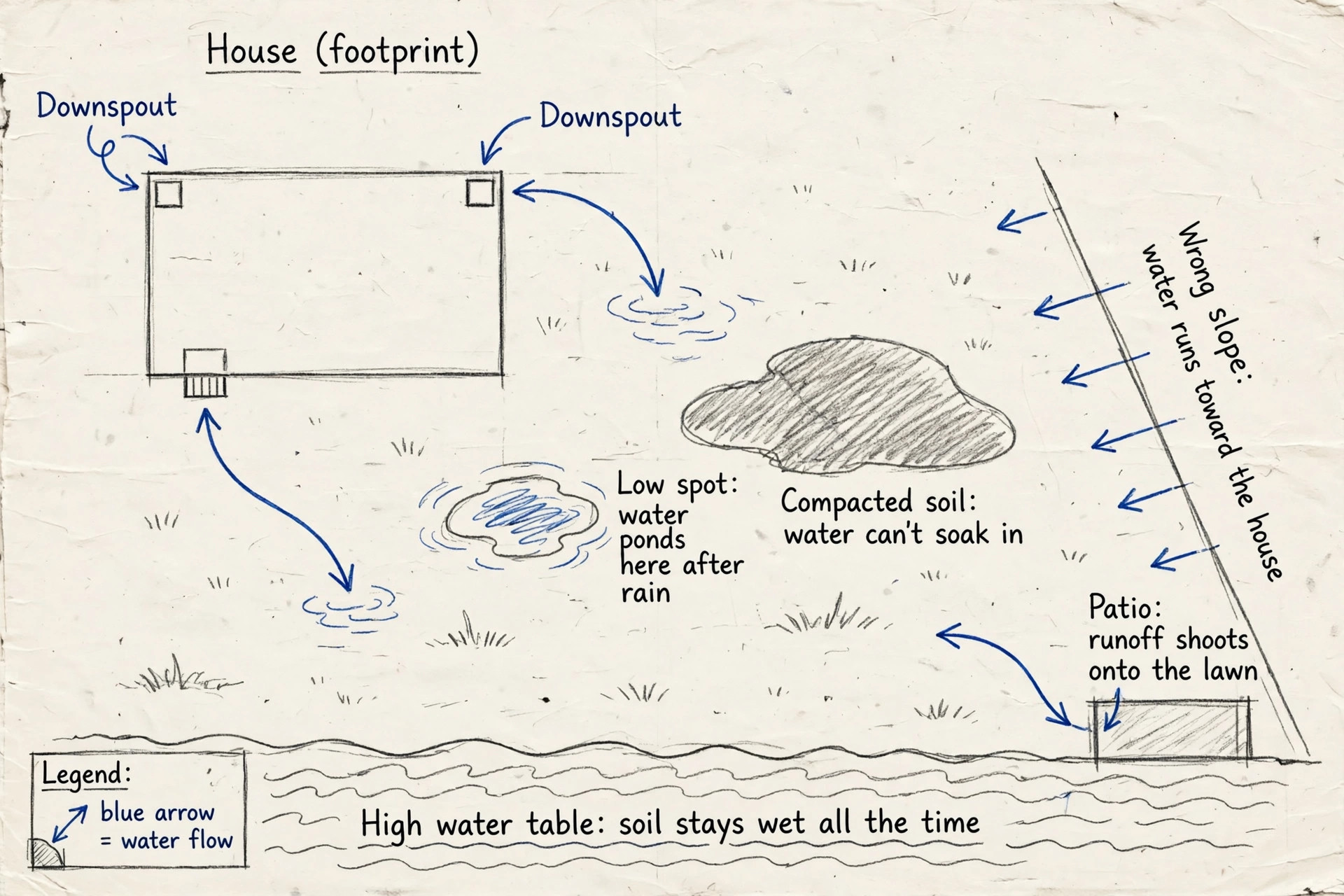
Two or three rows often match at once, and that is normal. Causes stack. A downspout that dumps into a low spot on compacted clay gives you three problems wearing one wet trench coat. The tests later in this guide help you sort out which one is doing the most damage.
When the soil itself refuses water: clay and compaction
Soil-level problems mean rain cannot get into the ground, so it sits on top. Clay particles are tiny and pack tightly, which slows infiltration to a crawl, and compaction crushes the pore spaces in any soil type until the surface acts almost like pavement. If your wet area is broad, shallow, and slow to dry, start here.
It helps to know what soil actually is. Clemson Extension explains that soil is a mix of mineral particles, water, air, and living things, and the relative sizes of the sand, silt, and clay particles decide how much pore space exists for water to move through. Sandy soils have big pores and drain fast. Clay particles are very fine and stacked like sheets of paper, so water passes through them slowly. Loam, a balanced mix of all three, is the middle ground every yard aims for.
| Soil condition | How water moves through it | What that means for your yard |
|---|---|---|
| Sandy soil | Large pores, drains quickly | Rarely the cause of sogginess; dries fast |
| Silty soil | Medium pores, steady drainage | Usually fine unless compacted |
| Clay soil | Tiny plate-like particles, very slow infiltration | The classic soggy-soil culprit; holds nutrients well but ponds easily |
| Loam | Balanced mix, drains and holds moisture evenly | The goal state; most soil work aims here |
| Any soil, compacted | Pore spaces crushed, surface nearly impervious | Water runs off instead of soaking in, even in sandy yards |
Compaction deserves attention because it strikes yards that should drain fine. Clemson’s turfgrass guide names the usual suspects: foot traffic first, then vehicles parking or driving on turf, then heavy mowers and equipment, all pressing the pore spaces out of the soil. Thatch over a quarter to a half inch thick makes it worse by holding water at the surface.
Two myths to kill before you spend money. First, do not spread sand over clay to open it up. Clemson warns the two can set up like concrete. Second, gypsum is not a quick fix for clay; its effects are short-lived. What works is organic matter, added over time, plus core aeration to keep pore spaces open.
When the ground tilts the wrong way: grading and low spots
Grading problems mean water runs to the wrong place or has nowhere to run at all. A yard that slopes toward the house sends every rain toward the foundation. A yard that is flat, or pocked with low spots, lets water sit where it lands.
Builder grading is a common origin story. It settles over the first few years, topsoil gets added and feathered out, and the original slope disappears. If your house is more than a few years old and the wet spot was not there at move-in, suspect the grade has changed.
Measure what you actually have with the string-line method. You need two stakes, a length of string, a line level, and a tape measure.
- Drive one stake at the high point and one at the low point of the area.
- Tie the string to the high stake at ground level, pull it taut, and level it before tying it to the low stake.
- Measure the run, the length of string between the stakes.
- Measure the rise, the distance from the level string straight down to the ground at the low stake.
- Divide rise by run. That is your slope. A one-foot drop over 100 feet of run is a one percent grade.
For the ground right around the house, the target is a two to five percent slope for the first ten feet. That means the soil should drop two to five inches for every ten feet you move away from the foundation.
Low spots behave differently from bad slopes. A depression does not need incoming flow to pond; it just collects what falls directly into it. Fill small ones with topsoil, tamp, and reseed. For larger ones, see our guide to why mulch washes away on a slope for how water moves on graded ground.
When your roof does the watering: downspouts and overflow
A roof collects every drop that falls on it and hands the whole load to a few downspouts. When those pipes dump that volume into one patch of yard, the soil there never stood a chance. If your soggy ground hugs the house or sits right under a downspout outlet, look up before you look down. A downspout ending a foot or two from the foundation delivers an enormous amount of water to one spot during a serious storm, saturating soil that the rest of the yard never bothers.
The discharge point matters so much it has its own coverage: how far downspouts should drain from the house covers the distance question, and why water pools at the end of a downspout digs into what to check when the outlet itself keeps ponding. During the next hard rain, watch the gutters too. A downspout clogged with leaves or seed pods sends water sheeting over the gutter edge, and that overflow lands in the same foundation-adjacent soil as a short downspout would. The tell: water pours over the gutter rim at one corner while the downspout below stays dry. The signs of a clogged downspout walk through that diagnosis from the ground, including the tap test that finds the blockage without a ladder.
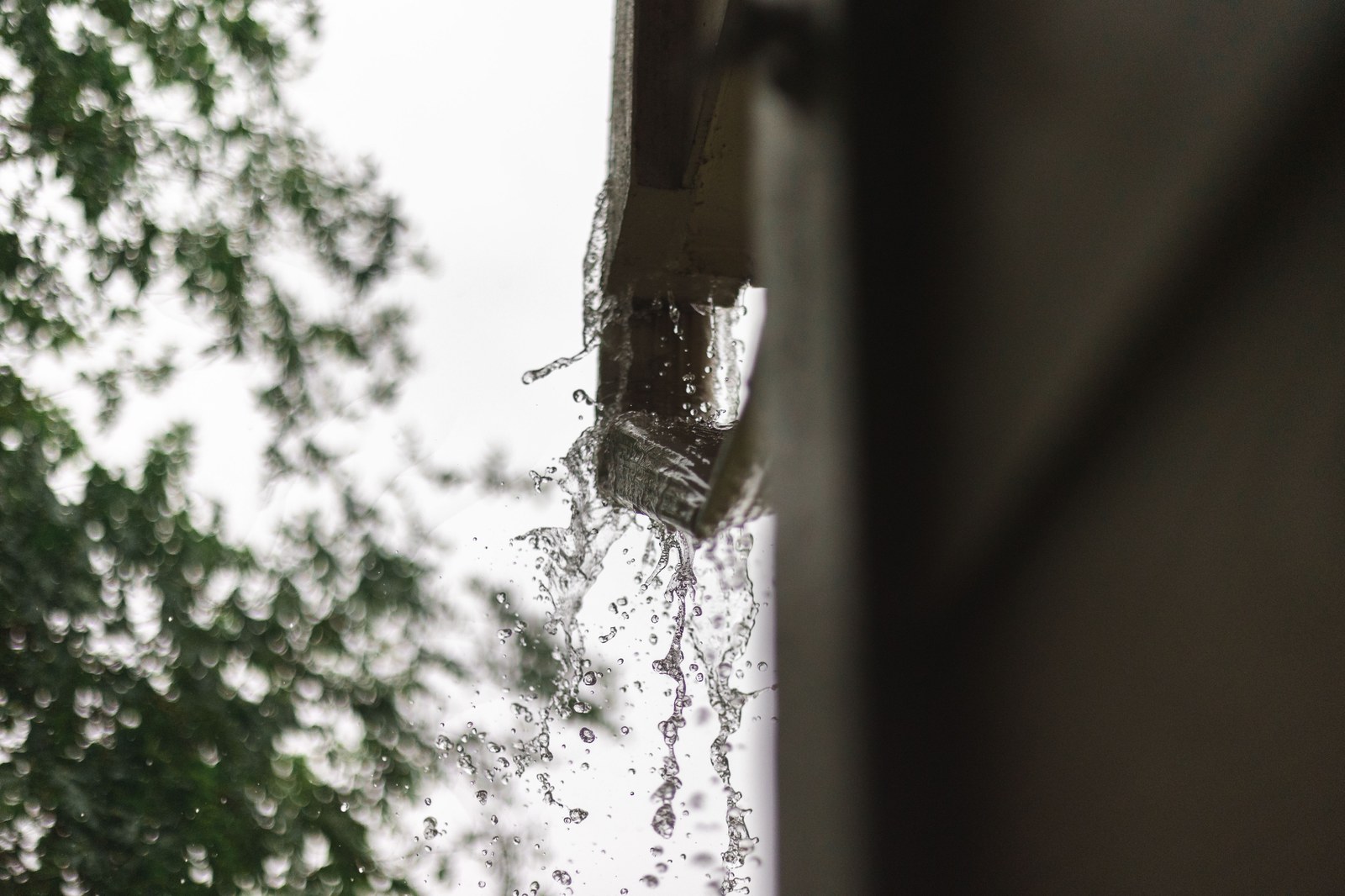
One more scenario: some downspouts feed buried drain lines instead of ending at the lawn. When those lines clog with silt or roots, or get crushed, water backs up and the soil around the base stays soggy for days. If the pipe runs clear in a hose test but the ground stays wet, the problem is underground, and that is pro territory.
When the wet never leaves: groundwater and hidden leaks
A yard that stays wet for months, or all the time, is telling you the water comes from below or from a pipe, not from the sky. High groundwater saturates the soil from underneath, and leaks from water lines, sprinkler systems, or outdoor faucets can soak one zone for as long as the leak runs. Suspect these when the soggy patch ignores the weather.
High groundwater is a location problem. The Fairfax County guidance notes it shows up in low-lying parts of the terrain, especially floodplains near streams, and sits closest to the surface in the colder months, so a spot can stay wet through winter and spring and improve in summer. If your yard is in a low area and the wetness follows that seasonal rhythm, the ground itself is saturated, and no surface grading changes where the water table sits.
Leaks are a detection problem, and they are sneakier. Leaky water pipes, sprinkler systems, outdoor faucets, ponds, and pools can all keep a yard wet, and the source may not be where the wetness shows on the surface. Two tests help. First, shut off the irrigation for a full week. If the patch starts to dry, the sprinkler system was the source, likely a stuck valve or a broken line. A single head stuck spraying into the ground can keep a patch saturated for weeks while everything around it dries, and walking the zones one at a time takes ten minutes. Second, check the water meter. Turn everything in the house off, note the reading, wait an hour, and read it again. Movement means water is going somewhere, and if the yard is the only suspect, a plumber is the next call.
When patios, driveways, and roots reroute the rain
Every hard surface in the yard adds runoff and removes infiltration. Driveways, patios, walkways, and the roof itself turn rainfall into sheet flow that has to go somewhere, and where it goes is often the lowest, most absorbent thing nearby: your lawn. If the soggy zone sits along the edge of a patio or driveway, the hardscape is probably feeding it.
The EPA’s stormwater page lays out the mechanism: in undeveloped ground, precipitation soaks in, but once buildings, driveways, patios, and roads are added, the ground cannot absorb the water, so stormwater flows over those hard surfaces and concentrates wherever it lands. A big patio next to a lawn is a funnel pointed at the grass.
Smaller barriers redirect water too. NDS’s exterior drainage guide lists tree roots, landscape edging, driveways, sidewalks, and patios among the surface obstructions behind drainage problems. A buried edging strip or a mat of tree roots can act as a tiny dam, holding a shallow pond on the uphill side after every rain. The same guide names the evidence: mud or silt deposits washed onto flatwork, porches, or walkways. If you see sediment fans on the concrete after rain, water is moving across that surface and stopping where the soggy ground begins.
Three backyard tests that name your cause
Patterns and measurements get you most of the way. Three simple tests turn a strong suspicion into a confirmed cause, and all of them use tools you probably own.
Test 1: The percolation test. This tells you whether the soil absorbs water fast enough. Dig a hole about 12 inches wide and 12 inches deep in the problem area, fill it with water, and let it drain completely to saturate the soil. Refill it, measure the water level, and check it again after one hour. A healthy soil moves roughly one to three inches per hour; under one inch per hour points to dense clay or severe compaction. The full method and its benchmarks are described there. Run the test in both the soggy spot and a healthy part of the yard so you have a comparison.
Test 2: The ribbon test. This tells you what kind of soil you are standing on. Dig up a handful from a few inches down, wet it until it holds together, and try to squeeze it into a ribbon between thumb and forefinger. Sandy soil crumbles and forms no ribbon. Loam forms a short ribbon that breaks easily. Clay forms a long, flexible ribbon that holds together. If you want numbers instead of a feel test, Clemson describes the jar test for measuring your actual sand, silt, and clay percentages.
Test 3: The string-line slope check. This tells you whether the ground falls away from the house. Use the stakes-and-string method from the grading section: two stakes, a taut level string, and a tape measure, finding the rise over the run. NDS notes a simple line level is accurate enough for distances up to about 50 feet. Check the first ten feet from the foundation on every side of the house, since grading failures are often local to one wall.
One more test that costs nothing: go outside during the next hard rain. Almost nobody does it, and it is the single most revealing hour you can spend on a drainage problem. Watch where the water lands, which way it moves, and where it stops. The table at the top of this guide becomes much easier to use once you have seen the water in motion.
What each cause points toward next
This is a diagnostic guide, so the fixes below are direction pointers, not instructions. A full comparison of drainage solutions, from French drains to dry wells to regrading, is coming in our companion solutions guide.
| Your cause | What the fix direction looks like |
|---|---|
| Compacted lawn | Core aeration plus topdressing with compost, repeated seasonally until drainage improves |
| Heavy clay | Organic matter worked in over time, not sand; aeration to keep pore spaces open |
| Low spot or wrong grade | Small depressions can be filled and regraded; larger grading work is pro territory |
| Downspout discharge | Move the discharge point farther out; check for clogs and buried-line blockages first |
| High water table | Subsurface drainage systems sized by a pro; surface fixes will not move groundwater |
| Hidden leak | Plumber or irrigation contractor, depending on whether the meter test points at the house line or the sprinkler system |
| Hardscape runoff | Intercept the sheet flow before it reaches the lawn, or redirect the surface toward a real outlet |
| Irrigation overlap | Audit the zones, fix stuck valves and misaimed heads, and cut run times on the overlap areas |
What you can diagnose yourself, and what belongs to a pro
Everything in this guide so far is homeowner territory. Watching the yard in the rain, running the percolation and ribbon tests, measuring slope with a string, aerating a lawn, filling a small depression, extending a downspout, and auditing sprinkler zones are all fair DIY work. Doing them first means you will not pay a contractor to discover something you could have found on a Saturday.
Bring in a professional when any of these apply:
- The grading needs redesigning, not just a filled dip. Moving real volumes of soil changes where water goes for you and your neighbors, and drainage work that sends water onto someone else’s property creates legal trouble fast.
- You need a French drain, dry well, or any buried drainage system. Trenching a French drain runs roughly 18 to 24 inches deep with a continuous slope to a real outlet, which is not a casual weekend dig, and any digging starts with having underground utilities marked.
- The always-wet pattern points at a high water table. Groundwater needs systems sized by someone who understands subsurface water, not surface fixes.
- Water is pooling against the foundation or entering the house. That is a structural problem wearing a drainage costume, and it deserves a drainage contractor or a foundation specialist, not guesswork.
- The downspout feeds a buried line that is blocked, crushed, or root-filled. Buried lines are pro territory.
When you do call someone, the questions you ask matter as much as the answers. A drainage contractor worth hiring should be able to explain which cause they think is behind your wet spot, how they ruled out the others, and where the water will go once their system is in. If the first answer is a price before a diagnosis, get a second opinion.
Frequently asked questions
Frequently asked questions
Because the water cannot soak in or flow away. The usual reasons are compacted or clay-heavy soil that absorbs water too slowly, grading that traps water in low spots, or downspouts dumping roof runoff into one area. Start with the percolation test: if the soil drains under an inch per hour, the soil is the bottleneck.
Standing water still present 24 hours after a hard rain is a recognized drainage-problem indicator. A yard that dries out within a day or two is normal. Puddles or soggy ground that persist for several days point to grading or soil issues, while wetness that lasts for months usually means groundwater or a leak.
No. Clay holds nutrients well and many healthy yards sit on it. The trouble starts when clay is also compacted, which closes off the already small pore spaces. Core aeration and regular additions of organic matter improve clay soils over time. Spreading sand over clay is counterproductive: the two can set up like concrete.
Yes, and it is one of the most common causes. A roof collects every drop that falls on it and delivers the whole volume through a few downspouts. If a downspout ends a foot or two from the foundation, or a clog sends water sheeting over the gutter edge, one patch of yard gets watered by the entire roof during every storm.
Water that ignores the weather comes from below or from a pipe. High groundwater saturates soil from underneath, especially in low-lying areas and in the colder months. A broken sprinkler line, stuck valve, or leaking water pipe can do the same. Shut off the irrigation for a week: if the spot dries, the sprinkler system was the source.
It helps when compaction is the cause, which is common in high-traffic areas and yards graded by heavy equipment. It will not fix a wrong slope, a low spot, a downspout dumping roof water, or a high water table. Time it right: aerate warm-season grasses from late spring through summer and cool-season grasses in early fall or early spring.
Sources
- Northern Virginia Soil and Water Conservation District: solving wet-yard problems: yards that dry within a day or two are normal; wetness for days points to grading or infiltration, wetness for months to groundwater or leaks; filling and regrading small depressions.
- NDS Principles of Exterior Drainage: standing water 24 hours after a hard rain as a drainage-problem indicator; soil void sizes in sand versus clay; line-level slope measurement; tree roots and edging as surface obstructions; mud and silt deposits as evidence.
- Clemson Extension: turfgrass cultivation: compaction causes and effects on infiltration; core aeration methods; thatch over a quarter to a half inch impeding water movement; seasonal aeration timing.
- Clemson Extension: soil conditioning: soil texture and pore space; the sand-into-clay myth; gypsum’s short-lived effects; organic matter for clay and sandy soils; the jar test.
- US EPA: stormwater sources and solutions: hard surfaces preventing infiltration and concentrating runoff; green infrastructure slowing, spreading, and soaking runoff into the ground.
- Engineer Fix: how to fix standing water in your yard: the percolation test method and the one-to-three-inches-per-hour benchmark; the two-to-five-percent grading target near the foundation; French drain trench depth, pipe size, and slope.

3 Comments
Pingback: Water Pooling at Downspout: 7 Causes & How to Diagnose
Pingback: How Far Should Downspouts Drain? Distance Guide | Home Exterior Lab
Pingback: Why Mulch Washes Away on a Slope: Causes & Fixes